At 1:37 p.m. ET today (Monday, December 22, 2025), gold prices remain near historic highs, with spot quotes hovering in the mid-$4,400s per ounce after a breakout above the psychologically crucial $4,400 level. The move caps an extraordinary late‑year surge in precious metals as investors balance rate‑cut expectations, a softer U.S. dollar, and a fresh wave of safe-haven demand linked to geopolitical headlines.
Key takeaways for gold right now
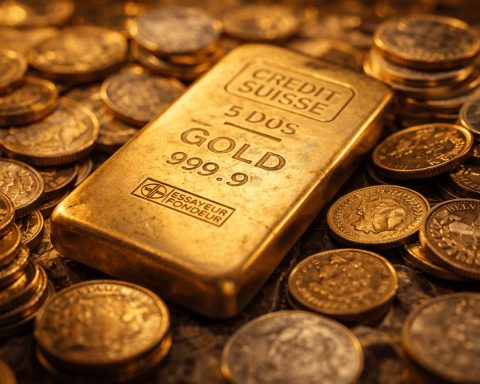
- Spot gold is holding around the $4,430–$4,450/oz zone in early afternoon New York trading, depending on the price feed.
- Gold hit a new all‑time high near $4,440/oz earlier today, while silver touched a record $69.44/oz.
- The rally is being driven by a potent mix: Fed rate-cut hopes, geopolitical risk (especially U.S.–Venezuela tensions), central-bank buying, and strong ETF inflows.
- Forecasters are increasingly anchoring on $4,900 by December 2026 (Goldman Sachs base case), while some market commentary is already eyeing $5,000 as the next big milestone.
Gold price today: where it stands at 1:37 p.m. ET
Because real-time precious-metals quotes can differ slightly by venue and provider (spot feeds vs. futures, bid/ask spreads, and data-delivery timing), the most accurate way to describe the gold price today at 1:37 p.m. ET is as a tight range around the mid‑$4,400s:
- Kitco spot quote (New York) showed gold bid/ask at $4,436.80 / $4,438.80 at 1:22 p.m. ET, with an intraday low/high of $4,337.30 / $4,442.90.
- JM Bullion’s spot read listed $4,450.45/oz at 1:12 p.m. ET.
- Reuters reported spot gold up 2.3% at $4,436.29 by 11:23 a.m. ET after printing an all-time high of $4,440.21 earlier in the session.
On the futures side, momentum has been just as striking. Reuters noted February COMEX gold futures around $4,471.1/oz during the U.S. morning.
Bottom line: Gold is consolidating near record territory, and the market is treating pullbacks—so far—as pauses rather than reversals.
Why gold is surging on December 22, 2025
Today’s price action isn’t being driven by a single headline. It’s a layered rally, powered by multiple reinforcing forces that have been building into year‑end.
1) Safe-haven demand is spiking again
The day’s strongest catalyst has been renewed safe-haven buying, particularly as U.S.–Venezuela tensions escalated. Reuters reported that gold’s jump was “powered by safe-haven flows” as tensions flared, and highlighted President Donald Trump’s announcement of a “blockade” of sanctioned oil tankers entering and leaving Venezuela.
In the same Reuters report, one market commentator described the breakout as a “textbook momentum break” after a bullish consolidation—made more impactful by holiday-thinned liquidity.
Reuters’ broader year-end wrap also points to persistent geopolitical uncertainty—referencing tensions in the Middle East, uncertainty around a Russia–Ukraine peace outcome, and the latest Venezuela-related developments—as a continuing tailwind.
2) Fed rate-cut expectations are back in the driver’s seat
Gold is exceptionally sensitive to the rate outlook because it is a non-yielding asset: when investors expect lower policy rates (and lower real yields), gold often becomes more attractive.
Reuters reported that spot gold was lifted by expectations of further Federal Reserve cuts after a quarter-point reduction last week, with markets pricing in two U.S. rate cuts in 2026—a backdrop that typically supports bullion.
Investopedia also flagged that cooler inflation data has helped revive optimism for further cuts, pushing gold and silver to record highs in early trading.
3) A weaker dollar is amplifying the move
A softer U.S. dollar tends to support gold because it makes dollar-priced bullion cheaper for buyers using other currencies.
Reuters’ year-end rally piece noted the dollar has slumped about 9% in 2025, putting it on track for its worst year in eight, and highlighted expectations among investors that the currency’s decline could resume in 2026 if the Fed eases further.
4) Central bank buying and ETF inflows remain structural support
Today’s breakout is happening on top of a multi-year shift in demand.
Reuters cited Metals Focus saying central banks are on track to buy 850 tons of gold in 2025 (down from 1,089 tons in 2024, but still “very healthy”), while the World Gold Council data cited by Reuters shows physically backed gold ETFs attracting $82 billion in inflows so far this year (about 749 tons)—their biggest inflow since 2020. Reuters
That combination—official-sector demand plus investor demand—helps explain why gold can keep making new highs even as jewelry demand softens at elevated prices.
Silver hits $69.44: the broader precious-metals breakout
Gold isn’t alone. The entire precious-metals complex is moving, and silver continues to outpace.
Reuters reported:
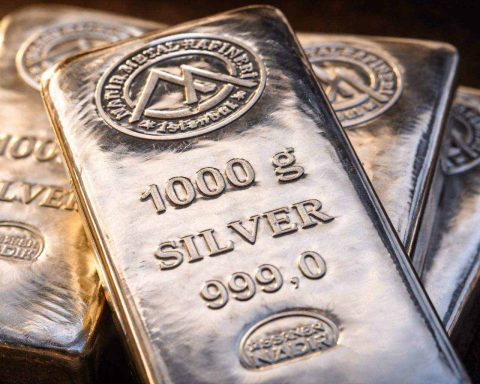
- Silver hit an all-time high of $69.44/oz, later trading near $68.55 in the U.S. morning.
- Reuters’ year-end analysis put silver up about 139% year-to-date, versus gold up around 68%, and noted the gold-silver ratio tightening dramatically.
- Platinum jumped to a 17-year high around the $2,060–$2,070 area, while palladium hit a near three-year high.
On the forward-looking side, Reuters also relayed that Macquarie strategists expect silver to average $57/oz in 2026, underscoring that even bullish forecasters anticipate volatility and mean reversion after extreme moves.
Forecasts and analysis from Dec. 22, 2025: where does gold go next?
With gold sitting at record levels late in the year, the key question isn’t whether it had a great 2025—it clearly did—but whether 2026 brings continuation, consolidation, or a sharp correction.
The bullish institutional anchor: $4,900 by December 2026
A major reference point in today’s coverage is Goldman Sachs’ base-case call for gold to reach $4,900/oz by December 2026—a forecast Reuters reported in a Dec. 18 note and reiterated as a key driver in today’s market coverage.
Reuters’ year-end piece explicitly frames this as part of the “more upside into next year” narrative, with easing policy and geopolitics keeping demand firm. Reuters
The psychological magnet: $5,000
Today’s Reuters reporting also included a striking line: one analyst said the “obvious target for gold bulls is $5,000 next year.”
It’s important to treat $5,000 as a sentiment milestone as much as a model-derived fair value: once a market clears a major round number ($4,000, then $4,400), attention naturally shifts to the next one.
Short-term tactical calls: $4,500 as the next battleground
If $5,000 is the big headline number, $4,500 is the nearer-term line that many tactical analysts are watching.
- CPM Group (via Kitco commentary) listed prices at $4,460 (Feb. 2026 COMEX contract basis) as of 9:20 a.m. EST, with a “Stay Long” recommendation and a next target at $4,500, while flagging potential profit-taking around that level.
- BabyPips technical levels also highlight $4,500 as a major psychological zone, with additional upside targets extending higher if the breakout holds.
A scenario-based lens: what has to happen for gold to keep climbing?
Many of today’s analyses converge on a few “if/then” drivers:
- If growth slows and the Fed cuts more than markets expect, gold can extend higher.
- If geopolitical stress worsens (energy disruptions, sanctions enforcement, conflict risk), safe-haven flows can accelerate.
- If the dollar’s downtrend resumes in 2026, that can mechanically support gold.
- If real yields rise or risk appetite returns sharply, gold could correct—especially after a massive run. (Several analysts explicitly warn about volatility into year-end due to positioning and liquidity.)
Technical outlook: key levels traders are watching after the $4,400 breakout
When a market makes all-time highs, technical analysis tends to focus on round numbers, former resistance, and consolidation zones—because there’s little historical price structure above.
Here are the levels most commonly referenced in today’s technical coverage:
- $4,500: the next major psychological resistance level after $4,400.
- $4,350–$4,370: a key “broken resistance becomes support” area cited by technical analysts as the first major defense zone.
- $4,300: widely cited as an important support/round-number threshold, and a level that appears repeatedly across market commentary this month.
Importantly, the day’s realized range has been wide, underscoring that volatility is not a side story—it’s the story. Kitco’s spot page showed an intraday high near $4,442.90 and low around $4,337.30.
What to watch next: catalysts in a holiday-shortened week
With Christmas approaching, traders typically expect thinner liquidity, which can exaggerate price moves both up and down.
Still, several near-term catalysts are on the calendar:
- U.S. macro data (including GDP, consumer confidence, and weekly jobless claims) that can shift rate expectations quickly.
- Fed leadership speculation: Reuters reported markets are watching closely after a report that Trump could name a new Fed Chair by early January, replacing Jerome Powell (set to retire mid‑2026). Any shift in expected policy direction can reprice gold fast.
- Geopolitical headlines, especially anything that impacts energy flows, sanctions enforcement, or regional conflict risk—factors explicitly tied to today’s safe-haven demand.
The bottom line
At 1:37 p.m. ET on Dec. 22, 2025, the gold price today remains pinned near record highs in the mid‑$4,400s, with the market treating the $4,400 break as a meaningful regime moment rather than a one-day spike.
Whether the next chapter is a sprint toward $4,500 (the near-term tactical target) or a volatile consolidation before another leg higher depends on the same forces that pushed gold here: rate expectations, dollar direction, central-bank demand, ETF flows, and geopolitical risk.