On December 24, 2025, the global metals market delivered one of the clearest signals yet that investors and industries are bracing for a more uncertain 2026: precious metals and key industrial inputs surged to historic highs, powered by a volatile mix of geopolitics, tariff-driven trade distortions, expectations of easier monetary policy, and the relentless buildout of AI-era infrastructure.
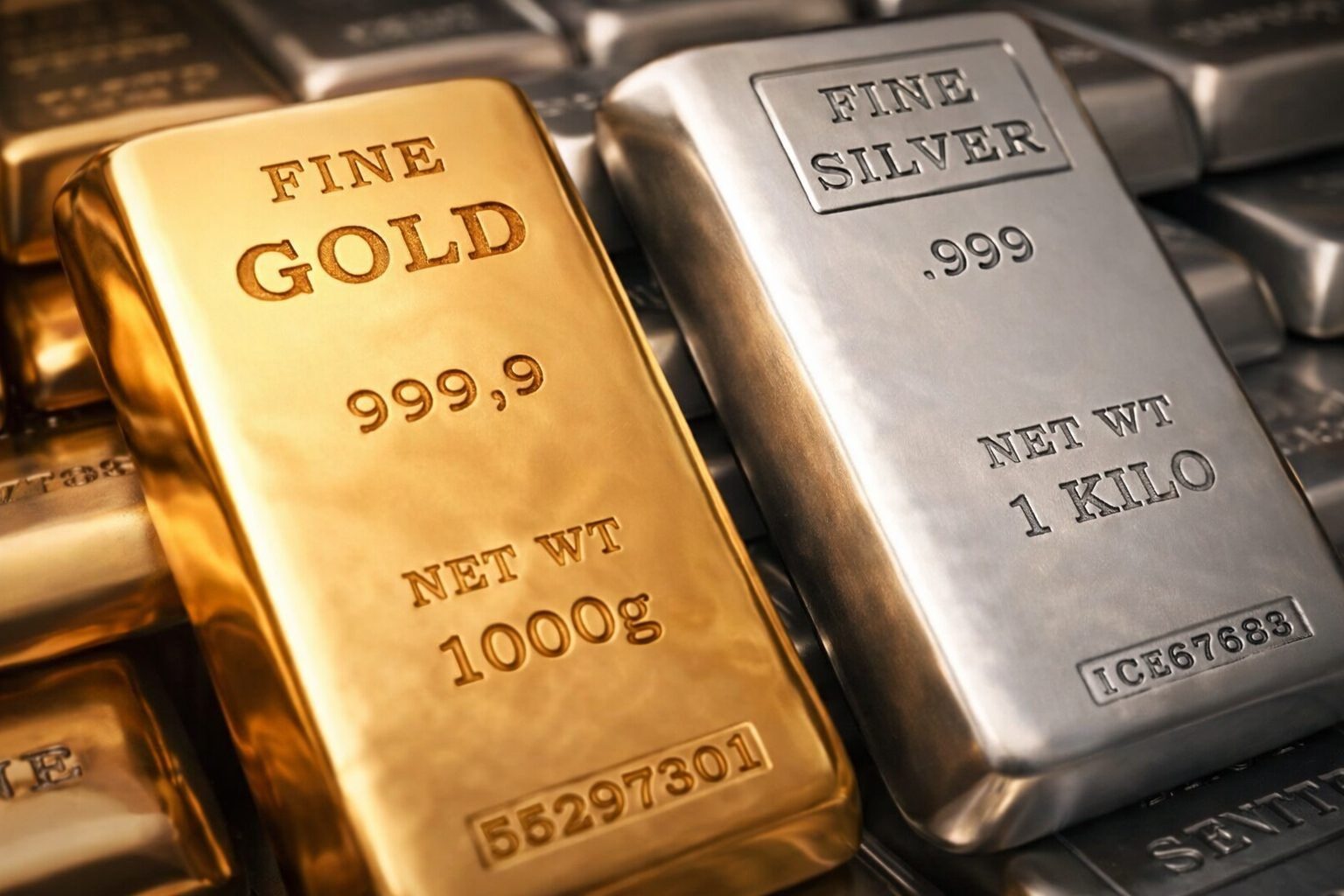
Gold briefly pushed beyond $4,500 per ounce, silver printed fresh records near $72 per ounce, and platinum also touched a new peak before prices eased as traders locked in profits in thin holiday liquidity.
In India, the move was just as dramatic. MCX gold futures hit a lifetime high of ₹1,38,676 per 10 grams, reflecting a global rally that has turned “safe haven” assets into the story of the year’s final stretch. The Times of India
The big question now is what comes next: Is this a year-end blow-off top, or the start of a longer bull cycle for hard assets? And for everyday investors looking toward 2026, the debate is sharpening: gold vs silver — which metal is better positioned to deliver higher returns next year?
What happened on Dec 24: gold, silver and platinum hit fresh records before pausing
Christmas Eve trading delivered a classic “late-cycle rush” into metals:
- Spot gold hit an all-time high around $4,525/oz, then dipped slightly as profit-taking kicked in.
- Silver notched a fresh record near $72.70/oz, holding close to peak levels even as gold cooled.
- Platinum peaked around $2,377.50/oz before paring gains.
Analysts cited a familiar pattern: after a sharp vertical move, markets often consolidate — not necessarily because the thesis has changed, but because positioning becomes crowded and liquidity thins. Reuters quoted Kitco’s Jim Wyckoff describing the pullback as “chart consolidation and mild profit-taking” after record highs. Reuters
But the more important takeaway is the context: the rally did not occur in isolation. It landed at the intersection of rate-cut expectations, global political risk, and trade policy shocks that are increasingly shaping commodity flows.
Why metal prices are soaring: tariffs, wars, a weaker dollar — and a new industrial supercycle
A single factor rarely drives a synchronized move across precious and industrial metals. On Dec 24, multiple forces were pushing in the same direction.
1) Metals are back as “insurance,” not just speculation
The NDTV/AFP breakdown captured the mood shift: investors are treating metals less like a tactical trade and more like portfolio protection amid geopolitical and policy turbulence.
Gold and silver demand has surged against the backdrop of escalating geopolitical tensions — including tariff escalation, the wars in Ukraine and Gaza, and heightened pressure involving Venezuela — with investors also uneasy about rising public debt and even the possibility of an AI-sector bubble.
One line from the report summed up the psychology driving the move: “Metal is once again becoming insurance rather than just a speculative asset.” www.ndtv.com
2) Rate-cut expectations are boosting non-yielding assets
Gold tends to benefit when real yields fall and the opportunity cost of holding a non-yielding asset declines. On Dec 24, markets were still leaning into the view that the US Federal Reserve could deliver further easing in 2026.
Reuters reported that traders were pricing two rate cuts next year, and also noted former President Donald Trump’s public push for a Fed chair inclined to lower rates if markets are performing well.
3) A weak dollar is turbocharging both precious and industrial metals
The same NDTV/AFP explainer pointed to a weakening dollar as a key accelerant: if the dollar softens, commodities priced in dollars become cheaper for non-US buyers, often lifting demand.
This mechanism matters beyond gold. It spills into base metals like copper and aluminium — especially when global industrial demand is already tight.
4) The AI boom and energy transition are pulling huge volumes of copper, silver and aluminium
A major 2025–2026 theme is that metals are no longer just “cyclical.” They’re increasingly “strategic.”
Industrial demand has surged in recent months, the NDTV/AFP report said, driven by the AI buildout and the energy transition — with copper at the center because it is essential for power grids, solar, wind, EVs and data centers.
On Dec 24, copper prices pushed into record territory above $12,000 a ton, helped by China announcing measures to boost demand, according to the same report.
5) Supply constraints and tariff fears are distorting physical markets
This is where 2025’s metals story becomes distinctly “political economy.”
The NDTV/AFP piece noted that copper prices have been lifted by fears of US tariffs, encouraging stockpiling ahead of implementation — with duties already imposed on some products and the scope potentially widening. It also flagged supply disruption risks across major mining regions (including the DRC, Chile and Indonesia).
Finally, year-end conditions amplified the volatility: thin holiday trading and “fear of missing out” can exaggerate price moves — a dynamic commodity traders know well. www.ndtv.com
India snapshot: MCX hits a lifetime high; city-wise gold rates jump on Dec 24
For Indian buyers, December 24 brought both sticker shock and renewed attention to daily price checks.
MCX and global benchmarks
According to Times of India reporting, MCX gold futures hit a lifetime high of ₹1,38,676 per 10 grams on February delivery. In the international market, Comex gold futures touched about $4,555/oz at the peak of the move.
The drivers echoed the global narrative: expectations of easier Fed policy and rising geopolitical tensions boosting safe-haven demand.
Gold price today in major Indian cities (Dec 24, 2025)
Times of India listed the following city-wise rates per gram:
- Delhi: 22K ₹12,750, 24K ₹13,908, 18K ₹10,435
- Mumbai: 22K ₹12,735, 24K ₹13,893, 18K ₹10,420
- Bengaluru: 22K ₹12,735, 24K ₹13,893, 18K ₹10,420
- Hyderabad: 22K ₹12,735, 24K ₹13,893, 18K ₹10,420
- Chennai: 22K ₹12,800, 24K ₹13,964, 18K ₹10,675
- Ahmedabad: 22K ₹12,740, 24K ₹13,898, 18K ₹10,425
- Jaipur: 22K ₹12,750, 24K ₹13,908, 18K ₹10,435
- Kolkata: 22K ₹12,735, 24K ₹13,893, 18K ₹10,420
Meanwhile, Financial Express pegged 24K gold in India around ₹1,38,350 per 10 grams on Dec 24, also highlighting how domestic prices can remain notably higher than Dubai due to duties and related costs.
Gold vs silver in 2026: which metal could deliver higher returns?
If December 24 was about record highs, the bigger market conversation is now about 2026 performance — and whether silver can continue to outpace gold after a blockbuster year.
The Economic Times noted that in 2025, MCX gold rose roughly 78% year-on-year (Dec 2024 to Dec 2025), while silver delivered a much larger 144% gain over the same period.
What experts are saying heading into 2026
The broad consensus: both metals still have support, but the return profile may diverge.
- Gold’s case for 2026: steadier upside potential supported by central bank buying, geopolitical uncertainty, softer dollar expectations, and ETF inflows.
- Silver’s case for 2026: higher volatility, but potentially higher percentage upside because it is both a monetary metal and an industrial input tied to the energy transition and AI-linked electrification.
2026 price targets: wide range, same direction
Economic Times compiled forecasts that illustrate how divided the market is — not on direction, but on magnitude:
- Some bullish calls see gold reaching $5,000–$5,500/oz and silver $75–$80/oz.
- More conservative ranges include gold around $4,300–$4,800/oz and silver $55–$75/oz by end-2026.
- Other projections push silver higher still, into $85–$100/oz territory in a strong bull cycle.
This spread matters: it shows how much 2026 depends on macro triggers — especially rates, the dollar, and trade policy.
The gold–silver ratio is flashing “silver strength”
Another key metric is the gold–silver ratio (gold price divided by silver price). The Economic Times reported the ratio fell from 87 at the start of the year to about 64.70 by late December — reflecting silver’s sharper rally.
A falling ratio typically signals stronger momentum in silver relative to gold, though it can also precede periods of consolidation when silver’s volatility catches up with it.
How investors are approaching 2026: SIP vs lump sum, stability vs upside
In a market where prices have already risen sharply, the “how” can matter as much as the “what.”
Economic Times reported several experts leaning toward staggered buying (SIP-style) approaches — particularly for silver — to manage volatility:
- Gold is often framed as a core portfolio stabilizer, better suited to systematic buying to average costs over time.
- Silver is framed as a higher-beta opportunity — attractive for upside, but best approached with position sizing and staggered entries due to price spikes and pullbacks.
This approach aligns with the market structure visible on Dec 24: rapid price bursts, thin liquidity, and narrative-driven flows.
What to watch next after Dec 24’s metal-market shockwave
With 2025 closing on record prints, the near-term risks and catalysts for 2026 are becoming clearer:
- US rate-cut expectations: even small shifts in the rate outlook can swing metals sharply.
- Dollar trend: continued softness supports commodities broadly; a reversal could cap gains.
- Tariff headlines and enforcement: tariffs don’t just change prices — they reroute supply chains and trigger pre-buying and stockpiling.
- Geopolitical flashpoints: safe-haven demand has been a major pillar of gold and silver’s run.
- AI and power-grid buildout: copper, silver, aluminium and related metals remain levered to electrification and data-center expansion.
Bottom line
December 24, 2025 wasn’t just another “gold price today” headline. It was a snapshot of a market repricing risk — across war, trade policy, and the cost of building the AI-and-energy-transition economy.
For 2026, gold’s appeal remains rooted in stability and macro protection, while silver’s pitch is increasingly about upside tied to industrial demand — and the reality that, in this cycle, precious metals are also becoming strategic commodities.
Whether the next phase brings consolidation or another leg higher, the Dec 24 surge made one thing hard to ignore: metals have moved back to the center of the global economic narrative.