
NEW YORK, July 12, 2026, 4:33 p.m. EDT — Healthcare stocks head into the week with Johnson & Johnson, UnitedHealth and Abbott set to gauge whether the sector’s reported 9% earnings decline is showing up in results.
Healthcare sector earnings are forecast to drop 9% in the second quarter, but most of that is due to accounting quirks, not a real downturn. FactSet Research Systems NYSE:FDS is calling for S&P 500 healthcare earnings per share to fall 9.0% year over year. Take out Gilead Sciences NASDAQ:GILD, though, and the sector is on track for 7.1% growth—shifting the number more than 16 percentage points. The real test for operating results hits in about 25 hours: Johnson & Johnson NYSE:JNJ, UnitedHealth Group NYSE:UNH and Abbott Laboratories NYSE:ABT, which make up 20.1% of the Health Care Select Sector SPDR Fund (NYSEARCA:XLV), all report Wednesday and Thursday.
Timing is key here, with healthcare stocks heading into earnings after a steep slide. XLV dropped 1.8% in the short week through July 10, while the S&P 500 was up 1.2%. That almost 3-point gap could bring in buyers if forecasts hold up, but investors are watching to see if weak profits are isolated or spreading through the group.
The gap is tighter than usual. Gilead made up just 2.85% of XLV by market cap as of July 9, but FactSet sees it flipping to a $7.31 loss per share from a $2.01 profit. FactSet also says Gilead will be the biggest weight on the group’s earnings. The firm points to Gilead’s 2026 forecast, which factors in $11.5 billion in in-process R&D expenses on acquired drugs and adds financing costs. Still, analysts expect five of six healthcare industries to grow earnings. Only biotech is set to drop, down 79%.
| Company | Report and call timing, ET | XLV weight | Primary investor test |
|---|---|---|---|
| Johnson & Johnson | Wednesday, July 15, earnings call at 8:30 a.m. investor.jnj.com | 10.63% | Drug and device sales, margins, guidance |
| UnitedHealth Group | Thursday, July 16, before the bell; call at 8 a.m. unitedhealthgroup.com | 6.68% | Medical ratio, pricing versus care use |
| Abbott Laboratories | Thursday, July 16, before the open, 9 a.m. call Abbott MediaRoom | 2.80% | Device and diagnostics sales, margins |
| Combined | — | 20.11% | A fifth of total sector ETF |
Weights for XLV are based on fund holdings from July 9. The combined total comes from those weights.
The three names together make up about 20% of XLV by assets. They also represent the operating categories behind the numbers Gilead’s charge muddied. FactSet sees 8% earnings growth this year for pharmaceuticals and healthcare providers and services, and 6% for equipment and supplies.
J&J is up first, giving investors an early look since its drug and device units both touch that forecast. Traders shouldn’t just watch if J&J beats the earnings estimate. More important is if sales, margin trends, and new guidance point the same way. If the beat is mostly tax, currency, or other nonrecurring items, that won’t say much about what the drug and device sector is really doing.
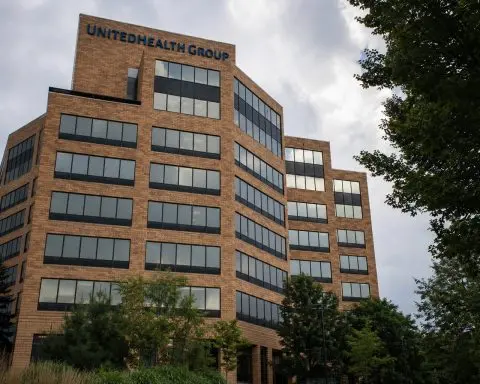
UnitedHealth is likely to draw the strongest market reaction among rivals. The company’s medical cost ratio—the chunk of premiums spent on care—will flag whether higher prices are covering rising utilization. KFF said Affordable Care Act insurers are asking for a median 14% premium hike for 2027, the second-biggest jump since 2018, blaming pricier hospitals, more patient visits and higher specialty drug costs. Since premiums are set before coverage starts while claims keep coming in, any spike in costs could hit UnitedHealth first, before higher pricing kicks in, which also matters for Humana NYSE:HUM and Elevance Health NYSE:ELV.
Abbott gives investors another look at how patient demand and manufacturing costs shake out. Stacking up its devices and diagnostics against J&J’s medtech numbers lets the market see what’s company-specific versus a sector move. If both post higher sales and hold margins steady, it bolsters the argument that healthcare’s earnings drag is just a one-off accounting hit.
Macro releases could muddy things this week. June CPI hits Tuesday at 8:30 a.m. ET, with PPI set for Wednesday and June retail sales on Thursday, both also at 8:30. If inflation runs hot, bond yields might rise, cutting the value investors put on future biotech profits. Higher inflation also pressures insurers and providers on wages, drug costs and hospital expenses. J&J’s call kicks off in step with Wednesday’s PPI report, UnitedHealth posts results half an hour before retail sales on Thursday, and Abbott’s call gets going half an hour after.
Risks: Leaving out Gilead drops a sizable accounting piece but doesn’t touch the real operating risks in healthcare. A jump in UnitedHealth’s cost ratio, softer margins at J&J or Abbott, drug-trial misses, regulatory hits, or any stronger inflation print could hold the sector back even if top-line earnings look better.
Consistency is the line in the sand. If two out of the three main players report around 5% to 9% growth and margins hold up, that three-point miss last week will seem more severe than the real profit pattern. But if insurance expenses keep going up and drug or device margins slip, that 9% headline shouldn’t be brushed off as a one-off—it could be an early sign the slowdown is spreading.
Related articles: NYSE:UNH