Published: December 7, 2025
Hertz Global Holdings (NASDAQ: HTZ) has become one of the more polarizing stocks in the transportation sector. After a costly electric-vehicle (EV) bet, a CEO change, and a bruising 2024, the company has finally posted its first quarterly profit in nearly two years – yet the stock still trades as if many investors remain unconvinced.
As of this weekend, Hertz stock is hovering just above $5 per share, with fresh financing news, mixed analyst calls, and a steady stream of analysis trying to decide whether this is a genuine turnaround or just a temporary rebound. Stock Titan+1
This article pulls together the latest news, forecasts, and analyses up to December 7, 2025, to give a current, news-ready snapshot of Hertz stock for readers of Google News and Discover.
Where Hertz Stock Stands Today
Hertz closed Friday, December 5, 2025, at about $5.06 per share, after trading between $5.05 and $5.39 during the session – a swing of nearly 7% in a single day. The stock fell roughly 1.6% on the day but is still up about 4% over the last two weeks, underscoring its high short‑term volatility. StockInvest+1
At this price, Hertz carries a market capitalization of around $1.6 billion. Various data providers put its trailing price‑to‑sales (P/S) ratio at roughly 0.19–0.20x on an estimated US$8.5 billion of annual revenue, placing it well below both transportation peers and the broader U.S. market on that metric. Simply Wall St+2BestStock AI+2
Short interest is substantial. One data hub shows short interest above 17% of the float, with institutional ownership reported at over 100% of free‑floating shares – a combination that typically reflects both heavy institutional positioning and meaningful short selling. Another technical source pegs the short sale ratio at about 14.5% as of December 5, suggesting that bearish traders remain active but may be easing their pressure slightly. Stock Titan+1
Earlier in 2025, Hertz shares were whipsawed by weak results and then a sharp recovery: in May, the stock dropped more than 20% in a single session after a disappointing quarter, even though it was still up strongly year-to-date, helped in part by activist investor Bill Ackman lifting his stake to nearly 20%. Reuters
Against this volatile backdrop, understanding the EV hangover and the “back‑to‑basics” reset is critical for interpreting today’s $5 share price.
From EV Gamble to “Back‑to‑Basics” Reset
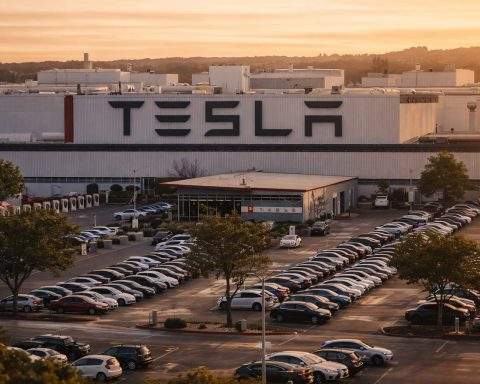
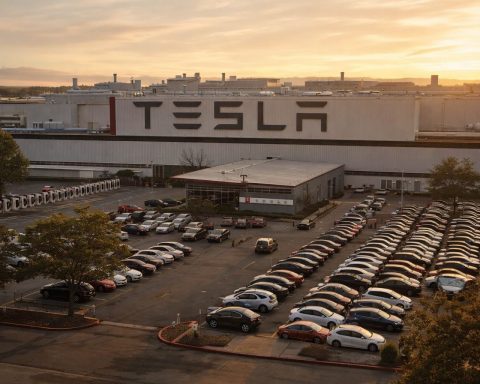
After emerging from bankruptcy and relisting in 2021, Hertz captured global headlines by committing to buy 100,000 Teslas, a deal estimated around $4.2 billion and touted as the largest EV purchase ever by a rental company. The vision was to lead the shift toward electrified mobility. Business Insider+2AInvest+2
Reality was far harsher. According to a December 2025 deep‑dive from Business Insider and prior filings:
- The EV strategy ran into weak rental demand, charging‑infrastructure gaps, and higher collision and repair costs as inexperienced drivers grappled with the technology.
- Hertz ultimately sold around 30,000 Teslas in a 2024 “fire sale”, often at steep discounts to book value.
- The company logged about $468 million in EV‑specific write‑downs and sales losses, plus roughly $1 billion in broader impairment charges and a $646 million jump in direct operating expenses, which it linked primarily to higher collision and damage costs in the EV fleet. Business Insider+2Business Insider+2
By late 2024, Hertz disclosed that the EV fleet reduction was “substantially complete.” Today, its EV presence is deliberately smaller, and management talks about maintaining a measured level of electrification rather than making EVs the core of the fleet. Business Insider+1
The EV fallout also triggered leadership change. In March 2024, the board appointed Wayne “Gil” West – former COO of Delta Air Lines and GM’s Cruise self‑driving unit – as CEO, effective April 1, 2024, replacing Stephen Scherr. Hertz Newsroom+2Hertz Investor Relations+2 West inherited the EV sell‑off and launched what he has repeatedly called a “back‑to‑basics” transformation, centered on:
- A younger, mostly combustion‑engine fleet aligned with customer demand
- Strict cost control with a “North Star” target of keeping depreciation per unit per month (DPU) below $300
- A deeper focus on customer experience and operational reliability Q4 Capital Markets+2Hertz Newsroom+2
That reset is now showing up in the numbers.
Q3 2025: First Profit in Nearly Two Years
On November 4, 2025, Hertz reported third‑quarter 2025 results that, for the first time in nearly two years, showed positive earnings per share:
- Revenue: $2.48 billion, down about 4% year‑on‑year, but ahead of estimates around $2.4 billion. Q4 Capital Markets+2Reuters+2
- GAAP net income: $184 million, compared with a loss of $1.33 billion a year earlier. Q4 Capital Markets
- GAAP diluted EPS: $0.42, versus a loss of $4.34 in Q3 2024. Q4 Capital Markets+1
- Adjusted EPS: $0.12, beating several forecasts that were clustered in low single‑digit cents. Investing.com+2Reuters+2
- Adjusted corporate EBITDA: $190 million, versus negative $157 million a year earlier. Q4 Capital Markets+1
Operational metrics were a key part of the turnaround story:
- Vehicle utilization reached 84%, the highest since 2018.
- Depreciation per unit per month dropped to $273, roughly 49% lower than a year earlier and comfortably below the company’s sub‑$300 “North Star” threshold.
- Revenue per unit per month (RPU) was about $1,530, close to or above internal targets. Q4 Capital Markets+2AInvest+2
- Hertz ended the quarter with more than $2.2 billion of liquidity and about $250 million of positive adjusted free cash flow. Q4 Capital Markets+1
The stock’s reaction was dramatic: shares jumped roughly 35–40% on the day of the release, briefly trading above $6.80, as investors cheered the return to profitability and improved fleet economics. AInvest+3Reuters+3Investing.com+3
For many analysts, Q3 2025 was the first concrete sign that West’s back‑to‑basics strategy was working – at least operationally.
December 2025 News: Fresh Fleet Financing and EV Post‑Mortem
$1 Billion Asset‑Backed Notes Issuance
On December 5, 2025, Hertz, through its special‑purpose subsidiary Hertz Vehicle Financing III LLC (HVF III), issued $1 billion of fixed‑rate rental car asset‑backed notes in two tranches: $450 million of Series 2025‑5 notes and $550 million of Series 2025‑6 notes. TipRanks+2TipRanks+2
Key details:
- The notes carry a weighted average interest rate of about 5.18%, allowing Hertz to lock in fleet financing costs for several years. Panabee
- A portion of the proceeds will be used to redeem $300 million of senior notes due 2026, with the rest earmarked for ongoing U.S. fleet financing and potential future vehicle purchases. TipRanks+1
Asset‑backed securities (ABS) are central to the rental‑car business model, and this deal signals that capital markets remain open to Hertz at reasonable spreads, despite its recent troubles.
Earlier 2025 Capital Structure Moves
The December ABS financing follows a September 2025 exchangeable senior notes deal, in which Hertz priced an upsized $375 million offering of 5.50% exchangeable senior notes due 2030, plus an option for an additional $50 million. The notes can be exchanged into Hertz common stock at an initial price of $9.24 per share, a roughly 32.5% premium to the then‑current stock price. Stock Titan
Hertz has stated that:
- $300 million of those proceeds will also go toward redeeming existing 2026 senior notes.
- Part of the remainder funded capped call transactions to limit dilution at higher share prices, with the cap set around $13.94 per share. Stock Titan
Taken together, the exchangeable notes and the new ABS deal show a deliberate push to term out debt, reduce near‑dated maturities, and support fleet refresh while rates remain elevated.
Media Focus on the EV Debacle
At the same time, Hertz’s EV saga remains very much in the public eye. A new Business Insider piece on December 6 revisited the company’s “multibillion‑dollar bet” on EVs, underlining:
- The $468 million in direct EV losses (write‑downs plus disposal losses) and additional $1 billion in impairment charges tied to the failed strategy.
- Structural challenges for EV rentals: range anxiety, uneven charging infrastructure, higher insurance and repair costs, and customer reluctance to “learn” an EV while traveling. Business Insider+1
The article also notes that Hertz’s used‑EV fire sale revealed strong consumer appetite for cheap second‑hand EVs, even as new‑car demand disappointed – a nuance that matters for the company’s growing used‑car retail efforts.
Analyst Ratings and Price Targets as of December 7, 2025
Wall Street’s view of Hertz is cautious at best.
Street Consensus
- MarketBeat compiles ratings from five analysts over the last 12 months and assigns HTZ a “Reduce” consensus rating:
- 2 Sell
- 3 Hold
- 0 Buy
The average 12‑month price target is $5.34, with estimates ranging from $2.70 to $7.00, implying about 5.5% upside from the current $5.06 share price. MarketBeat
- Retail brokerage platform Public.com, which aggregates three analyst views, shows a “Hold” consensus. Around 67% of analysts recommend Hold and 33% recommend Sell, with an average target price of $4.90, a modest discount to the current market price. Public
In short: the formal analyst community does not presently see Hertz as a clear buy, but nor is there a consensus that the stock is dramatically overvalued at ~$5.
Valuation Models and Fair‑Value Estimates
Fundamental and AI‑driven platforms paint a more complicated picture:
- Simply Wall St treats HTZ as unprofitable on a trailing basis and uses price‑to‑sales as its primary lens. It estimates:
- P/S ≈ 0.2x vs. a U.S. transportation industry average of about 1.2x and a peer group average of 2.5x.
- An estimated “fair” P/S of 0.4x, still above today’s multiple.
- A consensus 12‑month price target of $4.39, implying about 13% downside from the current price. Simply Wall St+1
- BestStock AI corroborates a trailing P/S around 0.19x on roughly $8.5 billion of revenue, but highlights how painful the EV saga has been to the balance sheet:
- Trailing net loss: about $1.03 billion, giving a negative trailing P/E.
- Book value: negative roughly $317 million, which leads to a price‑to‑book ratio of about –5x.
- Enterprise value/EBITDA: an elevated ~652x on trailing numbers, reflecting still‑depressed profits versus the firm’s debt and lease obligations. BestStock AI+1
- An AI‑driven DCF narrative on AInvest argues the opposite extreme: that Hertz might be deeply undervalued if it can eventually hit management’s targets. It cites a modelled intrinsic value of $63.73 per share, a theoretical 90%+ discount to fair value, based on assumptions that free cash flow could grow from around $250 million in 2025 to $3 billion by 2035. AInvest
That DCF estimate is highly sensitive to long‑term assumptions and should be read more as a “what if everything goes right” scenario than a consensus expectation, but it illustrates why some value‑oriented investors are still interested in HTZ despite its scars.
Quant, Technical and Short‑Term Forecasts
Short‑term and technical models skew more bearish than the fundamental story might suggest.
- Intellectia.ai’s technical dashboard currently rates HTZ a “Strong Sell”, with 5 sell signals and 1 buy signal, noting that the 20‑day moving average sits below the 60‑day, a classic bearish trend indicator. It highlights resistance near $5.51–$5.78 and support around $4.34–$4.62. Intellectia
- StockInvest.us also calls the stock high‑risk, pointing to:
- A 1.56% decline on December 5 (from $5.14 to $5.06),
- A 6.79% intraday range, and
- Average daily volatility close to 5% over the last week.
Their model notes both buy and sell signals but leans negative overall. StockInvest
Algorithmic price‑projection sites show similarly cautious outlooks:
- CoinCodex expects HTZ to be roughly flat to slightly lower in the near term, projecting about $4.99 in a week and around $4.87 by early January 2026. Its one‑year “base case” forecast is $4.07, roughly 20% below current levels, and its 2030 scenario sits near $1.63 per share. CoinCodex
On the earnings front, Intellectia’s consensus estimates suggest:
- Revenue hovering around $2.0 billion in Q4 2025 (down ~1.8% year‑on‑year),
- Roughly $1.85–2.20 billion per quarter through the first half of 2026, with only modest top‑line growth, and
- Negative EPS through at least mid‑2026, even as revenue stabilizes. Intellectia
Interestingly, the same source notes that revenue and EPS estimates for FY 2025 have been revised upward over the last three months, even while the stock price is down roughly 15% over that period – a classic “fundamentals improving, sentiment worsening” divergence. Intellectia
Balance Sheet, Short Interest and Who Owns Hertz
Hertz’s balance sheet is central to any investment case:
- The EV write‑downs and impairment charges left the company with negative equity on some data providers’ calculations and heavy reliance on ABS and notes markets. BestStock AI+2Business Insider+2
- The recent $1 billion ABS issuance and exchangeable notes are part of a broader effort to stagger maturities and lock in funding for a modernized fleet, while using excess liquidity to redeem 2026 notes. TipRanks+2Panabee+2
Ownership and sentiment indicators are equally mixed:
- Short interest in the mid‑teens as a percentage of float suggests that a meaningful fraction of the market is still betting against Hertz or hedging other positions. Stock Titan+1
- At the same time, institutional data summarized by AInvest point to about $128.8 million of net institutional inflows over the past year, including increased stakes from Pershing Square and others, even as some firms trimmed exposure over concerns about leverage and profitability. AInvest+1
In other words, Hertz remains a battleground stock: heavily owned, heavily shorted, and heavily debated.
Key Bull vs. Bear Arguments on HTZ
The Bullish Case
Supporters of Hertz stock tend to emphasize:
- Operational progress: Q3 2025 delivered positive EPS, sharply better EBITDA, and industry‑leading utilization, all while keeping DPU below target. Q4 Capital Markets+2Hertz Newsroom+2
- Valuation on sales: A P/S ratio around 0.2x looks optically cheap versus transportation peers (~1.2x) and the company’s own revenue base. Simply Wall St+1
- Turnaround strategy: The back‑to‑basics plan, cost discipline, and fleet refresh under Gil West appear to be working, at least in the short run. Hertz Newsroom+2AInvest+2
- Expansion in used‑vehicle retail: Hertz Car Sales and partnerships (such as selling cars through Amazon’s used‑car marketplace) create a potentially higher‑margin outlet for fleet rotation, leveraging strong consumer demand for lower‑priced used vehicles – including ex‑rental EVs. Business Insider+3Q4 Capital Markets+3Barr…
- Long‑term upside scenarios: Aggressive DCF models that assume Hertz can reach its 2027 EBITDA target of around $1 billion and sustain healthier margins point to substantial theoretical upside from current levels. AInvest+2AInvest+2
The Bearish Case
Skeptics focus on a different set of facts:
- Balance‑sheet damage: The EV misstep left Hertz with large cumulative losses, negative equity, and high leverage. Even after Q3’s profit, trailing metrics are still weak. BestStock AI+2Business Insider+2
- Debt dependence: The business model relies on constant access to ABS and note markets. Rising rates or tighter credit conditions could quickly squeeze margins or constrain fleet growth. TipRanks+2Panabee+2
- Analyst skepticism: With a “Reduce” consensus rating, multiple Sell or Underweight calls, and average price targets clustered around or below the current price, Wall Street is far from bullish. MarketBeat+2Simply Wall St+2
- Technical and algorithmic signals: Many quant models rate the stock “Sell” or “Strong Sell,” highlight high volatility, and forecast mildly negative returns over the next year. Intellectia+2StockInvest+2
- Execution risk: Hitting management’s 2026–2027 EBITDA margin and absolute EBITDA targets requires not only continued cost discipline but also stable demand for travel, favorable used‑car markets, and no repeat of the EV‑style strategic missteps. Reuters+3Q4 Capital Markets+3AInvest+3
What to Watch Heading Into 2026
For readers tracking Hertz stock beyond today’s headlines, several catalysts and metrics will likely matter most over the coming quarters:
- Q4 2025 and 2026 guidance
Whether Hertz can preserve profitability – or at least sharply reduce losses – while demand softens seasonally will be a key test of the turnaround narrative. Intellectia+1 - DPU and RPU trajectory
Holding DPU below $300 and keeping RPU at or above $1,500 are central to the company’s internal scorecard. Any backsliding here would quickly show up in margins. Q4 Capital Markets+2AInvest+2 - Progress toward 2026–2027 EBITDA goals
Management has talked about achieving 3–6% EBITDA margins in 2026 and roughly $1 billion in EBITDA by 2027. Investors will watch how quarterly EBITDA stacks up against that runway. AInvest+2AInvest+2 - Used‑car retail and Amazon partnership performance
The profitability of Hertz Car Sales and online channels (including Amazon’s used‑car marketplace) will shape whether fleet monetization becomes a real “profit engine” or just a capital recovery mechanism. Q4 Capital Markets+2Barron’s+2 - Capital markets access and refinancing
Future ABS deals, potential additional note redemptions, and any rating‑agency moves will signal how comfortable lenders are with HTZ’s risk profile. TipRanks+2Panabee+2 - Macro factors: travel demand and interest rates
As a cyclical, capital‑intensive business, Hertz is exposed to downturns in leisure and corporate travel, as well as to fluctuations in funding costs. This is a stock that tends to amplify macro swings rather than dampen them. Reuters+1
Methodology and Important Disclaimer
This overview is based on publicly available information up to December 7, 2025, including Hertz’s own filings and press releases, major financial newswires, analyst‑aggregation platforms, and AI‑driven research tools. Figures may differ slightly across providers due to methodology, revisions, or reporting lags. Intellectia+4Q4 Capital Markets+4Reuters+4