
New York, May 27, 2026, 14:06 EDT
- Hoth Therapeutics shares were up about 71% at $1.21 in heavy Nasdaq trading, after touching $1.54.
- The company said HOTH will stop trading at Wednesday’s close and reopen Thursday under RKTO as Rocket One Inc.
- The pivot moves the story from clinical-stage biotech toward space, defense and nanomagnetic AI chips, while legacy drug programs stay in a subsidiary.
Hoth Therapeutics Inc. shares surged on Wednesday after the clinical-stage biotech said it had completed its legal name change to Rocket One Inc. and would start trading under the ticker RKTO at the open on May 28. The stock was recently at $1.21, up roughly 71% from Tuesday’s close, after trading as high as $1.54 on volume of about 113 million shares.
The move matters now because HOTH is effectively becoming a different market story before the next trading session. The company said its common stock will stop trading under HOTH at the close of May 27, while the new RKTO symbol will trade on the Nasdaq Capital Market from Thursday.
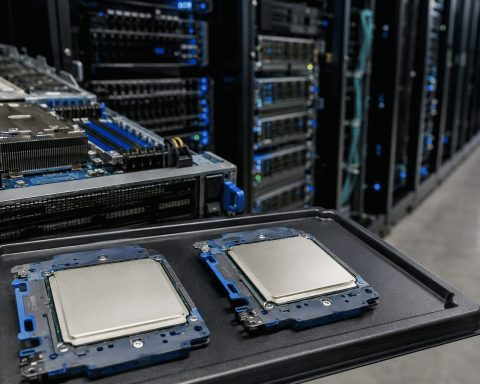
The sharp gain puts a speculative, low-market-cap stock into the orbit of the AI hardware and space-defense trade. Rocket One said it will focus on nanomagnetic AI chip technology, a type of computing architecture that uses nanoscale magnetism rather than standard silicon electron flow, aimed at low-power, radiation-tolerant computing for satellites and defense systems.
“Space is moving from a launch story to a compute story,” Chief Executive Robb Knie said in the company’s release. He added that the RKTO ticker signals that the company’s focus is now “on the orbital economy.”
The company also said its legacy biotechnology pipeline, including HT-001, HT-KIT, HT-ALZ and a GDNF-based metabolic program, will continue under a wholly owned subsidiary. That keeps the biotech assets alive, but the market’s reaction on Wednesday centered on the new space-AI identity.
One day earlier, Hoth said the U.S. Patent and Trademark Office had issued a notice of allowance for its HT-KIT therapeutic, a mast-cell disease program. Knie called that patent action a “meaningful validation” of the mast cell platform, and the company said it expected to finalize an investigational new drug submission in 2026, a filing needed before first human trials can begin in the United States. PR Newswire
The pivot puts Rocket One in a crowded field, even if not in a direct apples-to-apples race. Rocket Lab describes itself as an end-to-end space company spanning launches, spacecraft design, satellite components and flight software, while Redwire calls itself an integrated space and defense technology company using AI-enabled autonomous operations across domains and orbits.
There is a harder side to the story. In its latest quarterly filing, Hoth reported no revenue, a first-quarter net loss of about $2.7 million, cash and equivalents of about $4.0 million at March 31, and an accumulated deficit of about $75.6 million. The filing said those conditions raised substantial doubt about the company’s ability to continue as a going concern, meaning whether it can keep operating without more capital.
The company has also been under Nasdaq pressure. A May filing showed Hoth had received a notice that it was not in compliance with Nasdaq’s $1 minimum bid-price rule after trading below that level for 30 straight business days, though the notice had no immediate effect on trading. It has until Oct. 27 to regain compliance by closing at or above $1 for at least 10 consecutive business days.
The rally, if it holds above $1, could help with that listing problem. But it does not by itself validate the new technology plan, bring in revenue, or remove the need for financing.
The downside case is straightforward: the licensed chip technology is early stage, has no commercial product, and has not been validated in space environments, the company said in its risk language. Rocket One also cited the need for substantial capital, long semiconductor development timelines, larger competitors, license milestones, intellectual-property risks and export-control issues tied to defense and space work.
Related articles: Artificial Intelligence