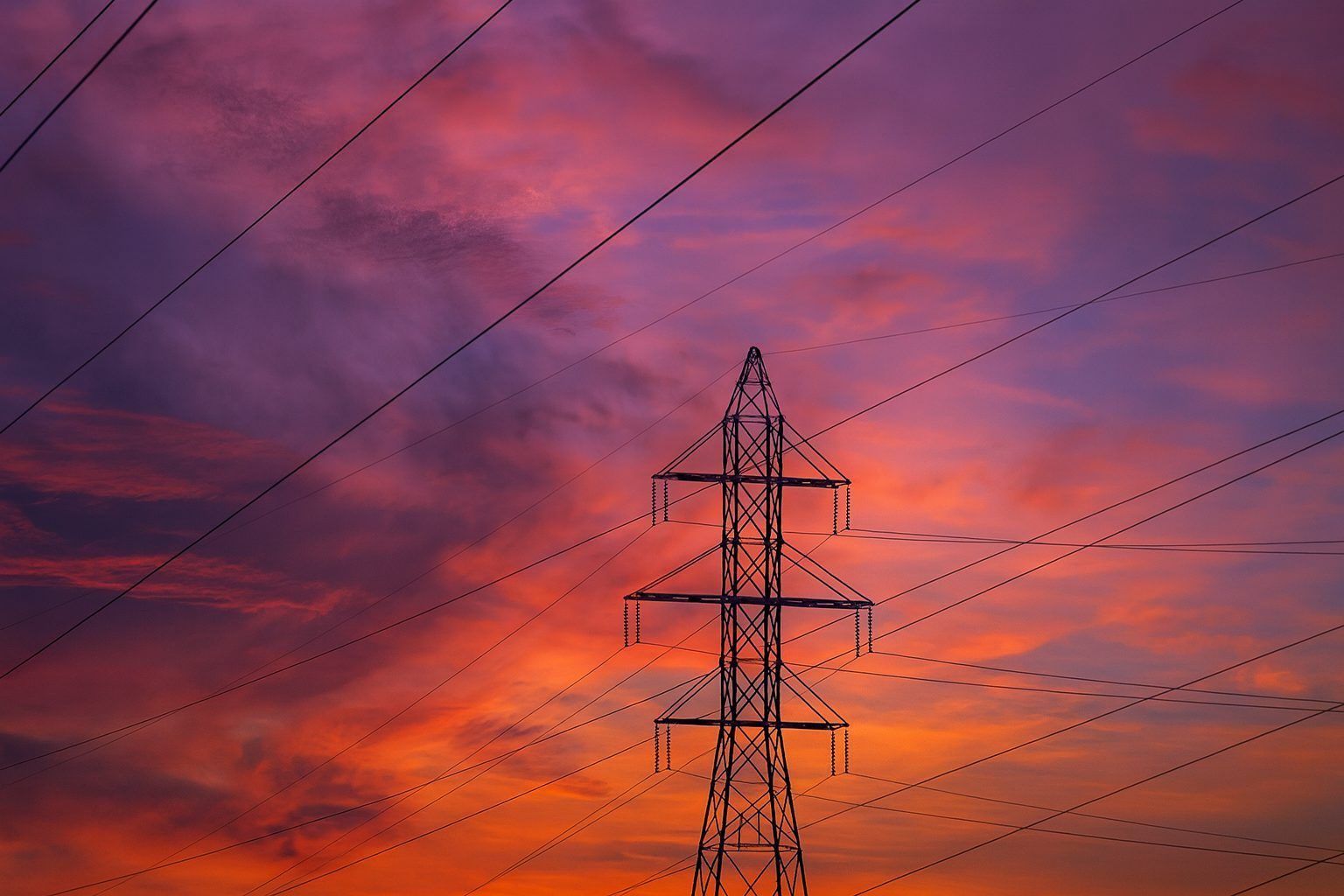

An unusually harsh early December cold snap has pushed Hydro‑Québec’s electricity network close to its maximum capacity, triggering two rare peak-demand alerts and reigniting debate over how ready the province is for a colder‑than‑normal winter.
According to a CBC News report syndicated through multiple outlets, the public utility scrambled to meet surging demand as temperatures plunged across southern Quebec, warning customers to cut consumption during critical hours to avoid overloading the grid.
At the same time, meteorologists say December 2025 is only getting started: the pattern driving this early cold is expected to keep central and eastern Canada colder than average through much of the month.
A deep freeze before winter even starts
Meteorological winter only technically began on December 1, but Montreal and much of southern Quebec have already been living in mid‑January conditions.
Local coverage from MTL Blog and Montreal Secret describes how:
- After a snowy start to the month, Montreal slid into a prolonged “deep freeze,” with wind chills forecast to reach around –25°C by the first Thursday of December—“unusually harsh for the first days of December,” according to Environment Canada guidance cited in local reporting.MTL Blog
- A second article warns of an “EXTREME COLD ALERT,” noting that from Thursday, December 4, Montreal’s temperatures fall below –10°C, dropping to about –14°C in the evening and hitting –18°C on the night of Sunday, December 7, with a “feels like” temperature near –23°C.Montréal Secret
These numbers are well below typical early‑December norms for the city, and even undercut the average temperatures for February, traditionally Montreal’s coldest month.
And the pattern isn’t a fluke. The Weather Network’s national December outlook, published December 1, warns that colder‑than‑normal temperatures are expected to dominate the month from Saskatchewan east through the Maritimes, with pulses of Arctic air “having staying power” through the final weeks of 2025.The Weather Network
On December 9 itself, Montreal is bracing not just for cold but for a snow‑laden storm: a special weather statement from Environment Canada calls for more than 15 cm of snow Wednesday and Thursday, with icy roads, reduced visibility, and sub‑zero daytime highs around –2°C to –5°C.
Why Hydro‑Québec’s grid is so sensitive to cold snaps
Hydro‑Québec is often described as an energy giant, and in many ways it is. The province’s hydro and wind fleet can generate nearly 40,000 megawatts (MW) of clean electricity—more than enough to supply Quebec in most seasons.
Winter cold snaps are the exception. The utility itself explains that:
- Quebec consumes nearly twice as much electricity in winter as it does in summer.
- On cold days, heating alone can account for up to 80% of an average household’s daily electricity use.
- A handful of “winter peak” hours—mainly 6–9 a.m. and 4–8 p.m. between December 1 and March 31—drive the bulk of strain on the system.Hydro-Québec+1
Hydro‑Québec’s own case studies show how extreme temperatures translate almost directly into demand spikes. During a brutal cold spell on February 3, 2023, temperatures plunged to –48°C in parts of Quebec and –52°C at Le Massif, pushing demand to about 43,124 MW, a historic record at the time.
That’s above the province’s typical generating capacity—meaning Hydro‑Québec must juggle every available resource, including imports from neighbouring provinces and U.S. markets, to keep the lights (and heaters) on.
Two “rare alerts” as demand nears the limit
Against this backdrop, it’s easier to understand why the early December 2025 cold snap triggered such concern.
A CBC News item (syndicated via outlets like Yahoo and Unpublished) reports that the recent cold wave pushed Hydro‑Québec’s network “near its limit,” forcing the utility to issue two rare alerts as it scrambled to meet the surge in demand.Unpublished+1
While Hydro‑Québec has not publicly framed these as “near‑blackout” moments, independent industry coverage offers a sense of how tight margins can become:
- In one recent extreme cold snap, Quebec’s grid hit 40,300 MW around 8 a.m., breaking a previous record of 39,000 MW and prompting urgent appeals for conservation.
- During that event, temperatures in Montreal dropped to –24°C with a wind chill near –29°C, while Environment Canada maintained extreme cold warnings across southern Quebec, cautioning that wind chills around –40°C could persist into the following morning.
Though those numbers come from a separate but similar cold‑snap analysis, they illustrate the razor‑thin buffer between “system under stress” and “not enough capacity.”
Environment Canada’s own criteria highlight how serious these warnings are: in much of Quebec (excluding the far north), extreme cold warnings are typically triggered when temperatures or wind chills of –38°C or colder are expected to last at least two hours.
So when a CBC‑reported event drives Hydro‑Québec to issue two rare peak‑demand alerts in early December, it signals that the grid is already flirting with limits before winter has reached its traditionally coldest phase.
Peak‑demand events: what they are and how they work
To manage these crunch periods, Hydro‑Québec has built an increasingly sophisticated ecosystem of peak‑demand programs for homes and businesses:
- Winter peaks occur from December 1 to March 31, mostly during 6–9 a.m. and 4–8 p.m., when heating and energy‑intensive appliances are used at the same time.
- Residential “Rate Flex D” and business demand‑response programs offer lower electricity rates most of the winter in exchange for higher prices during peak‑demand events, nudging customers to shift usage.Hydro-Québec+1
- The utility’s smart‑home subsidiary Hilo explains that peak‑demand events can be called up to 30 times per winter, lasting four hours (6–10 a.m. and/or 4–8 p.m.) and are “often scheduled during periods of extreme cold.”Hilo
Customers who opt in receive advance notifications—typically the evening before—so they can pre‑heat their homes, lower thermostats during the peak window, and postpone heavy appliance use. Hilo says households can save up to 20% on winter electricity bills by leaning into these events.
Hydro‑Québec’s own data show these programs are already making a measurable dent. Households on Rate Flex D or Hilo, along with participating businesses, reduced peak demand by about 2,330 MW in winter 2024–2025—roughly equal to the entire installed capacity of the La Grande‑2‑A generating station.
To increase transparency, the utility has even published an open dataset of peak‑demand events for the 2025–2026 winter season, covering December 1, 2025, to March 31, 2026, and detailing when participants were asked to reduce load.
Reliability outlook: stressed, but not unprepared
Despite the drama of near‑capacity alerts, regional reliability planners say Quebec is entering the 2025–2026 winter in better shape than many might assume.
The North American Electric Reliability Corporation (NERC), in its 2025–2026 Winter Reliability Assessment, notes that:
- The NPCC‑Québec area (essentially the province’s bulk power system) is winter‑peaking and heavily hydro based.
- Quebec is projected to have adequate capacity margins above required reserves for the coming winter.
- No major hydropower performance or fuel supply issues are expected during extreme cold, in part because facilities are designed to operate in such conditions.
- Since last winter, demand‑side management capacity has increased by about 450 MW, partially offsetting a modest reduction in firm import capability.
Still, NERC cautions that extreme cold events come with real risks: they assume up to 1,500 MW of unplanned outages in their scenarios and rely on emergency imports and temporary reserve reductions as backstops.
Hydro‑Québec’s own financial reporting underscores the stakes. Its bulletin for the first nine months of 2025 notes that winter 2024–2025 was about 3°C colder than the previous year, driving higher electricity use in Quebec and boosting net income—but also highlighting how sensitive the system is to temperature swings.
Cold snaps in a warming climate
The irony of Quebec straining under extreme cold while the planet is on track for record heat is not lost on scientists.
On December 9, the EU’s Copernicus Climate Change Service reported that 2025 is likely to be the second‑ or third‑warmest year on record, probably surpassed only by 2024. It also marks the first three‑year period (2023–2025) in which the average global temperature likely exceeded 1.5°C above pre‑industrial levels, at least temporarily.
For Hydro‑Québec planners, climate change is not just a background statistic; it’s embedded in their forecasting models. A case study produced with climate consortium Ouranos shows that:
- Extreme cold temperatures in Quebec are warming faster than average winter temperatures, but they remain critical drivers of peak electricity demand.
- Hydro‑Québec has overhauled its demand‑forecasting system to incorporate new climate normals and evolving trends in temperature extremes.
In plain language, a warmer climate does not mean cold snaps vanish; instead, it may mean fewer but potentially more disruptive extremes, layered on top of electrification trends (EVs, heat pumps, industrial decarbonization) that push winter demand steadily higher.
How Quebecers can help stabilize the grid this winter
For households and businesses, the December 2025 cold snap is a preview of how the rest of the season could play out. Whether you’re motivated by climate concerns, bill savings, or just avoiding blackouts, the advice from Hydro‑Québec and its partners is remarkably consistent.
During peak‑demand alerts (typically 6–10 a.m. and 4–8 p.m.):
- Turn thermostats down 1–3°C, especially in rooms you’re not using.
- Pre‑heat your home before the event window starts, then let temperatures drift a bit lower during the peak.
- Delay heavy appliance use—ovens, dryers, dishwashers—until after the event ends.
- Avoid long hot showers and unnecessary hot‑water use during these hours.
- If you drive an EV, charge it overnight or between peaks, not during them.
Over the full winter season:
- Consider enrolling in Rate Flex D (residential) or demand‑response offers (business), which reward you for shifting load away from peaks.
- Look into smart thermostats or Hilo’s smart‑home service to automate temperature reductions during peak events.
- Weather‑proof your home—simple measures like sealing drafts and adding window insulation reduce the amount of electricity you need to stay comfortable.
- Watch for official alerts from Hydro‑Québec and Environment Canada, especially during extreme cold warnings where frostbite can occur within minutes on exposed skin.
Individually, these steps may feel small. But Hydro‑Québec’s numbers show that when hundreds of thousands of customers respond, they can free up gigawatt‑scale capacity—enough to avoid expensive imports, keep rates lower, and reduce the risk of emergency outages.
The road ahead: watching the rest of December
Short‑term, the focus is on getting through the current stretch of active weather:
- Montreal faces a mid‑week snowstorm with over 15 cm expected, followed by stubborn sub‑zero highs around –5°C and a bitter overnight low near –16°C by Sunday.
- Seasonal outlooks point to a colder‑than‑normal December across central and eastern Canada, with repeated intrusions of Arctic air.
Medium‑term, open data on peak‑demand events and the province’s growing fleet of smart thermostats, EV chargers, and flexible tariffs will show whether Quebecers can consistently shave enough load off winter peaks to keep the system comfortable—even when the air outside is not.
And long‑term, the December 2025 cold snap will likely be remembered less as a freak event and more as a stress test: a real‑world trial of how a hydro‑dominated, increasingly electrified province copes with cold snaps in a world that is, paradoxically, warmer than ever.
Related articles: Energy