
New Delhi, July 11, 2026, 19:41 (IST)
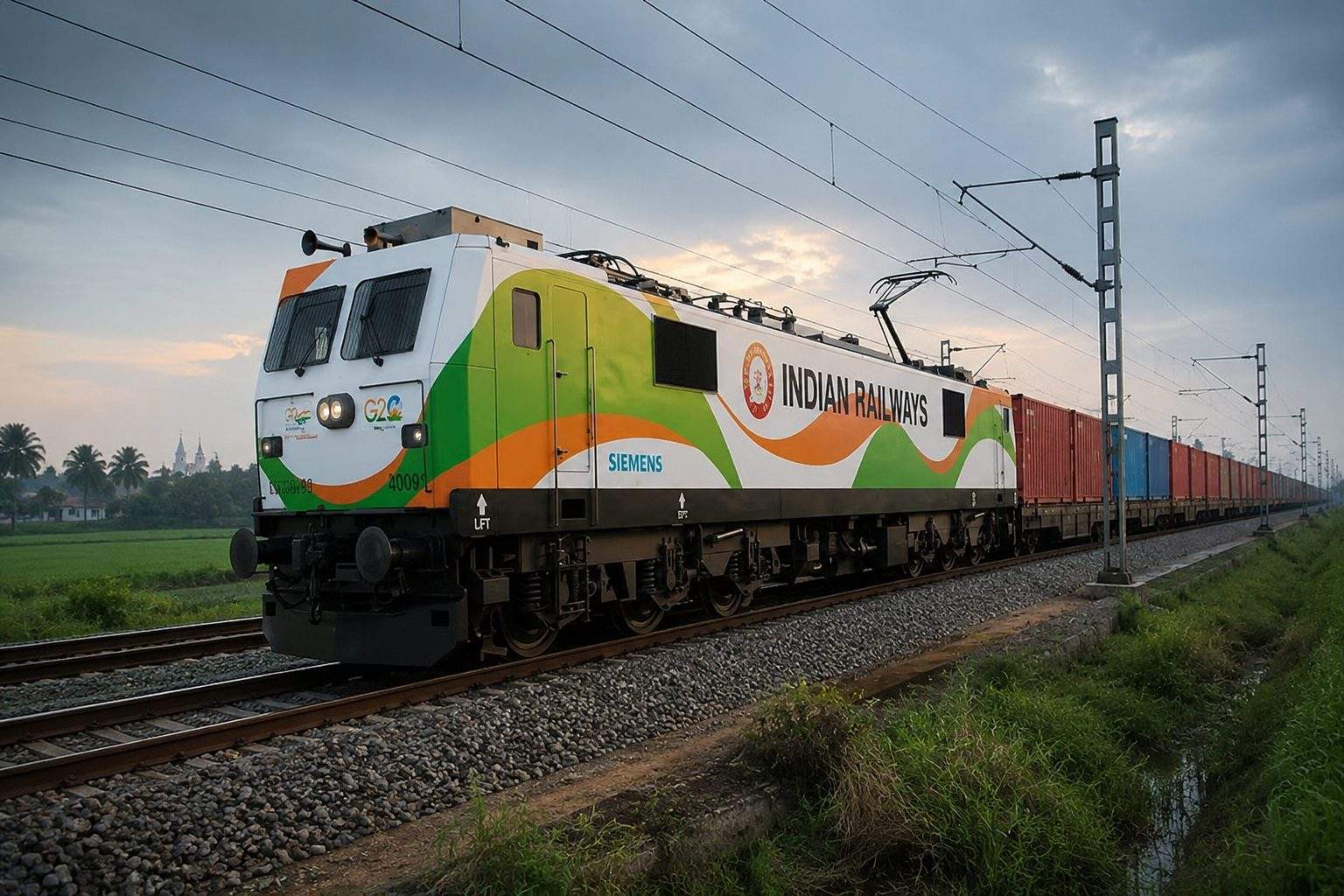
Indian Railways’ ₹381 crore headline from Friday is for two separate projects, not only a Kavach rollout. Of that, ₹206 crore—about 54.1%—goes to Kavach, the train-protection tech that can brake a train if a driver skips a stop signal. The balance ₹175 crore will fund more loco maintenance space at Raipur.
This matters because Delhi Division’s Version 4.0 sanction lays down a spending marker at ₹206 crore for 680 route km—measured by corridor length, not by each track—coming out to ₹30.3 lakh a km. That lines up with three other ministry sign-offs since June 15, landing right on a ₹30.0 lakh weighted average, based on release calculations.
| Approval | Route km | Sanction, ₹ crore | Implied ₹ lakh per route km |
|---|---|---|---|
| Ahmedabad Division, June 15 | 598 | 140 | 23.4 |
| Ambala Division, June 15 | 811 | 201 | 24.8 |
| East Coast Railway, June 22 | 631 | 270 | 42.8 |
| Delhi Division, July 10 | 680 | 206 | 30.3 |
| Weighted total | 2,720 | 817 | 30.0 |
Headline figure is sanction per route kilometre; project scopes differ.
The four sanctions together add up to 2,720 route km and ₹817 crore. But the rates vary a lot—Ahmedabad is at ₹23.4 lakh, while East Coast Railway jumps to ₹42.8 lakh. That’s an 83% difference, and the releases don’t say why. The average rate is just a benchmark, not a set tariff.
Central Railway hit an operational milestone this week as it commissioned Standard Kavach on its 149.476-km Solapur-Wadi stretch—marking the first such project in the Solapur Division. The rollout included 1,234 radio-frequency identification tags, about 8.3 tags per route km. The system’s collision-prevention and SOS features underwent tests set by the Research Designs and Standards Organisation.
The Railways said in March it had installed Kavach on 3,103 route km and 4,277 locomotives, with work still going on across 24,427 km and 8,979 more locomotives. The four latest clearances cover routes equal to about 87.7% of what was in place as of March. Using the recent ₹30.0 lakh average per km, Railways’ next 9,000-km goal would run to about ₹2,700 crore in route deployment costs, though that’s not a formal estimate and doesn’t factor in equipment or scope changes.
Raipur is getting a new round of capex. “Homing” refers to assigning each locomotive to a shed for regular inspection and repairs. The ₹175 crore will add space for 250 electric locomotives, coming to ₹70 lakh each per slot. No supplier was named in the approval notice. DD News
Kavach-linked stocks didn’t all move higher after Friday’s news. HBL Engineering (NSE:HBLENGINE) and Kernex Microsystems (NSE:KERNEX) gained on the day, but Quadrant Future Tek (NSE:QUADFUTURE) dropped. All three still closed down for the July 3-10 week.
| Company | Friday close, ₹ | Friday move | July 3-10 |
|---|---|---|---|
| HBL Engineering | 765.85 | rose 0.75% | fell 6.26% |
| Kernex Microsystems | 2,157.50 | added 1.58% | dropped 9.30% |
| Quadrant Future Tek | 413.75 | slipped 3.36% | down 11.93% |
The race now depends on where each firm stands in the delivery timeline. HBL has a ₹1,714 crore contract from Chittaranjan Locomotive Works to supply Kavach 4.0 gear for locomotives and must finish in 12 months. Kernex, on July 2, said it commissioned a 207-km system in the Tundla-Panki Dham stretch. Quadrant, in May, got the green light to start passenger trials, the last step before commercial use.
The cost curve isn’t a locked-in contract price. Approvals still come before tendering, formal awards, certification or booking sales. Siddharth Maurya, founder and MD at Vibhavangal Anukulakara, said investors are watching “delivery timelines, margin stability, and cash-flow discipline.” Harshal Dasani, INVasset PMS business head, said “slip-ups could trigger sharp resets.” Delays or having cash stuck in unfinished work could limit earnings, even if sanction volumes go up. Moneycontrol
Trading is set to resume on Monday, July 13. Investors are waiting for tender documents and formal awards to be released, naming suppliers and spelling out execution periods. The NSE’s 2026 calendar shows no holiday for Monday. If no new contract is awarded, numbers out over the weekend only indicate available funds, not actual booked revenue.
Related articles: Technology


![Australia Stock Market Today 26/08/2026 [UPDATE: 10:37 AEST] [Woolworths and Lovisa Lift ASX Before CPI]](https://ts2.tech/wp-content/uploads/2026/08/AU-market-dashboard-2026-08-26-1037-480x384.jpg "Australia Stock Market Today 26/08/2026 [UPDATE: 10:37 AEST] [Woolworths and Lovisa Lift ASX Before CPI]")