
GEORGETOWN, August 1, 2026, 09:15 GYT
- Stabroek consortium recouped $55 billion in costs nearly two years ahead of schedule.
- The operator projects a reduction of 100,000 booked barrels per day for the third quarter. Nevertheless, it maintains the outlook that free cash flow from Guyana will double by 2030.
- U.S. markets remain shut. Brent finished July up 24% at $90.12.
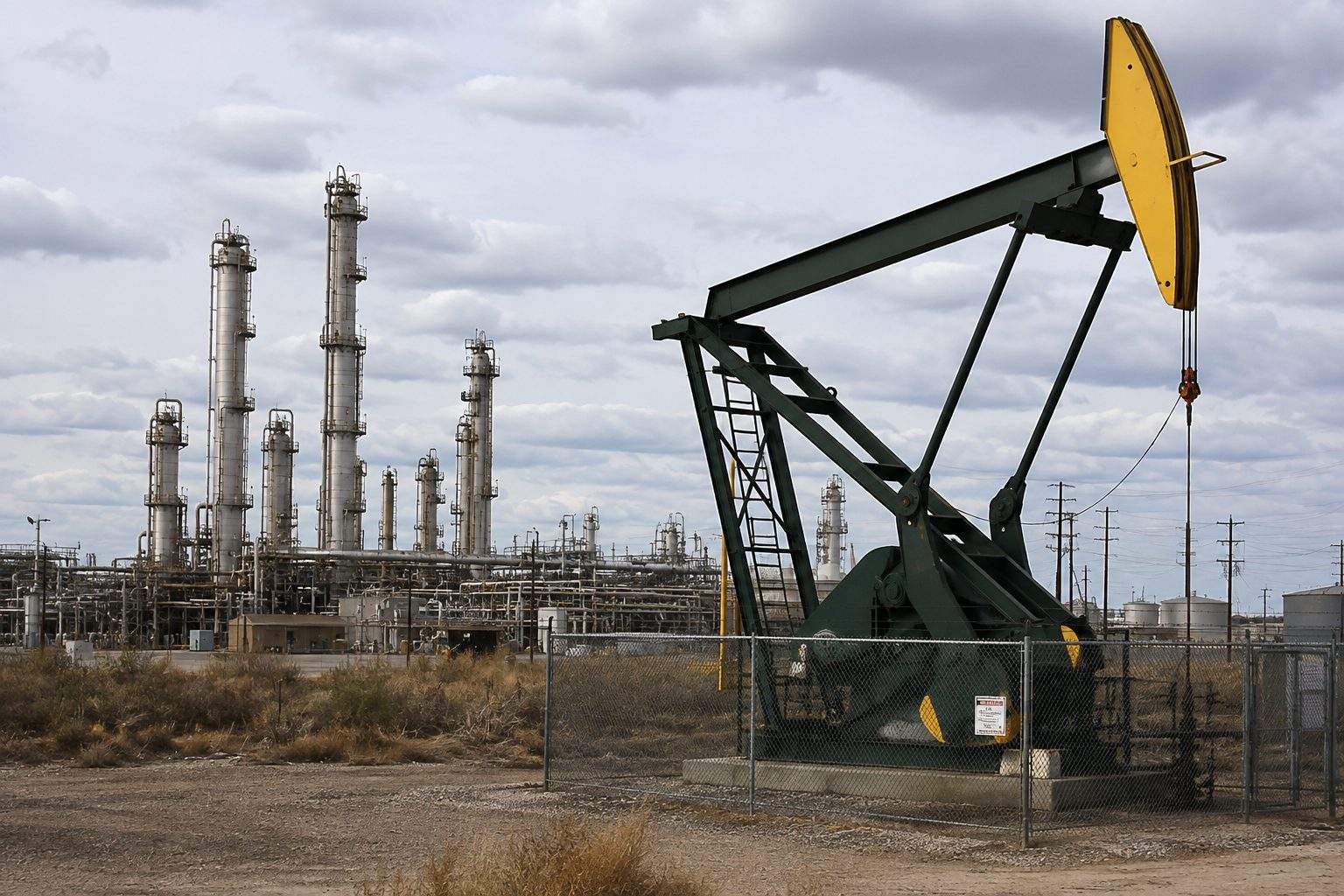
Guyana is set to secure greater offshore revenues following Exxon Mobil Corp NYSE:XOM and its consortium surpassing $55 billion in recovered costs. The achievement came nearly two years ahead of schedule. Production at Stabroek now surpasses 900,000 barrels per day.
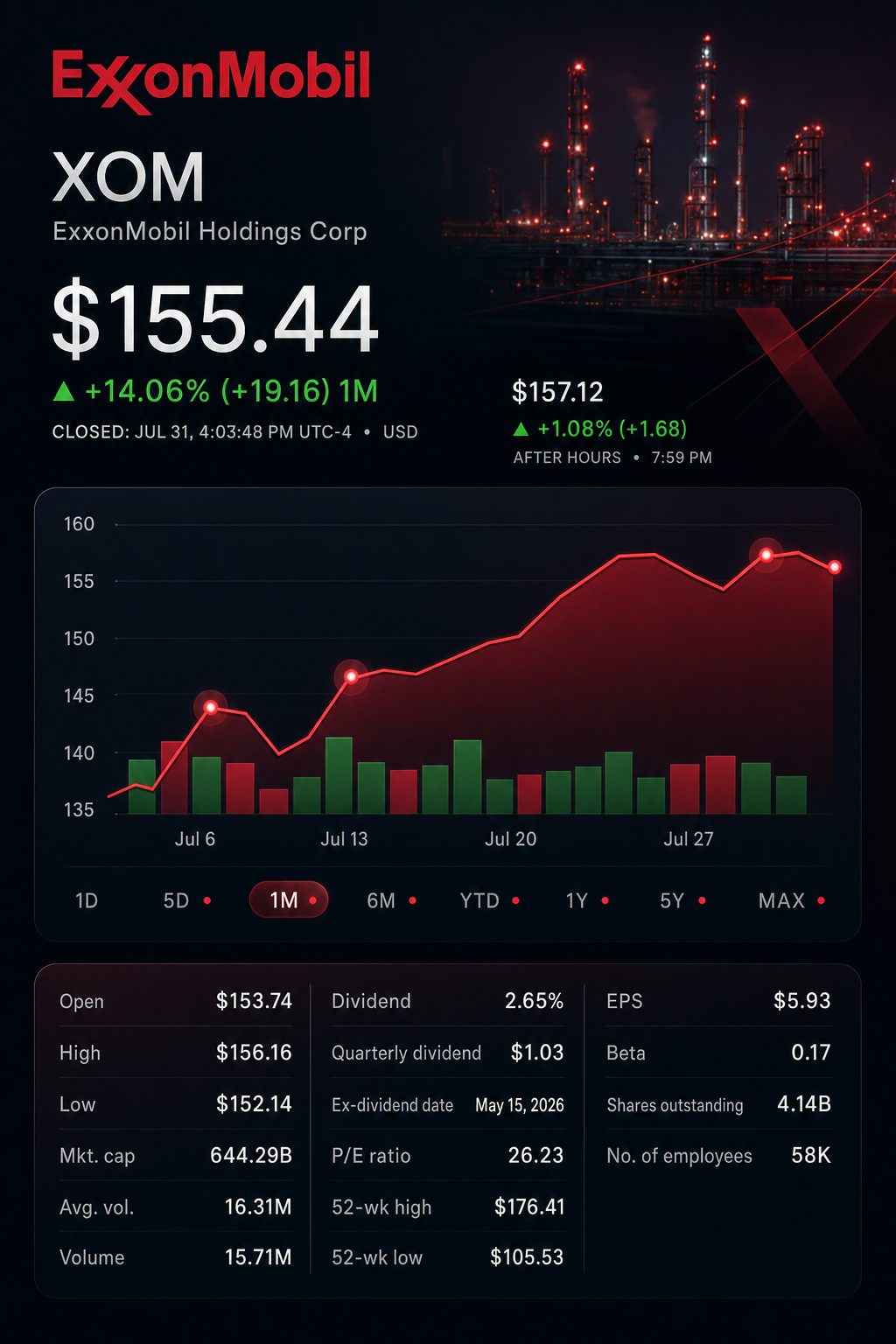
The most significant indicator for investors is the unexpected one. Exxon projects that its recorded Guyana entitlement will decrease by around 100,000 bpd this quarter. Despite this, the company states that Guyana free cash flow is on track to double by 2030 compared to 2025.
The asset transitions from cost recovery to profit sharing. As much as 75% of monthly oil income may be used to cover approved expenses. Guyana obtains half of the leftover amount, along with a 2% royalty.
Example: Guyana share taken as cost oil decreases
| Cost oil limit | Guyana’s total contract share | Annualized total value |
|---|---|---|
| 75% maximum | 14.5% | $4.3 billion |
| 50% | 27.0% | $8.0 billion |
| 25% | 39.5% | $11.7 billion |
| 0% hypothetical | 52.0% | $15.4 billion |
Based on a 900,000-bpd baseline and Brent’s Friday close of $90.12, calculations show Guyana’s share as the 2% royalty plus half of the remaining oil after cost recovery. The figures reflect contract sensitivities rather than fiscal forecasts. They do not factor in crude discounts, ongoing expenses, cargo scheduling or effects from tax payments.
The sensitivity highlights how volume optics may be deceptive. The 100,000-bpd decrease in entitlement is equal to roughly $3.3 billion in annualized gross crude value at Friday’s Brent price. However, this does not correspond to an equivalent cash loss.
Exxon has a 45% stake in Stabroek. Chevron Corp NYSE:CVX possesses 30%, and CNOOC Ltd SHA:600938 holds 25%. Their operational footprint continues to grow with the launch of Uaru and Whiptail.
Stabroek working-interest exposure increases alongside output growth
| Gross block production | Exxon, 45% | Chevron, 30% | CNOOC, 25% |
|---|---|---|---|
| 900,000-bpd starting point | 405,000 bpd | 270,000 bpd | 225,000 bpd |
| 1.15 million after Uaru phase | 517,500 bpd | 345,000 bpd | 287,500 bpd |
| 1.40 million after Whiptail phase | 630,000 bpd | 420,000 bpd | 350,000 bpd |
The figures represent pro-rata working-interest volumes and do not reflect booked accounting entitlement. Both Uaru and Whiptail are designed for 250,000 bpd capacity. Uaru is scheduled for 2026 startup, with Whiptail set for 2027.
The expansion distinguishes physical growth from entitlement reflected in reports. Exxon’s fifth floating production unit is planned to come online in the fourth quarter, boosting capacity by 250,000 bpd.
U.S. markets will be shut on Saturday. Exxon finished Friday’s session at $155.44, a decline of 1.0%, after posting results that fell short of quarterly forecasts. Chevron advanced 2.4% to close at $196.83, exceeding expectations.
Friday peer review summary
| Company | Friday close | Friday move | Weekly move | Q2 adjusted earnings | Adjusted EPS |
|---|---|---|---|---|---|
| Exxon | $155.44 | down 1.0% | off 1.0% | $14.7 billion | $3.52 |
| Chevron | $196.83 | up 2.4% | gained 1.0% | $12.0 billion | $6.06 |
Weekly shifts reflect closing prices from July 31 versus July 24 and do not account for dividends. Exxon ended at $156.94 on July 24. Chevron finished at $194.79.
Brent closed at $90.12 per barrel on Friday, rising 1.2%. The contract advanced 24% over July. Oil price volatility is expected to steer the market when U.S. trading resumes Monday, August 3. Exxon’s entitlement guidance is set to influence the Guyana outlook.
Chief Financial Officer Neil Hansen stated the projects were delivered at “an unprecedented pace and cost advantage.” This rapid execution reduced the cost bank and accelerated Guyana’s timeline for receiving a larger share of profits. Reuters
Bloomberg Opinion characterized the boom as a test of the resource curse, questioning if oil-fueled expansion will benefit households contending with rising living expenses. The issue of cost recovery currently heightens fiscal pressures.
Peter Ramsaroop, serving as Guyana’s chief investment officer, dismissed that argument in an op-ed published Saturday. “Oil is not our destination; it is our catalyst,” he stated. Ramsaroop additionally noted issues such as inflation, labour shortages, urbanisation, and governance challenges. Guyana Chronicle
Initial findings from the IMF staff delivered a more limited assessment. Real GDP increased by over 19% in 2025, with non-oil sectors expanding close to 14%. Average inflation stood at 3.3%, and the fiscal deficit declined to 5.5% of GDP. The staff did not observe definite signs of overheating.
The IMF maintained calls for more rigorous wage oversight, enhanced oil auditing, and stricter procurement regulations. The fund projects increased inflows to the Natural Resource Fund as cost recovery by operators wraps up. Sustained elevated prices are likely to encourage higher savings, it added.
Natural Resource Fund starting point prior to the cost-bank transfer
| Fund metric | Q1 2026 | Reference point |
|---|---|---|
| Total inflows | $577.60 million | $867.65 million in Q4 2025 |
| Profit-oil inflows | $466.71 million | $769.43 million in Q4 2025 |
| Royalty inflows | $110.89 million | $83.22 million in Q4 2025 |
| Transfer to government budget | $400.00 million | $2.374 billion approved for 2026 |
| End-quarter fund value | $3.643 billion | $3.435 billion at the end of Q4 2025 |
Data are sourced from the Bank of Guyana’s official quarterly report for March.
The fund data is from before the cost-recovery threshold was met. Subsequent receipts will indicate the extent to which the contractual adjustment benefits sovereign reserves, as well as how efficiently increased earnings flow into the local economy.
Shareholders in Guyana can expect the upcoming stage to emphasise cash returns rather than reported volumes. For the government, this approach broadens fiscal flexibility. Success for both hinges on prudent management of capital and government expenditure.
Risks: A drop in oil prices, new project expenditures or delays getting started might reduce the increase in cash flow. Some of Stabroek is still under force majeure due to the Venezuela maritime dispute. Lax spending oversight could further elevate risks of overheating and governance issues.
Related articles: NYSE:XOM







![Australia Stock Market Today 08.22.2026 [UPDATE: 08.22.2026 08:37 AEST] [Weekly Recap and Week Ahead: Healthcare Leads, CPI Looms]](https://ts2.tech/wp-content/uploads/2026/08/AU-market-dashboard-2026-08-22-0837-480x384.jpg "Australia Stock Market Today 08.22.2026 [UPDATE: 08.22.2026 08:37 AEST] [Weekly Recap and Week Ahead: Healthcare Leads, CPI Looms]")