
Dec. 25, 2025 — U.S. markets are closed for Christmas, but the industrials stocks story is still moving fast. On the final shortened session before the holiday, the Dow and S&P 500 finished at record closing highs, and traders were already looking ahead to 2026 with rate cuts, tariff policy, and AI-driven infrastructure spending at the center of the debate.
For investors focused on the Industrials sector—from aerospace and defense to machinery, logistics, rail, electrification, and data-center infrastructure—today’s headlines and forecasts paint a clear picture: industrial stocks are being pulled by two powerful forces at the same time.
- The classic industrial cycle (manufacturing output, capital spending, freight volumes, construction, and rates).
- A structural, multi-year investment wave tied to defense modernization, grid upgrades, and AI data center buildouts.
Below is a detailed, Google News–style roundup of the most relevant industrials news, forecasts, and sector analyses available as of Dec. 25, 2025, plus the themes that matter most for 2026.
Why Industrials Stocks Are in Focus Going Into 2026
Industrials stocks typically do best when economic growth is steady (or re-accelerating), financing conditions are easing, and companies are willing to spend on equipment, buildings, and capacity.
That’s why the sector is so sensitive to the current macro crosscurrents:
- Rate-cut expectations are back in the spotlight. In the Christmas Eve rally, markets were still pricing roughly 50 basis points of Federal Reserve cuts next year, even as expectations for an immediate January move looked low.
- At the same time, parts of U.S. manufacturing remain sluggish. The latest data showed factory production was unchanged in November after a decline in October, with motor vehicle output pressured after the expiration of EV tax credits.
In other words: the near-term cycle is mixed—but the longer-term industrial investment pipeline remains active.
Market Backdrop on Dec. 25, 2025: Santa Rally, Thin Liquidity, Big Macro Bets
On Dec. 24 (the last trading day before the holiday closure), U.S. stocks extended gains in holiday-thin trading, with the Dow and S&P 500 closing at record highs. Reuters noted volumes were far below normal, underscoring how quickly sentiment can swing in late December.
For industrials investors, that late-December setup matters because it influences:
- Risk appetite for cyclicals
- Funding conditions for big-ticket projects
- The market’s tolerance for valuation in “quality industrial compounders” versus deep cyclicals
The Fed’s Latest Signal: A Cut Now, But a More Complicated 2026 Path
The Fed cut rates on Dec. 10, lowering the federal funds target range by 25 bps to 3.50%–3.75%, and emphasized that future moves depend on incoming data and the balance of risks.
A few details industrials investors are watching closely:
- The Fed’s implementation note confirmed the operating framework around the new target range.
- Reuters described the move as a “divided” decision and highlighted that policymakers’ projections pointed to only one rate cut in 2026, revealing a less-uniform path than markets often assume. Reuters
- Nuveen’s FOMC commentary characterized the policy message as hawkish-leaning in tone, even with cuts continuing—important for rate-sensitive industrials like machinery and construction-linked names.
What it means for industrials stocks: if the market gets steady rate relief, capital goods and economically sensitive transport names often benefit. If inflation/tariffs force a higher-for-longer reset, the market tends to favor defense and “must-build” infrastructure plays instead.
Industrials Sector Performance: Strong 2025, But Investors Are Paying for Quality
One reason industrial stocks remain a top conversation going into 2026 is performance and valuation. The Industrial Select Sector SPDR Fund (XLI)—a widely used proxy for U.S. industrials—shows a sector that’s no longer “cheap,” but still expected to grow.
State Street’s fund characteristics for XLI show:
- 80 holdings
- Forward-looking valuation metrics in the mid-to-high range (including FY1 P/E and broader P/E measures)
- An estimated 3–5 year EPS growth expectation in the low double digits SSGA
Translation: industrials are being priced less like a deep cyclical trade and more like a blend of cyclical + secular growth (defense, electrification, and AI infrastructure).
Today’s Key Industrials Stocks News on and Around Dec. 25, 2025
Because markets are closed today, much of the actionable industrials news is concentrated in the final pre-holiday stretch (Dec. 22–24) and this morning’s Christmas Day analysis pieces.
1) Aerospace supply chain consolidation: Howmet’s $1.8B deal
Howmet Aerospace agreed to buy Consolidated Aerospace Manufacturing, Stanley Black & Decker’s aerospace unit, for about $1.8 billion in cash, a deal expected to close in the first half of 2026. Reuters reported the unit is projected to generate $405–$415 million in 2025 revenue.
Why it matters for industrials stocks: aerospace is one of the most important industrial sub-cycles right now. Consolidation can strengthen pricing power and deepen exposure to long-duration production ramps and aftermarket demand.
2) Defense modernization tailwind: Boeing’s $2B B-52 engine order
Boeing received a $2 billion order tied to the B-52 commercial engine replacement program, according to the Pentagon (via Reuters).
Why it matters: defense spending is a major pillar inside industrials, and these multi-year modernization programs tend to be less sensitive to short-term economic slowdowns.
3) AI data center buildout is becoming an “Industrials boom,” not just a tech story
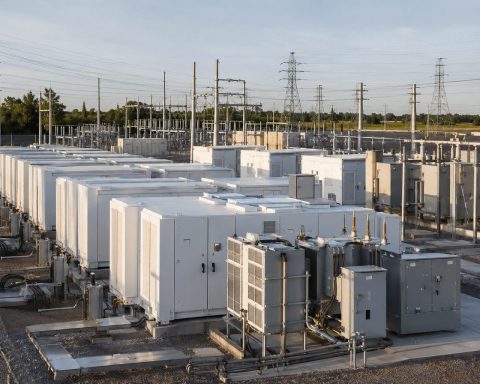
If 2024–2025 was about AI chips and hyperscaler capex headlines, late 2025 has increasingly been about the industrial plumbing behind AI: power distribution, turbines, liquid cooling, modular buildouts, and grid interconnections.
Key developments:
- Eaton announced it will acquire Boyd’s thermal business for $9.5 billion to strengthen liquid cooling exposure; Boyd Thermal forecast $1.7 billion in 2026 sales, with much tied to data centers.
- Vertiv said it would acquire PurgeRite for about $1 billion to expand liquid cooling services.
- Caterpillar and Vertiv announced a collaboration focused on integrated, on-site energy optimization and data center power/cooling architectures, aiming to simplify deployment and accelerate “time-to-power.” Vertiv Holdings
- The Associated Press reported federal regulators are allowing (and clarifying rules for) arrangements that let massive data centers effectively plug directly into power plants—an infrastructure shift with major implications for industrial power markets.
Why it matters for industrials stocks: this is the clearest bridge between AI growth and industrial earnings. It benefits electrical equipment, engineered components, thermal management, energy systems, and industrial services.
Forecasts and Strategy Views: What Big Firms Expect for 2026 (and Why Industrials Care)
Morgan Stanley: “Late cycle? Yes. End of cycle? No.”
In its 2026 equity outlook, Morgan Stanley’s Andrew Slimmon argued the bull market has entered later stages, but expects another positive year for U.S. equities due to:
- Historically positive “fourth years” of longer bull markets
- A supportive backdrop when the Fed is cutting
- Fiscal stimulus expectations
- Cautious sentiment (not euphoric) Morgan Stanley
He also flagged a classic risk: midterm election years often see sizable corrections, and a hawkish Fed pivot could change the story quickly.
Industrials angle: industrials often outperform when the market broadens beyond mega-cap tech. Morgan Stanley specifically noted AI productivity gains could help the “other” companies outside the biggest names catch up—an environment that historically supports diversified industrial leaders. Morgan Stanley
Schwab: 2026 may be “unstable,” not merely uncertain
Schwab’s 2026 outlook described an environment shaped by tariffs, inflation dynamics, and shifting relationships in the economy. Schwab also expects central bank rate cuts responding to labor-market weakening and sees potential strength in international stocks due to relative valuations.
Industrials angle: industrials are exposed to tariffs (input costs, supply chains) but can also benefit from domestic production shifts and infrastructure buildout that often accompany policy changes.
BlackRock: constructive on stocks, but balance matters
BlackRock’s 2026 playbook emphasizes staying diversified, noting that bonds have again acted as a stabilizer and that many investors remain constructive on equities while seeking balance through bonds and alternatives.
Industrials angle: this supports a “barbell” industrials approach—pairing secular industrial compounders (data center power/cooling, mission-critical electrification) with selective cyclicals that benefit from easing rates.
Lord Abbett: tailwinds exist, but watch deficits and tariffs
Lord Abbett’s 2026 outlook highlighted a resilient U.S. economy with inflation moderating toward ~2.8%, and pointed to rate cuts resuming earlier in late 2025. It also flagged risks: deficits and the inflationary impact of tariffs, warning markets may be priced for substantial additional easing that could be challenged by sticky inflation.
Industrials angle: tariffs are a double-edged sword—supportive for some domestic producers, painful for import-reliant manufacturers, and often disruptive for margins and planning.
The 5 Biggest Themes Likely to Drive Industrials Stocks in 2026
1) Defense and aerospace production ramps
Between major defense modernization programs and commercial aerospace supply chain normalization, aerospace/defense remains one of the most visible multi-year backlogs in industrials—supported by deals like Howmet’s CAM acquisition and Pentagon orders like Boeing’s B-52 engine program.
2) AI data centers: industrial infrastructure is the second wave
The industrial beneficiaries of AI aren’t just chip-adjacent; they include power management, cooling, HVAC services, turbines, and engineered components—reflected in the Eaton and Vertiv deals and Caterpillar/Vertiv collaboration.
3) Rates and “capex confidence”
If rate cuts continue and financing conditions loosen, it can unlock deferred projects—especially in machinery, construction-linked names, and industrial automation. The Fed’s current stance leaves that door open, but the pace is data-dependent.
4) Freight, rail, and logistics: watch the real economy indicators
Logistics and rail names tend to be “tell” stocks for industrial demand. They’re also a place where margin improvements from automation and AI show up quickly—one reason they appear in several analyst focus lists. Investing
5) Tariffs and supply chains: margin risk and opportunity
Reuters’ manufacturing coverage noted tariffs are weighing on factories dependent on imported materials, while potentially boosting some domestic segments facing foreign competition. Reuters
For industrials investors, this means 2026 could reward companies with strong procurement, pricing power, and localized supply chains.
Analyst Watchlists: What’s Being Highlighted Right Now
JPMorgan Focus List (Capital Goods / Industrials)
An Investing.com recap of JPMorgan’s analyst focus list highlighted seven industrial-linked names across agriculture equipment, aerospace/defense, logistics, rail, heavy machinery, and engineered products:
- AGCO, Boeing, C.H. Robinson, Canadian Pacific Kansas City, Caterpillar, DuPont, Valmont Industries Investing
Use this less as “a buy list” and more as a map of where analysts see relative strength: equipment, transport/logistics, rails, and select industrial materials.
Small-cap industrials under $50: where “hidden gems” are being hunted
A Dec. 25 Insider Monkey screen framed 2025’s industrial drivers as defense spending, infrastructure, manufacturing activity, and AI data center demand—and pointed to small caps as an underfollowed pocket. It cited 15% 2025 returns for a small-cap industrials ETF and explained a methodology based on market cap ($300M–$2B), price (<$50), and consensus upside.
One example from the list: Electrovaya (ELVA), positioned in industrial electrical equipment and battery systems, with bullish analyst commentary tied to scaling in electric materials handling.
The Caution Tape: High Margins Don’t Always Mean High-Quality Industrials
Not every industrial stock is a clean “infrastructure supercycle” story. A Dec. 25 analysis published by IndexBox (citing StockStory/Yahoo Finance) flagged three companies as examples of strong margins paired with troubling trends:
- Kadant (KAI): slowing growth, EPS declines, weaker free cash flow margin
- Generac (GNRC): multi-year margin erosion and returns-on-capital pressure
- Hayward (HAYW): limited organic growth and EPS contraction IndexBox
Takeaway: in 2026, the industrials winners may be less about “the sector is up” and more about identifying which companies can defend margins, generate cash, and reinvest effectively as macro conditions shift.
What to Watch Next After the Holiday (Industrials Edition)
When markets reopen, industrials traders and long-term investors will likely focus on:
- Rate expectations vs. Fed messaging (cuts priced by markets vs. policymakers’ projected path) Reuters
- Manufacturing and freight signals following the flat factory output reading Reuters
- Aerospace supply chain execution (production cadence, aftermarket demand, consolidation effects) Reuters
- Data center power and cooling spend (deal integration, backlog conversion, and regulatory developments like FERC’s colocation framework) Reuters
- Tariff policy and how quickly it transmits to industrial margins and demand Reuters
Bottom Line: Industrials Stocks Enter 2026 With Two Engines—Cycle and Structure
As of Dec. 25, 2025, industrial stocks are being driven by a rare combination:
- A macro debate about rate cuts, growth resilience, and inflation/tariffs Federal Reserve
- A structural spending pipeline in defense modernization and AI-era physical infrastructure (power, cooling, electrification, and specialized components) Reuters
That mix helps explain why industrials have remained a standout sector—and why 2026 could reward investors who go beyond the headline “Industrials” label and focus on which industrial business models are positioned for cash-generating growth.
This article is for informational purposes only and does not constitute investment advice.