
SANTA CLARA, California, April 21, 2026, 10:27 (PDT)
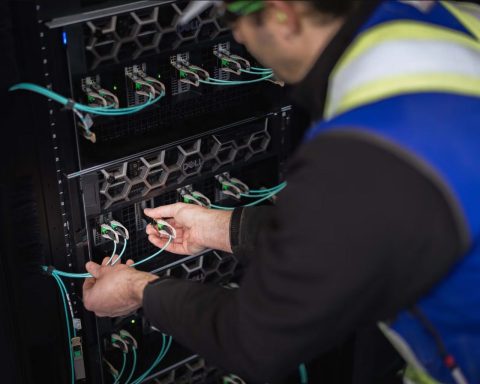
Intel’s first-quarter results are due Thursday, with investors watching for signs the chipmaker can supply enough server processors to latch onto the AI boom. Its latest update, expected after the bell, comes after January’s disclosure that Intel was struggling to meet demand for its AI data center chips.
Timing matters. AI spending remains robust, though the money isn’t landing in the same buckets. On Sunday, Morgan Stanley flagged agentic AI—software that makes decisions and takes action with less human input—as a potential driver. The firm is estimating that agentic AI could add anywhere from $32.5 billion to $60 billion to the data-center CPU market, which has already passed $100 billion, by 2030. That could redirect some of the demand, pulling it away from the graphics chips that powered Nvidia’s rise.
Intel is taking the hit head-on. LSEG’s analyst consensus pegs first-quarter revenue down 1.9% at $12.42 billion, while adjusted earnings per share are set for a nearly 90% nosedive. Yet, the data center and AI unit is expected to grow 6.8% to $4.41 billion. Jacob Bourne at eMarketer highlights steadier CPU demand for AI data centers, labeling it a “steadier revenue lifeline” compared to the more volatile consumer PC segment. Reuters
18A remains in sharp focus. This is Intel’s newest manufacturing technology, crucial for luring back top-tier chip clients. Margins are still at the mercy of yields—the share of working chips per wafer—even after CFO David Zinsner touted “real progress” in March. CEO Lip-Bu Tan, meanwhile, is signaling more flexibility about opening 18A up to external customers. Reuters
Intel’s not the only one feeling the squeeze. CPUs, once solidly the territory of Intel and AMD, are getting fresh competition with Nvidia ramping up its push. Analysts point out that as AI customers move from model training to rolling out agents, this shift could give general-purpose chips an edge.
Intel’s still pushing to show there’s real demand behind the chatter. On April 9, Google reaffirmed support, saying it would continue deploying Xeon processors throughout its cloud operations. The companies also committed to stepping up joint efforts on custom infrastructure silicon. Google’s Amin Vahdat called Intel a “trusted partner” and pointed out their collaboration goes back almost twenty years. Newsroom
Intel’s been paring down its balance sheet lately. In a filing dated April 8, the company said it repurchased Apollo-managed funds’ 49% stake in the Fab 34 joint venture in Ireland for $14.2 billion. The buyout, a mix of cash and a $6.5 billion bridge loan, hands Intel full control of the facility.
Downside risk still lingers. Back in the early part of the year, Intel told customers in China that they could be looking at up to six-month waits for some server CPUs. The company’s estimate: inventory reaching its lowest point in Q1, with a rebound slated for Q2. If that recovery slips further, Intel could end up losing out on profitable AI server demand.
Right now, external cues are leaning positive. Last week, TSMC and ASML each signaled strong AI-fueled demand. Intel shares traded close to $65.77 by midday Tuesday in New York. Now, attention shifts to Thursday’s earnings—investors are watching to find out whether those AI growth bets are finally reflected in the results.
Related articles: NASDAQ:INTC