Published December 7, 2025
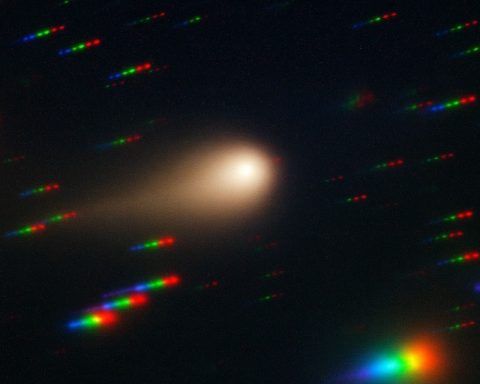
Interstellar comet 3I/ATLAS – only the third confirmed visitor ever seen passing through our Solar System from another star – is putting on its biggest show yet this December. As it brightens again after looping behind the Sun, astronomers are releasing a flood of new results: Hubble and ESA’s Juice spacecraft have snapped fresh images, radio telescopes have detected the comet’s first “radio signal,” and new chemistry measurements reveal surprisingly large amounts of methanol and hydrogen cyanide, molecules tied to both the origins and the destruction of life. Live Science+3Live Science+3IFLScience+3
At the same time, speculative claims that 3I/ATLAS might be an alien craft or a deliberate life‑seeding probe are spreading online – prompting NASA and most comet experts to repeatedly stress that all the evidence so far points to a perfectly natural (if extremely weird) comet.
Below is a detailed look at what we know about 3I/ATLAS as of December 7, 2025, and what skywatchers and science fans can expect in the coming weeks.
What Is 3I/ATLAS, Exactly?
3I/ATLAS, formally designated C/2025 N1 (ATLAS), was discovered on July 1, 2025 by the Asteroid Terrestrial‑impact Last Alert System telescope in Río Hurtado, Chile.
Follow‑up observations quickly showed that:
- Its orbit is strongly hyperbolic, meaning it isn’t gravitationally bound to the Sun and is just passing through.
- It’s moving incredibly fast: around 58 km/s (about 130,000 mph) relative to the Sun far from perihelion, and over 68 km/s at its closest approach to the Sun.
- Tracing its path backwards suggests it came from interstellar space in the direction of the constellation Sagittarius, near the Milky Way’s galactic center, and not from any known reservoir of Solar System comets.
Those traits mark 3I/ATLAS as an interstellar object, following in the footsteps of 1I/ʻOumuamua and 2I/Borisov. The “3I” prefix literally means “third interstellar.” Wikipedia
Based on its motion through the Galaxy and the ages of similar stars, several teams estimate that 3I/ATLAS is between 3 and 14 billion years old, likely older than the Solar System and possibly one of the oldest comets ever studied.
Where the Comet Is Now – and Why December 19 Matters
After disappearing into solar glare in October, 3I/ATLAS re‑emerged for observers in early December. NASA’s trajectory data show that:
- It passed perihelion (closest to the Sun) on October 29–30, 2025, at about 1.36–1.4 astronomical units (AU) – just inside the orbit of Mars.
- It is now heading outward and will make its closest approach to Earth on December 19, 2025, at roughly 1.8 AU, or about 270 million kilometers (170 million miles) – nearly twice the Earth–Sun distance.
Crucially, 3I/ATLAS poses no impact threat. NASA repeatedly stresses that it “won’t come close to Earth at all” in planetary‑defense terms; even at its nearest, it will be more than 700 times farther away than the Moon. NASA Science+1
How to See 3I/ATLAS
Despite the hype, this is not a naked‑eye spectacle. As of December 6–7, 3I/ATLAS is around magnitude 11–12, far too faint for unaided vision or small binoculars.
Skywatching guides based on NASA data recommend:
- When: Early pre‑dawn hours through mid‑ to late December.
- Where to look: Low in the east to northeast, near the bright star Regulus in the constellation Leo.
- Equipment: At least a 30 cm (12‑inch) telescope under dark skies. Many amateurs are relying on remote or robotic telescopes to image it.
Even for professionals, this is a “small, fuzzy smudge” rather than a dramatic tailed comet visible from the city – but scientifically, it’s pure gold.
New December 7 Results: Methanol, Hydrogen Cyanide and the Chemistry of Life
One of today’s biggest 3I/ATLAS headlines comes from new observations with the Atacama Large Millimeter/submillimeter Array (ALMA) in Chile. A team led by Martin Cordiner at NASA’s Goddard Space Flight Center has measured unusually high amounts of methanol and hydrogen cyanide (HCN) in the comet’s coma.
Their key findings:
- 3I/ATLAS is ejecting hundreds of grams per second of hydrogen cyanide from near its nucleus.
- It’s producing around 40 kilograms of methanol per second, making methanol about 8% of all vapor coming off the comet – roughly four times the typical fraction seen in Solar System comets.
Why that matters:
- Methanol is a simple carbon‑based molecule that acts as a building block for more complex organics in prebiotic chemistry.
- Hydrogen cyanide is chemically double‑edged: in the lab, it can help form amino acids and nucleic‑acid basessuch as adenine, but it is also a potent neurotoxin in high concentrations.
The pattern of where these gases appear suggests that 3I/ATLAS’s nucleus may be chemically patchy, with metal‑rich regions where heated water interacts with iron‑bearing minerals to synthesize methanol, and other zones venting HCN directly.
Taken together, the ALMA data reinforce earlier results from JWST and ground‑based observatories that 3I/ATLAS is exceptionally rich in carbon dioxide and sports an unusual mix of volatiles compared with most comets born in our own planetary neighborhood.
‘Ice Volcanoes’ and Jets: A Violent, Active World
Another striking storyline this week: 3I/ATLAS appears to be erupting in “ice volcanoes”, or cryovolcanoes. High‑resolution images from the Joan Oró Telescope in Spain reveal multiple jets of gas and dust blasting from its surface as it recedes from the Sun. Live Science+1
Researchers interpret these jets as:
- The product of subsurface ices (especially CO₂ ice) warming up, turning directly from solid to gas and venting explosively.
- Evidence that 3I/ATLAS’s interior is not uniform, but layered or pocketed with volatile‑rich regions.
Estimates from these observations suggest the nucleus might be hundreds of meters to a few kilometers across, with a mass potentially over 600 million metric tons, though there is still significant uncertainty because the bright coma hides the solid core.
Amateur and professional images taken in late November and reprocessed by astronomers including Avi Loeb show a teardrop‑shaped coma with an “anti‑tail” – a bright extension that points roughly sunward rather than away from the Sun. This feature likely traces a swarm of large, slow‑moving dust and pebble‑sized particles left along the comet’s path during its swing around the Sun. Medium+2Medium+2
Spacecraft Dogpile: Hubble, Juice, Lucy, Psyche and More
Because 3I/ATLAS is interstellar and passing relatively close to the inner Solar System, space agencies have thrown a remarkable flotilla of instruments at it.
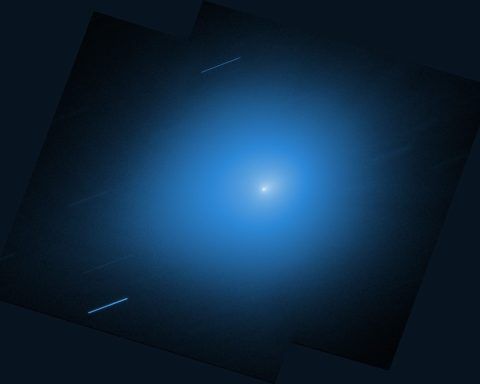
Hubble’s New Post‑Perihelion Image
On November 30, 2025, NASA’s Hubble Space Telescope used its Wide Field Camera 3 to re‑image 3I/ATLAS after perihelion. The comet was then about 286 million kilometers from Earth, and the image shows a compact nucleus surrounded by a bright, asymmetric coma and an anti‑tail pointing toward the Sun.
Hubble photometry and modeling help refine the nucleus size (likely < 1 km in diameter) and constrain dust production rates as the comet moves outward.
ESA’s Juice: A Jupiter Mission Moonlighting as a Comet Observer
ESA’s Jupiter Icy Moons Explorer (Juice) isn’t anywhere near Jupiter yet, but during November it used five of its science instruments, plus its navigation camera, to observe 3I/ATLAS from deep space.
These measurements:
- Track how the comet’s brightness and activity change after perihelion.
- Sample its dust environment and gas outflow from a vantage point far from Earth.
Juice’s NavCam images, though designed for navigation rather than science, clearly show an active, jet‑rich coma, adding an independent confirmation that 3I/ATLAS is “very bright and active” in the weeks leading up to its closest approach to Earth. European Space Agency+2Live Science+2
Surprise Cameos: SWAN, Lucy and Psyche
In the past few weeks, several other missions have caught 3I/ATLAS in their fields of view:
- NASA’s STEREO‑A / SWAN campaign produced an unprecedented 40‑day timelapse of comet C/2025 R2 (SWAN) and incidentally captured 3I/ATLAS as a moving point of light, helping refine its trajectory and activity timeline.
- The Lucy mission, en route to the Trojan asteroids, imaged 3I/ATLAS in September, providing an early look at its coma and motion against background stars.
- NASA’s Psyche spacecraft, heading to the metallic asteroid (16) Psyche, also observed 3I/ATLAS over several hours in early September, contributing additional constraints on its brightness and dust environment.
Together with ground‑based telescopes and radio facilities, these spacecraft form a Solar System‑wide observing network, giving astronomers multiple perspectives on a tiny object tens or hundreds of millions of kilometers away.
The First ‘Radio Signal’ – and Why It’s Not Aliens
On November 11, astronomers using South Africa’s MeerKAT radio telescope reported the first clear radio emission from 3I/ATLAS. That phrase – “radio signal from an interstellar comet” – instantly triggered social‑media speculation about alien technology. Live Science+1
In reality, the signal is classic comet physics:
- Sunlight breaks apart water molecules in the coma, creating hydroxyl (OH) radicals.
- Those OH molecules emit radio waves at specific frequencies, and MeerKAT picked up this well‑known spectral signature, previously seen in many Solar System comets.
Rather than hinting at an artificial beacon, the OH emission is further confirmation that 3I/ATLAS is a water‑bearing, outgassing comet.
The ‘Heartbeat’ and Alien Spacecraft Debate
Despite the mounting natural explanations, 3I/ATLAS has become a magnet for speculation, much as 1I/ʻOumuamua did.
A 16‑Hour ‘Heartbeat’
Photometric monitoring shows that 3I/ATLAS’s brightness varies with a period of about 16.16 hours, likely corresponding to its rotation period.
Harvard astrophysicist Avi Loeb has described this periodic brightening as a “heartbeat‑like pulse,” arguing in interviews and essays that it could, in principle, be produced by artificially controlled jets rather than simple rotation. He has suggested scenarios in which 3I/ATLAS might be: inkl+3Medium+3New York Post+3
- A “mothership” performing fine‑tuned maneuvers to skim the edge of Jupiter’s Hill sphere in March 2026, where it could hypothetically release probes.
- A vehicle sent by an advanced civilization to “seed” planetary systems with life, using comets rich in organics and molecules like methanol and HCN.
- A potential “cosmic serial killer”, distributing life‑inhibiting neurotoxins like hydrogen cyanide along with life‑building chemistry.
In a recent Medium essay, Loeb points to a numerical coincidence: with the measured non‑gravitational forces on 3I/ATLAS included, its predicted closest approach to Jupiter in March 2026 is within a fraction of a million kilometers of Jupiter’s Hill radius, which he interprets as suggestive of intentional targeting.
What Most Scientists Think
So far, however, the mainstream scientific community remains firmly unconvinced that any of this requires alien engineering:
- Orbital “anomalies” can arise naturally from outgassing jets, which exert small, hard‑to‑model thrusts on active comets.
- The 16‑hour brightness modulation is entirely consistent with a rotating, irregular nucleus whose jets and reflective dust coma present changing cross‑sections to the Sun and Earth.
- Cryovolcanoes, CO₂‑rich compositions, and even odd anti‑tails have all been seen in Solar System comets before, especially among objects from cold, distant reservoirs.
NASA’s own outreach articles and FAQs emphasize that “3I/ATLAS is a comet” and that alien explanations are unnecessary given the observed chemistry, dust, and gas behavior. Yahoo+3NASA Science+3Live Science+3
Science writers have also noted how quickly speculative ideas – especially involving aliens – can go viral, sometimes overshadowing the painstaking work of comet researchers. GeekWire, for example, highlights 3I/ATLAS as a case study in how “way‑out speculation” about interstellar visitors spreads online even when the underlying data support a mundane explanation. GeekWire+1
In short: it’s healthy to explore bold hypotheses, but extraordinary claims require extraordinary evidence. So far, all of the data on 3I/ATLAS can be explained by natural cometary physics.
Why 3I/ATLAS Is a Scientific Jackpot
Even if it’s “just” a comet, 3I/ATLAS is a big deal. Each new dataset helps astronomers answer some fundamental questions:
- How do other planetary systems build and eject comets?
Its hyperbolic orbit and thick‑disk kinematics suggest it has spent billions of years wandering the Milky Way, probably after being flung out of a distant planetary system by a giant planet or passing star. - What is interstellar comet chemistry like?
The combination of CO₂‑rich ices, methanol‑heavy vapors, and HCN outgassing provides a unique comparison point with Solar System comets. It hints that other planetary systems can produce metal‑rich, chemically diverse icy bodies, possibly with implications for how often life’s ingredients are scattered between stars. - How common are objects like this?
Three confirmed interstellar visitors in less than a decade suggests such objects may be far more numerous than we once thought, with surveys like ATLAS, Pan‑STARRS, and soon the Vera Rubin Observatory poised to find many more. - How should we design future missions?
Observations from Hubble, Juice, Lucy, Psyche and other spacecraft are effectively a rehearsal for dedicated interstellar‑object intercept missions, which NASA and other agencies have begun studying on paper.
What to Watch for Next
Over the coming weeks and months, expect:
- More detailed chemistry papers based on ALMA, JWST and large ground‑based telescopes, further refining 3I/ATLAS’s inventory of ices and organics.
- Additional NASA and ESA image releases as data from Hubble, Juice and other spacecraft are processed and calibrated.
- Improved models of the comet’s non‑gravitational forces, which will sharpen predictions for its close pass by Jupiter’s sphere of influence in March 2026 – and help test some of the more exotic ideas about its trajectory.
For now, though, the cosmic verdict is simple:
3I/ATLAS is a rare, chemically exotic, interstellar comet
hurtling past the Sun – ancient, natural, and scientifically priceless.
If you have access to a large telescope or a local observatory, December 2025 is your chance to catch a photon or two from a world that formed around another star, billions of years before Earth existed.