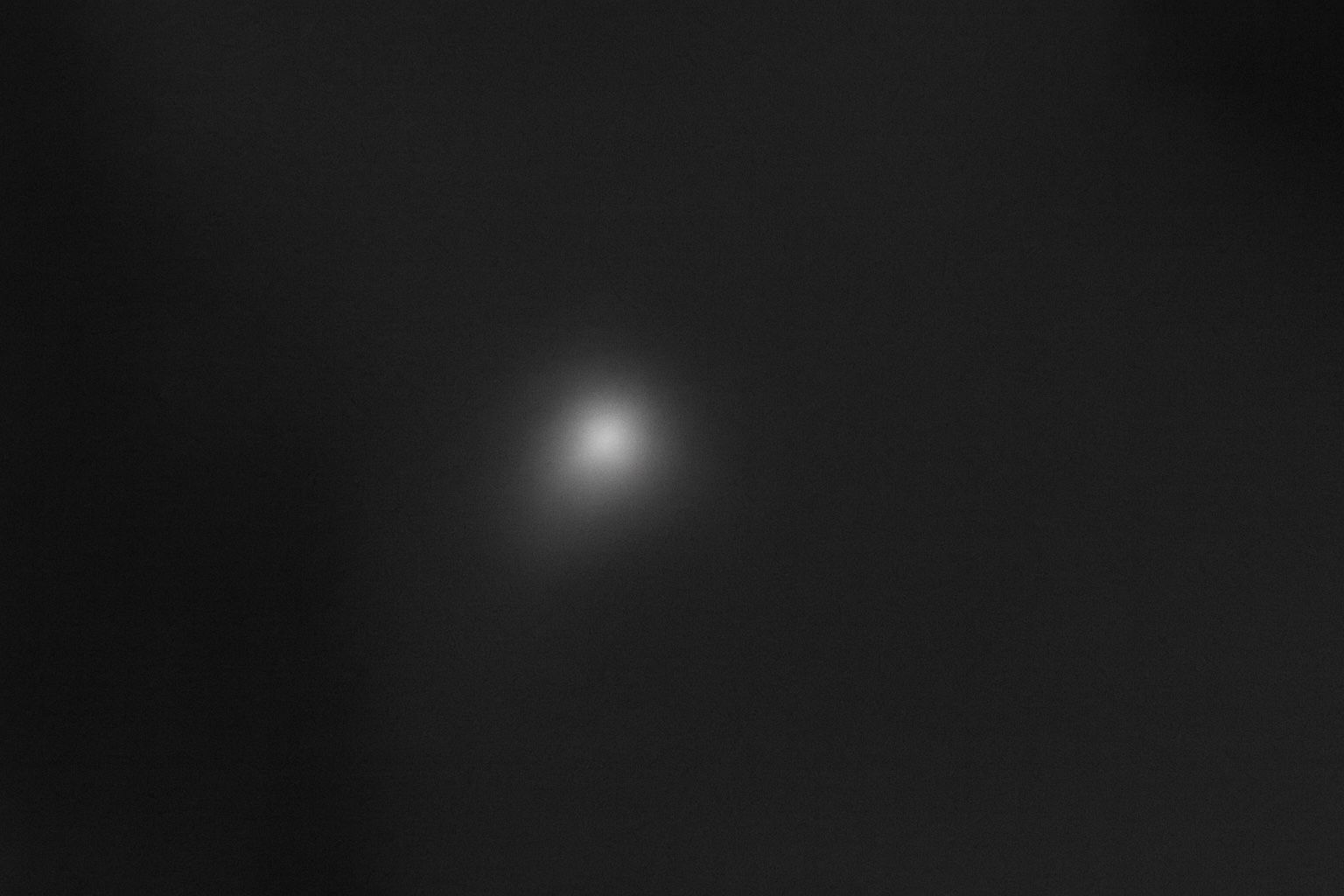
As of 1 December 2025, interstellar comet 3I/ATLAS is racing back out of the inner solar system, sparking a rare combination of hard science, UN‑level planetary‑defense drills and loud public debate over whether this icy visitor is “just” a comet or something more exotic.
In the last few days, NASA has formally reiterated that 3I/ATLAS is a natural comet with no alien technosignatures, even as new multi‑spacecraft images and chemical data show it is one of the strangest objects ever observed.Space+2BizzBuzz+2 At the same time, the United Nations and the International Asteroid Warning Network (IAWN) have officially selected 3I/ATLAS as the centerpiece of a months‑long planetary‑defense exercise, while stressing that the object poses no threat to Earth.IAWN+2Blogs of Israel+2
Today’s Astronomy Picture of the Day (APOD) from NASA highlights 3I/ATLAS’ green coma, blue ion tail and subtle “anti‑tail,” calling it a key test of how typical our solar system is compared with others.Astronomy Picture of the Day+1And fresh ephemeris data show the comet shining around magnitude 11.3, visible only in telescopes as it climbs through the morning constellation Virgo and heads toward Leo ahead of its closest Earth approach on 19 December 2025.astro.vanbuitenen.nl+2EarthSky+2
Here’s what you need to know right now about this once‑in‑a‑generation visitor.
What is interstellar comet 3I/ATLAS?
3I/ATLAS is the third confirmed object from another star system ever seen passing through ours, after 1I/ʻOumuamua (2017) and 2I/Borisov (2019).NASA Science+1
Key basics:
- Type: Active interstellar comet (not an asteroid)
- Official designation: 3I/ATLAS (also C/2025 N1 in some catalogs)NASA Science+1
- Origin: Formed around another star; inbound from near the direction of the constellation Sagittarius, toward the Milky Way’s centerNASA Science+1
- Speed: ~137,000 mph (221,000 km/h) when discovered, rising to ~153,000 mph (246,000 km/h) at closest approach to the Sun before matching its original speed on the way outNASA Science+1
- Size: Hubble data suggest a nucleus between about 440 m and 5.6 km across – somewhere between a skyscraper‑sized rock and a modest mountain.NASA Science+1
Astronomers classify 3I/ATLAS as interstellar because its orbit is hyperbolic – it’s moving too fast to be captured by the Sun’s gravity and will never return once it leaves.NASA Science+1
Discovery, orbit and timeline: from Chile to Mars and beyond
3I/ATLAS was first picked up by the NASA‑funded ATLAS survey telescope in Rio Hurtado, Chile, with earlier pre‑discovery images later identified in data from other ATLAS stations and the Zwicky Transient Facility in California.NASA Science+1
Timeline of the encounter
- June 14–29, 2025 – ATLAS and other surveys unwittingly capture the object; at this stage it’s still just a faint moving point of light.NASA Science+1
- 1 July 2025 – Official discovery report sent to the Minor Planet Center; soon after, its extreme trajectory reveals it is interstellar.NASA Science+2NASA Science+2
- July–August 2025 – Hubble, the James Webb Space Telescope (JWST), SPHEREx and ground‑based observatories swing into action, detecting its growing coma and tail as ices begin to sublimate.Space+3NASA Science+3spherex.caltech.edu+3
- 3 October 2025 – 3I/ATLAS passes Mars at ~29 million km; ESA’s ExoMars Trace Gas Orbiter and other Mars missions image the comet, dramatically refining its orbit.European Space Agency+2NASA Science+2
- 29–30 October 2025 – Perihelion: closest approach to the Sun at ~1.4 AU (just inside Mars’ orbit). From Earth’s perspective the comet is almost behind the Sun and extremely hard to observe.NASA Science+2NASA Science+2
- Early–mid November 2025 – 3I/ATLAS re‑emerges from solar glare, brighter and more active than before, with an unusually structured tail system and a striking “anti‑tail” pointing roughly sunward in some images.Live Science+3Benricks+3Space+3
- 1 December 2025 (today) – The comet is ~1.9 AU from Earth, around magnitude 11–12 and visible in the pre‑dawn sky with a medium amateur telescope.astro.vanbuitenen.nl+2EarthSky+2
- 19 December 2025 – Closest approach to Earth at ~1.8 AU (about 170 million miles / 270 million km) – still nearly twice the Earth–Sun distance.NASA Science+2NASA Science+2
- March 16, 2026 – 3I/ATLAS passes near Jupiter at ~50 million km before vanishing back into interstellar space.Wikipedia+2Newsweek+2
Crucially, all orbital solutions agree that 3I/ATLAS never comes remotely close enough to threaten Earth.NASA Science+2Newsweek+2
What NASA just confirmed: a natural comet, not alien tech
Rumors that 3I/ATLAS might be an alien spacecraft exploded online in October and November, fueled by a widely discussed preprint led by Harvard astrophysicist Avi Loeb and early reports of unusual chemistry and a sunward‑pointing dust feature.Wikipedia+2Medium+2
Those rumors hit a wall last week when NASA held a much‑anticipated briefing after a 43‑day US government shutdown had temporarily paused official communications. Using observations from more than 20 different missions – including Hubble, JWST, Lucy, Psyche, SOHO, STEREO, SPHEREx, Mars orbiters and the Perseverance rover – NASA officials laid out their case:Reuters+3NASA Science+3NASA Science+3
- It looks and behaves exactly like a comet. 3I/ATLAS has an icy nucleus, a gas‑and‑dust coma, and both ion and dust tails. Its activity increases with solar heating along a predictive curve.NASA Science+2NASA Science+2
- No technosignatures have been found. NASA’s science leadership explicitly stated that there are no signs of artificial patterns in the object’s light curve, chemistry or dynamics.Space+2BizzBuzz+2
- Its oddities fit within comet physics. Features that looked strange in early data – like the anti‑tail and strong nickel emission – now appear to fall within the broader spectrum of comet behavior when interstellar age and geometry are taken into account.Live Science+3NASA Science+3Live Science+3
An article published today summarizing the briefing puts it bluntly: 3I/ATLAS is a natural comet with unusual chemistry, not an alien machine, and it represents a rare chance to sample material from a star system that likely predates our own Sun.BizzBuzz+2Reuters+2
A global planetary‑defense exercise built around a harmless comet
If 3I/ATLAS is harmless, why are headlines talking about the UN “activating planetary defenses”?
Here’s what’s really happening.
The International Asteroid Warning Network (IAWN) – a UN‑coordinated body that runs regular global drills – had already planned a comet‑focused observing exercise for late 2025. Once 3I/ATLAS appeared, it became the ideal test target: bright enough for many observatories, unusual enough to be scientifically interesting, but guaranteed not to hit Earth.IAWN+2Blogs of Israel+2
The official IAWN campaign document, now widely circulated, states clearly:
- 3I/ATLAS “poses no threat”,
- the exercise runs from 27 November 2025 to 27 January 2026, and
- the goal is to practice precise tracking and orbit determination for tricky, fuzzy comet images.IAWN+2Blogs of Israel+2
Some outlets have condensed that into dramatic language about “activating Earth’s planetary defenses,” but in reality this is a rehearsal, not a response to danger – very much like a global fire drill around a building that is not actually on fire.
For planetary‑defense experts, 3I/ATLAS is a perfect stress test: an object that is scientifically compelling, politically high‑profile, and safely distant, letting teams debug their processes without real‑world risk.IAWN+2ABOUT SCIENCE – Learn Science Easy+2
The weird bits: anti‑tails, brightening and “structured jets”
So where do all the “anomalies” come from?
The dramatic anti‑tail
One of the most striking views of 3I/ATLAS is its “back‑to‑front” look: while the blue ion tail streams away from the Sun as expected, a sharp dust spike appears to point toward the Sun, making the comet look like it’s flying backwards in some images.Benricks+2Space+2
Astronomers call this an anti‑tail. It’s a known, though rare, phenomenon that happens when:
- Earth crosses the comet’s orbital plane, so we see its dust trail edge‑on; and
- larger, heavier dust grains lag behind along the orbit instead of being blown straight back by radiation pressure.Benricks+2Wikipedia+2
Viewed from the right angle, that debris trail can appear as a sunward spike even though every particle is obeying ordinary physics.
Post‑perihelion brightening
As 3I/ATLAS emerged from behind the Sun in early November, observers noticed that it was significantly brighter than before perihelion, suggesting a major outburst that exposed fresh ices.Benricks+2Space+2
JWST observations indicate that the comet’s surface has been heavily modified by billions of years of cosmic‑ray bombardment, creating a 15–20 m‑thick crust enriched in carbon dioxide. As solar heating cracks that shell, deeper, less processed material may be venting in bursts – a natural explanation for its renewed activity.Live Science+2spherex.caltech.edu+2
Claims of “structured jets” and controlled motion
Some commentators have gone further. A recent article in USA Herald, based on heavily processed amateur images, argues that 3I/ATLAS is firing narrow, symmetric jets in what looks like controlled thrust, and therefore might be an engineered spacecraft.USA Herald – The People’s Voice
Likewise, Avi Loeb has published lists of a dozen “anomalies” – from plane alignment to possible non‑gravitational acceleration – and has suggested that one low‑probability explanation could involve alien technology, even while acknowledging that a natural comet remains the most likely scenario.Wikipedia+3Medium+3Medium+3
However:
- Comet specialists have systematically gone through these claims and found conventional explanations for each, from measurement uncertainties to known cometary behavior.Penn State Sites+2Live Science+2
- NASA and ESA, with access to the best data, have not reported any trajectory changes or jet patterns that require new physics or artificial propulsion.Space+2NASA Science+2
In other words, 3I/ATLAS is weird in the way an ancient, interstellar comet ought to be weird – but so far, nothing demands a science‑fiction explanation.
What 3I/ATLAS is made of: carbon‑dioxide fog, water ice and nickel
If it’s natural, it’s still extraordinary.
A coma rich in carbon dioxide
Spectra from SPHEREx and follow‑up measurements reported in both NASA briefings and Space.com show that 3I/ATLAS’ coma is unusually rich in carbon dioxide (CO₂) gas, with strong water‑ice signatures in the nucleus.spherex.caltech.edu+2Space+2
Together with other measurements, scientists find:
- Outgassing of CO₂, CO (carbon monoxide) and water vapor, plus trace species like cyanide (CN) and carbonyl sulfide – all familiar comet ingredients, but in unusual proportions.NASA Science+2Wikipedia+2
- Significant emission from atomic nickel, seen at surprisingly large distances from the Sun, similar to some chilly comets in our own system.Wikipedia+2Newsweek+2
An ancient, altered crust
JWST data suggest that during its ~7 billion‑year journey through interstellar space, the outer layers of 3I/ATLAS have been chemically reshaped by galactic cosmic rays, turning carbon monoxide into carbon dioxide and building up a CO₂‑rich shell tens of meters thick.Live Science+2Space+2
That means:
- The outermost material we see today may not match the original composition of the comet’s birthplace.
- As solar heating erodes this shell, astronomers hope to glimpse pristine interior ice that still remembers the conditions around its original star.Live Science+2NASA Science+2
Is our solar system “normal”?
NASA’s APOD explanation today leans into a quieter but profound point: despite its exotic orbit and age, 3I/ATLAS otherwise looks surprisingly similar to ordinary comets, with a green coma, blue ion tail and modest anti‑tail structure – suggesting that the basic building blocks of icy worlds may be common across many planetary systems.Astronomy Picture of the Day+2Space+2
If that holds up, it’s a vote for our solar system being “typical” rather than exceptional – good news for anyone hoping that Earth‑like worlds and comet‑delivered ingredients for life are widespread.
How to see comet 3I/ATLAS in early December 2025
3I/ATLAS will never be a naked‑eye showpiece, but dedicated observers can catch it over the next few weeks.
Brightness and equipment
- Current magnitude (1 Dec 2025): ~11.3, fading slowly toward ~13 by closest Earth approach on 19 December.astro.vanbuitenen.nl+1
- What you need: a moderate amateur telescope (at least 6–8 inches / 150–200 mm aperture) under dark skies; in images, it shows a fuzzy coma and a delicate tail structure.Benricks+2EarthSky+2
Where to look
Star‑chart calculations and observing guides indicate:EarthSky+2astro.vanbuitenen.nl+2
- Late November – early December 2025:
- Visible in the pre‑dawn sky, low in the east to southeast.
- Passing through the constellation Virgo, near the galaxy NGC 4454 around 22 November and close to the star Zavijava (β Virginis) around 4 December.
- Mid‑December 2025:
- Climbing higher before sunrise and drifting toward Leo, near several faint background galaxies.
To actually find it:
- Use up‑to‑date coordinates from an ephemeris (for example, TheSkyLive or dedicated comet trackers).Newsweek+1
- Punch those into your GoTo mount or planetarium app.
- Observe from a dark site, give your eyes time to adapt, and use averted vision to tease out the faint coma and tail.
Every image taken now becomes part of the global data set feeding the UN/IAWN exercise and helping refine the comet’s behavior as it recedes.
3I/ATLAS and the search for life: separating science from hype
It’s easy to see why 3I/ATLAS has captured imaginations:
- It may carry material older than the Sun, frozen since before our solar system formed.Live Science+1
- It’s the largest and brightest interstellar small body we’ve seen so far.Reuters+2Newsweek+2
- It has real, scientifically interesting quirks in its chemistry, polarization and dust dynamics.Live Science+3Wikipedia+3NASA Science+3
But the key points emerging from the last week of data are:
- No credible evidence of alien technology has been found. Independent experts and NASA panels continue to favor a natural explanation for all observed features.Reuters+3Space+3Penn State Sites+3
- Speculative ideas are part of science – but so is ruling them out. Loeb and others argue that exploring extreme hypotheses can be useful, while their peers counter that extraordinary claims require extraordinary evidence that is not present here.Jalopnik+3Wikipedia+3Medium+3
- Either way, we win scientifically. Whether every anomaly folds neatly into existing comet models or forces new tweaks to our understanding of interstellar ices, 3I/ATLAS is already reshaping how we think about frozen bodies between the stars.Reuters+3Live Science+3NASA Science+3
For now, the most robust description is also the most awe‑inspiringly simple:
3I/ATLAS is a natural chunk of another star system that has wandered into ours, letting us study truly alien ice without ever leaving home.
Key facts about 3I/ATLAS at a glance
- Category: Third known interstellar object, first clearly comet‑like interstellar visitor since 2I/BorisovNASA Science+1
- Discovery: ATLAS telescope, Chile, reported 1 July 2025; pre‑discovery images back to mid‑JuneNASA Science+2NASA Science+2
- Orbit: Hyperbolic; one‑time fly‑through of the solar system, never returningNASA Science+1
- Closest to Sun: ~1.4 AU on 29–30 October 2025NASA Science+2Newsweek+2
- Closest to Earth: ~1.8 AU on 19 December 2025 – no impact riskNASA Science+2NASA Science+2
- Speed: ~153,000 mph (246,000 km/h) at perihelionNASA Science+1
- Composition: CO₂‑ and CO‑rich coma, water ice nucleus, cyanide, and detectable nickel vapor – a chemically unusual but natural comet mixReuters+3NASA Science+3spherex.caltech.edu…
- Planetary defense: Core target of the 8th IAWN UN‑coordinated observing exercise (27 Nov 2025 – 27 Jan 2026), explicitly labeled “no threat” in official documentsIAWN+2Blogs of Israel+2
Why 3I/ATLAS matters
In the span of just a few months, 3I/ATLAS has:
- given interstellar science its most detailed comet case study yet,
- provided a live‑fire systems test for global planetary‑defense infrastructure, and
- offered the public a front‑row seat to how science handles genuinely strange data without jumping straight to extraordinary conclusions.Astronomy Picture of the Day+3European Spa…
As December unfolds, astronomers will keep watching this ancient wanderer fade into the dawn. Whether you’re following the alien‑vs‑comet debate or just love the idea of another star system literally blowing past us, 3I/ATLAS is a reminder that the galaxy is busy, dynamic – and occasionally sends its messengers right through our backyard.