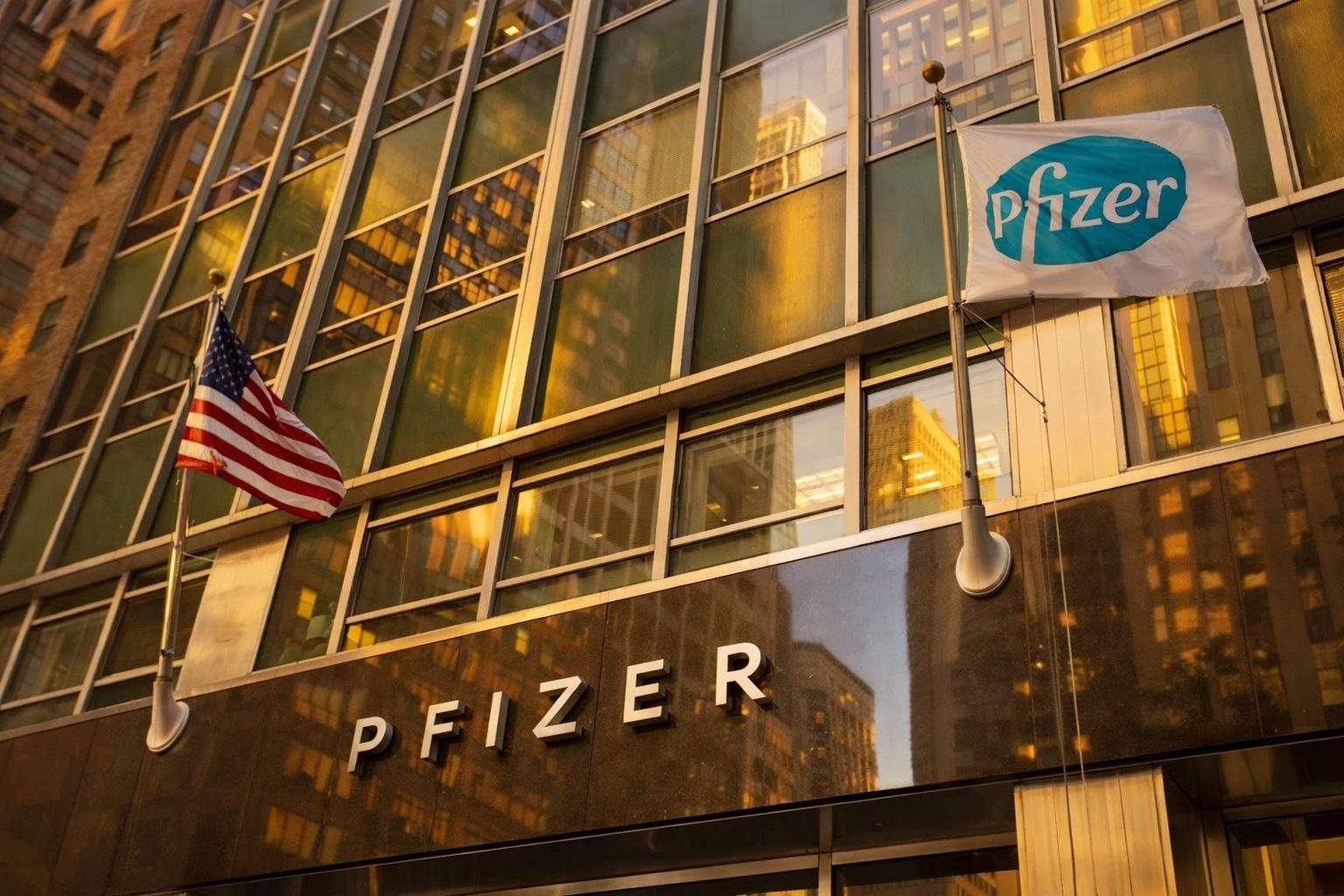
New York, March 31, 2026, 11:13 EDT
Pfizer hit a new 52-week high Tuesday, lifted by upbeat analyst notes and a string of pipeline news fueling demand. Shares last changed hands at $27.87 late in the morning, having reached $28.30 earlier—eclipsing the earlier high-water mark of $27.92. Reuters
This shift is significant: focus is turning away from the fading COVID cash stream at Pfizer. Now, investors are sizing up how quickly oncology, vaccines, and obesity treatments can step in to bridge that gap before legacy drugs lose their edge. Pfizer Investors
Three recent investor notes highlight the divide. On March 29, a Motley Fool column suggested Pfizer’s rapid shift—from halting its internal GLP-1 efforts to the Metsera buy—might pay off for investors willing to wait, as the company aims to close the gap with Eli Lilly and Novo Nordisk. A couple days earlier, a March 27 Seeking Alpha note pointed to strong Q4 results from Padcev, Lorbrena, and Talzenna as support for a bullish outlook. The Motley Fool
Still, some aren’t convinced there’s much upside left. Acquirer’s Multiple, applying its discounted cash flow approach—which tries to gauge the present value of future cash flows—calculated Pfizer’s intrinsic value at just $14 to $15 a share as of March 26. That’s a big gap from the stock’s market price around $27 at the time, suggesting about 45% downside. Acquirer’s Multiple
Pfizer’s latest figures had ammo for bulls and bears alike. On Feb. 3, the drugmaker reported fourth-quarter sales of $17.56 billion, handily ahead of forecasts, and stuck to its 2026 revenue target of $59.5 billion to $62.5 billion, with adjusted EPS expected between $2.80 and $3.00. Pulling out the COVID segment, revenue posted 6% growth in 2025 and 9% in the fourth quarter. Management flagged around 20 pivotal trial launches for 2026—these are the major studies needed for regulatory green lights. Pfizer Investors
The latest oncology numbers are driving bullish sentiment. On March 19, Pfizer reported its late-stage TALAPRO-3 trial hit its primary target: Talzenna combined with Xtandi delayed disease progression in advanced prostate cancer. “Unprecedented,” said Jeff Legos, the company’s chief oncology officer. Lead investigator Neeraj Agarwal added the combo “significantly extends” time before the cancer gets worse. Pfizer
There have been additional successes in the pipeline. Earlier this month, Pfizer announced that its breast cancer therapy, atirmociclib, reduced the risk of disease progression or death by 40% in a Phase 2 trial. Over on the eczema front, Reuters highlighted BMO analyst Evan Seigerman, who called the tilrekimig candidate “potentially competitive” and said it gives Pfizer “another potential catalyst” as the company looks to regain lost momentum on the pipeline front. Pfizer
Obesity’s the real battleground, and it’s not getting any easier. Pfizer, after snapping up Metsera, put its sights on 2028 for a potential green light in this space. Chief Scientific Officer Chris Boshoff pitched their once-monthly drug as possibly holding its own against current options, but Daniel Barasa at Gabelli Funds tempered expectations, saying the initial weight-loss numbers looked “good, but not category-defining.” Reuters
Risks here aren’t trivial. Around 10% of patients in both arms of Pfizer’s mid-stage obesity trial dropped out over side effects, Reuters said. David Wagner at Aptus Capital Advisors pointed out that the bigger question is whether Pfizer’s acquisition spending will actually deliver “sizeable returns” for investors. Pfizer itself isn’t projecting a return to revenue growth until 2029. There’s also the Lyme disease vaccine, developed with Valneva; it showed over 70% efficacy this month but still fell short of a key statistical hurdle. Trung Huynh at RBC Capital Markets suggested regulators might take a “sympathetic” stance. But Cantor’s Carter Gould described the results as only “directionally supportive” for approval. Reuters
Pfizer’s getting leeway from investors for the time being. Still, there’s a sharp divide: bulls are banking on late-stage trial successes, while bears point to sluggish growth and looming patent cliffs. Bottom line, the stock likely pivots on Pfizer’s ability to actually convert those clinical wins into approvals—and real sales—rather than on how investors feel about the story.