
TOKYO — Japan’s stock market took a sharp hit on Thursday, December 18, 2025, as a renewed wave of skepticism about the economics of the artificial intelligence boom spilled from Wall Street into Asia. Heavyweight technology names led the decline, dragging the Nikkei 225 to its lowest close in three weeks and reviving a question investors have been whispering for months: will the vast global buildout of AI data centers generate profits fast enough to justify the enormous capital spending and debt that underpin it? TradingView+1
The selloff was especially punishing for AI-linked bellwethers such as SoftBank Group, which has become tightly associated with the “AI infrastructure” narrative through its involvement in large-scale data center ambitions. Chip-testing and fiber-optics plays tied to data-center growth also fell, while Japanese financial stocks softened as markets looked ahead to the Bank of Japan’s policy decision. TradingView+2TradingView+2
At the same time, developments elsewhere underscored the push-and-pull shaping markets: U.S. tech shares had slid on worries about AI funding and data-center economics, but later on December 18, softer U.S. inflation data and upbeat results from memory maker Micron helped stabilize sentiment, highlighting how quickly the AI trade can swing between fear and renewed confidence.
Nikkei 225 Falls to a Three-Week Low as Tech Heavyweights Slide
Japan’s Nikkei 225 ended the session down 1.03% at 49,001.5 — its lowest close since November 25 — while the broader Topix slipped 0.37% to 3,356.89. The day’s price action was a classic “growth-to-defensive” rotation: growth shares fell more than value shares, reflecting investor caution toward long-duration, high-expectation technology names when financing concerns rise. TradingView
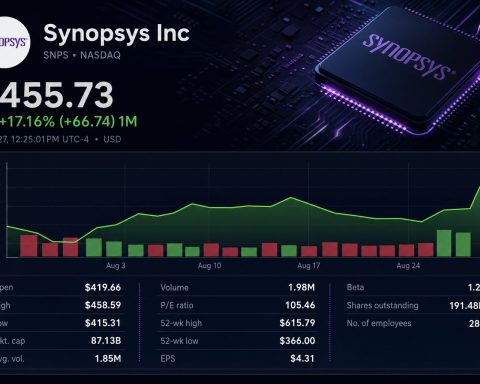
SoftBank Group, a major Nikkei component and a proxy for AI enthusiasm in Japan, dropped 3.76% by the close. Other high-profile data-center and semiconductor-adjacent names also sank: chip-testing equipment maker Advantest fell 3.32%, and Fujikura — known for fiber-optic cable products used in data center connectivity — declined 3.42%.
Notably, the selling pressure wasn’t confined to one or two stocks; it was broad enough to pressure the index, even as a few names bucked the trend. Software testing firm Shift jumped 5.09%, and Keisei Electric Railway rose 4.57%, a reminder that even on risk-off days, investors hunt for idiosyncratic opportunities away from crowded tech positioning.
SoftBank’s Selloff Reflects a Bigger AI Data Center Anxiety
SoftBank’s decline carried outsized symbolic weight: when SoftBank drops sharply, investors often interpret it as a referendum on the market’s willingness to pay up for the next phase of AI expansion.
CNBC reported that SoftBank fell as much as 7.25% intraday, while Japan’s benchmark index was among the worst performers in Asia during the risk-off move.
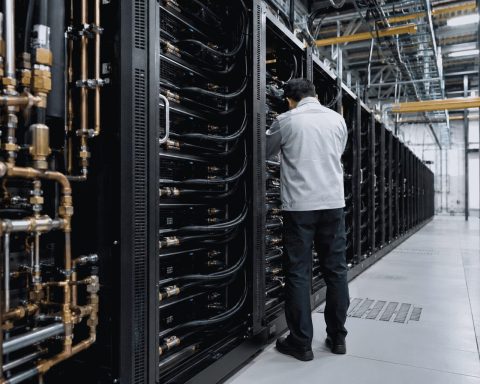
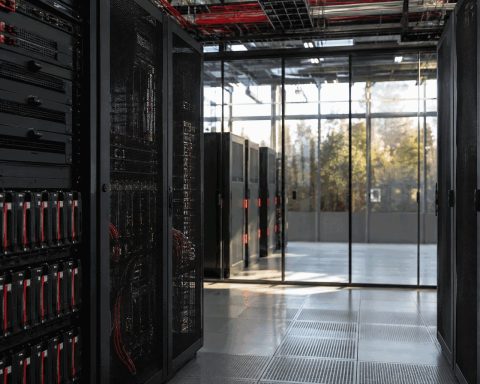
What’s driving that sensitivity is the market’s growing focus on AI infrastructure funding — especially the capital intensity of building data centers, securing power supply, and financing specialized chips and networking hardware. In Japan, these worries are amplified by the reality that many data centers are being built domestically, tying local equities more tightly to the global AI capex cycle than they were in prior tech eras. Reuters quoted IwaiCosmo Securities strategist Kazuaki Shimada saying concerns about the profitability of AI-related businesses and data centers “have been coming to the surface,” adding that Japan “is not an exception.” TradingView
Oracle and the $10 Billion Data Center Question Ripples Through Markets
A key spark for the latest bout of anxiety came from the U.S., where AI-linked stocks had already been under pressure. On Wednesday’s close in New York (overnight in Asia), the Nasdaq Composite fell 1.81% and the S&P 500 slid 1.16% as investors digested a report that Oracle’s largest data center partner, Blue Owl Capital, would not back a $10 billion deal for a next facility — stoking fears that the AI infrastructure buildout may face funding constraints or tougher terms.
That matters in Tokyo because Japanese markets are heavily exposed to the “picks-and-shovels” of the AI boom — semiconductor testing, advanced components, networking, and industrial supply chains that feed data centers. When the U.S. market questions whether AI data centers can earn adequate returns on the staggering capital required, Asia’s AI supply chain tends to react quickly.
The SoftBank link is also direct. Reuters noted that SoftBank, Oracle and OpenAI announced plans earlier this year to develop data centers in the U.S. as part of an ambitious “Stargate” project, connecting SoftBank’s valuation narrative even more tightly to U.S. data center momentum. TradingView
Japan Shares Lower at the Close: What the Broader Tape Signaled
While the Nikkei’s tech-driven slide dominated headlines, other market internals pointed to a defensive mood.
Investing.com reported Japan equities lower at the close, with declines led by sectors including Paper & Pulp, Transport and Communication, and pegged the Nikkei 225’s drop at 0.88%. Market breadth was mixed but tilted negative: advancing stocks outnumbered decliners overall, yet large-cap tech weakness still pulled the headline index down.
One interesting datapoint: the Nikkei Volatility index — a gauge derived from Nikkei 225 options — fell 5.06% to 28.34, suggesting that even amid a sharp tech selloff, implied volatility cooled rather than spiking. That can happen when markets interpret the move as a “re-pricing” of a crowded theme rather than the start of disorderly liquidation. Investing.com India
Currency and commodity moves also reflected a cautious, macro-sensitive environment. Investing.com cited USD/JPY around 155.91 and reported oil prices firmer on the day, underscoring how Japan’s equity narrative was unfolding alongside global rates and commodity crosscurrents.
Asia’s AI Selloff Wasn’t Just Japan
Across the region, the mood was similarly cautious early Thursday. The Associated Press reported that Asian shares slipped further after declines for AI stocks dragged the U.S. market to its worst day in nearly a month, with Japan’s technology shares leading Tokyo’s losses. AP also highlighted notable declines in Tokyo Electron and Advantest, reinforcing that the selloff hit core semiconductor and semiconductor-equipment names — the backbone of Japan’s “AI trade.” wplg
AP added that investors were waiting both for a U.S. inflation update and for the Bank of Japan’s interest rate decision, with expectations that the BOJ would raise rates by 0.25 percentage point. A tighter BOJ stance can matter for tech-heavy equities by lifting discount rates and strengthening the yen, potentially pressuring exporters’ earnings translations.
The Macro Backdrop: Inflation, Central Banks, and a Fast Mood Swing
Later on December 18, global market tone shifted as U.S. data and earnings tempered the fear. Reuters reported that softer-than-expected U.S. inflation data helped revive risk appetite and that Micron’s strong results contributed to stabilizing “rollercoaster” sentiment around AI stocks. U.S. indexes ended the day higher, with the Nasdaq up 1.38%. Reuters
This push-and-pull matters for Japan because the Nikkei’s biggest tech names are often priced off global liquidity conditions: when investors believe central banks may ease (or at least not tighten aggressively), high-growth tech can rebound quickly; when financing concerns dominate, the same names can drop sharply.
Why Samsung and SK Hynix Still Matter to This Story
Even as markets questioned the pace and profitability of AI infrastructure spending, the underlying demand for critical AI components continues to look intense — especially in memory.
Reuters reported on December 18 that Micron surged after forecasting sharply stronger profits amid a worldwide supply crunch in memory chips driven by robust demand from AI data centers. In that report, Reuters emphasized that Micron is one of only three major suppliers of high-bandwidth memory (HBM) — alongside South Korea’s Samsung and SK Hynix — a detail that helps explain why investor sentiment about AI infrastructure can whipsaw across the entire semiconductor ecosystem.
In other words: when the market worries that AI data center capex could slow, it sells the whole chain. But when the market sees evidence of sustained shortages and pricing power in essential components like HBM, it quickly remembers why the AI buildout has been so profitable for chip leaders — and why Samsung and SK Hynix remain central beneficiaries of the AI era.
A Deeper Issue: AI’s Capital Spending and Debt Are Now the Story
Beyond day-to-day market moves, a more structural narrative is gaining traction: AI is transitioning from a “breakthrough technology” story into a “financing and returns” story.
Reuters Breakingviews pointed to Oracle’s aggressive expansion in data centers and the cost of its AI push, noting that the company’s expected capital expenditure could rise to about $35 billion for the year ending May 2026 (per estimates cited), while debt concerns have increasingly shaped how investors value that strategy. The commentary also connects the broader “AI arms race” to a higher bar for financial discipline — exactly the dynamic that can reverberate into Japan via SoftBank and the Nikkei’s AI-linked supply chain. Reuters
What Investors Are Watching Next
After December 18’s selloff, the market’s next moves likely hinge on three near-term catalysts:
1) Bank of Japan policy and the yen
With investors already positioned for a BOJ hike, any surprise in tone could move USD/JPY sharply — and that can feed directly into Japanese equities, particularly export- and tech-heavy names.
2) Data center financing headlines in the U.S.
Updates on large projects, partners, and funding — like the Oracle-Blue Owl situation — have become “global risk signals” for the AI complex. If financing looks smooth, AI equities can recover quickly; if funding looks constrained, the selloff can spread. Reuters+1
3) The semiconductor reality check: HBM supply, pricing, and lead times
Micron’s outlook underscored that real shortages remain, especially in HBM. For investors, the question is whether those shortages translate into sustained earnings power across the cycle — or whether the market has already priced in the best-case scenario.
Bottom Line
Japan’s December 18 tech selloff wasn’t just another down day in Tokyo — it was a snapshot of a market recalibrating the “AI trade” in real time. The Nikkei’s drop to a three-week low, SoftBank’s sharp slide, and declines in chip-linked names like Advantest and Fujikura reflect a new phase of AI investing: less about excitement over what AI can do, and more about whether the infrastructure being built can generate returns that justify its scale. TradingView+1
And while upbeat signals from memory markets and U.S. inflation data can still spark rapid rebounds, the message from December 18 is clear: from here, AI winners may be decided as much by balance sheets, financing access, and capital discipline as by technological leadership.
Related articles: Technology