
New York, June 10, 2026, 09:59 (EDT)
- Keel Infrastructure gained 0.83% to $5.47 in early Nasdaq trading. The company has closed a $458 million convertible-note offering.
- The deal started as a $350 million plan. Keel put some of the money into capped calls, aiming to cap dilution at $11.86 a share.
- Investors are looking at new capital for AI data-center builds while also weighing more debt and the chance of future share sales.
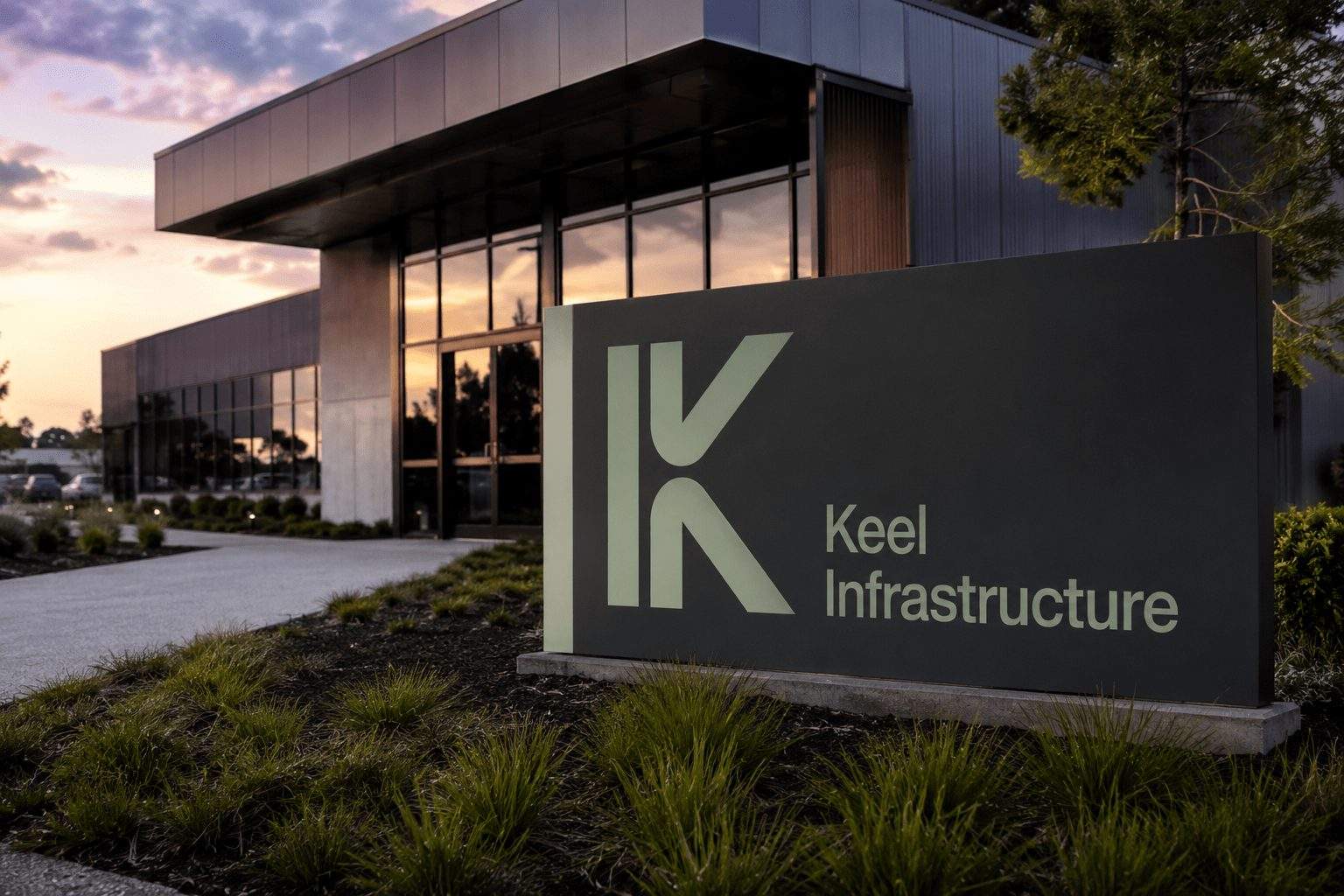
Keel Infrastructure Corp. shares rose Wednesday morning after the company closed a $458 million financing that had been only proposed last week. The move drops some uncertainty for investors as Keel, formerly Bitfarms, pushes further into AI data-center projects. The stock was quoted at $5.47, up 0.83%, as of 09:59 a.m. in New York, according to Markets Insider.
Keel’s latest move is different from what was announced yesterday. In a June 9 SEC filing, the company said it issued $458 million of 1.250% convertible senior notes due 2032, exercising the full $58 million option for initial buyers. These notes can turn into stock if certain terms are met, so investors have to watch both the cash inflow and the dilution risk.
Keel’s financing round finished larger than what investors first saw. A June 5 filing from Keel showed the deal had been bumped up from $350 million to $400 million. Investors also got a chance to buy another $58 million, and the final figures show they took the full option.
That extra capital gives some reason for bullishness. Keel said the offering brought in around $445.4 million in net proceeds, not counting estimated offering expenses or capped-call costs. The company said it could spend what’s left on general corporate purposes, with possible uses like deposits on long-lead equipment and letters of credit for data-center expansion and acceleration projects.
The math on dilution comes from the other side. The notes convert at an initial price of around $7.41 per share, about 25% higher than Keel’s $5.93 Nasdaq close on June 4. Keel put out a capped-call price starting at $11.86 a share, which is double that June 4 close. A capped call is a hedge that companies use to control possible dilution from converts, but it only helps up to a certain cap.
Keel paid about $41.7 million for the capped calls, the SEC filing showed. The filing also said as many as 77.2 million shares could be issued at first if the notes are converted, with the typical adjustments. That’s why the stock might get a boost from better liquidity, but investors still have concerns about how many shares could hit the market later.
Keel said its capped-call hedge could drive some trade in the stock. In the pricing update, the company told investors that hedge counterparties or their affiliates might buy shares or use derivatives right after pricing. They could later change their hedges in the secondary market. Keel said this trading could affect the price of its common shares or the notes.
Keel is out raising capital as it tries to shed its image as a Bitcoin miner. The company now pitches itself as a North American digital infrastructure and energy player, saying it builds data centers and energy projects for high-performance computing — the kind of big computing needed for AI and similar workloads. Keel says it has a 2.2-gigawatt pipeline, along with grid ties in Pennsylvania, Washington and Québec.
Investors now will be watching if the cash lets Keel speed up at Panther Creek, Sharon, and Moses Lake. Keel said it plans to use existing liquidity to handle those projects through leasing, while the extra funds should add flexibility for “value-add investments” in ongoing developments.
Keel already had a large balance sheet ahead of this deal. As of May 8, Keel showed about $533 million in liquidity, with around $336 million in unrestricted cash and $197 million in unencumbered Bitcoin. Earlier in 2026, the company said it sold 269 Bitcoin for $20 million, following an earlier plan to wind down its Bitcoin holdings.
Operations remain uneven. First-quarter revenue from continuing legacy business dropped 23% from a year ago to $37 million. Loss from continuing operations also expanded, coming in at $128 million, compared to $38 million a year earlier. Adjusted EBITDA, which backs out interest, taxes, depreciation and amortization, swung to negative $17 million after posting positive $7 million in the same period last year.
Keel’s switch to AI infrastructure could drag out, run over budget, or miss out on good lease deals. The company points to its short track record and ongoing losses. Other risks Keel lists include construction setbacks, reliance on power prices, supplier issues, rivals in the data center space, the chance customers don’t pay, capped-call counterparty risk, and possible dilution from its convertible notes.
The market is taking the completed financing as a mild positive for now, not a full reset. Traders are watching to see if Keel can move Panther Creek, Sharon and Moses Lake from funded projects to leased AI-infrastructure before the new convertible debt starts to dominate what investors focus on.
Related articles: NASDAQ:KEEL