
New York, May 11, 2026, 18:53 (EDT)
Keel Infrastructure Corp posted a bigger first-quarter loss Monday. The company, formerly Bitfarms, said it holds $533 million in liquidity, aiming to secure customer leases at three North American AI data-center locations before year-end. Revenue from its legacy operations dropped 23% to $37 million. Loss from continuing operations deepened to $128 million, or 21 cents per share.
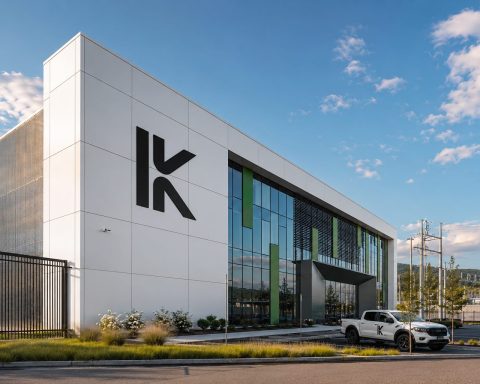
This report lands as Keel’s initial quarterly check-in after shifting its base to the U.S. and dropping the Bitfarms name on April 1. The company is taking those energy-hungry bitcoin mining rigs and repurposing them for high-performance computing — the kind of muscle needed for AI and other data-heavy operations.
It’s not a footnote anymore: miners like IREN, TeraWulf, and Core Scientific are redirecting their resources into AI and high-performance computing. The investor lens has shifted, away from how much bitcoin gets mined and toward the value of contracts for power, cooling, and data-center infrastructure.
Forget about production numbers for now. Keel’s short-term focus, CEO Benjamin Gagnon said, is landing leases. By the close of 2026, the company wants deals signed for three sites: Panther Creek, Sharon, and Moses Lake.
Gagnon described the rebrand as “marking the completion of a nearly two-year strategic transformation,” as the company moves away from Latin American megawatts to zero in on North American HPC and AI markets. Keel noted it had zoning approvals locked in and was moving forward on land development and environmental permits at Panther Creek, Sharon, and Moses Lake. GlobeNewswire
The balance sheet connects it all. Keel put liquidity at roughly $336 million in unrestricted cash and another $197 million in unencumbered bitcoin as of May 8—bitcoin not held as collateral. Between Jan. 1 and May 8, the company offloaded 269 bitcoin, pulling in $20 million as it moved to reduce its bitcoin exposure.
Chief Financial Officer Jonathan Mir said liquidity will cover the three main sites up to lease signing, help kick off construction in Moses Lake, and take care of G&A expenses through 2028. Mir added Keel may consider a credit facility or at-the-market equity raise later this year—common options for public companies—but management maintains there’s no need to access capital markets just to get to the leasing phase.
Panther Creek, sitting in eastern Pennsylvania, stands out as Keel’s main site. The company reports 350 megawatts of secured gross capacity there, tied up through an energy service agreement with PPL. Securing megawatt-scale power—essential for running AI data centers—has turned into a major hurdle.
Keel said the Sharon facility in western Pennsylvania has locked in 110 megawatts with FirstEnergy—30 megawatts are already running through an operational substation, with another 80 megawatts under development. Out in Moses Lake, Washington, the company is developing an 18-megawatt site, holding an option for 10 more. Bitcoin mining activities at Moses Lake are in the process of being wound down.
The economics remain up in the air. On the call, Gagnon fielded a question about tenant mix, saying hyperscaler customers might deliver “tighter” economics but better credit strength. Neoclouds—those newer AI-focused cloud companies—could be willing to pay more, yet bring their own higher capital costs. The Motley Fool
Execution is where the trouble could start. In its filing, Keel flagged an evolving business model that might not pan out, hefty costs tied to building data centers, and a gauntlet of risks—delays, cost overruns, permitting headaches, heavy reliance on power, plus rivals with deeper pockets in the HPC game. The company also cautioned that trading its securities comes with high risk.
Despite everything, the stock kept climbing. Keel finished Monday’s session at $4.30 on Nasdaq, up 8.3% for the day. That puts the company’s valuation near $2.25 billion, according to TradingView figures.
Related articles: NASDAQ:KEEL
![US Stock Market Today 08/23/2026 [UPDATE: 08:13 EDT] [Nvidia and PCE Face a Bond-Stressed Market: Weekly Recap and Week Ahead]](https://ts2.tech/wp-content/uploads/2026/08/US-market-dashboard-2026-08-23-0810-480x384.jpg "US Stock Market Today 08/23/2026 [UPDATE: 08:13 EDT] [Nvidia and PCE Face a Bond-Stressed Market: Weekly Recap and Week Ahead]")