- Brightest Comet of 2025: Comet C/2025 A6 (Lemmon), discovered in January 2025 at Arizona’s Mt. Lemmon Observatory, has rapidly brightened to around magnitude +4 in late Octoberts2.tech. Experts are hailing it as “the best and brightest comet to view from Earth this year”sfgate.com – visible under dark skies and even faintly to the naked eye.
- Now or Never (in Our Lifetime): This icy visitor won’t return for roughly 1,300 yearsskyatnightmagazine.comsfgate.com. It made its closest pass by Earth on October 21 at about 56 million miles awaylivescience.com. After shining through early November (perihelion around Nov. 8), Comet Lemmon will vanish into the depths of space until around the year 3179livescience.com.
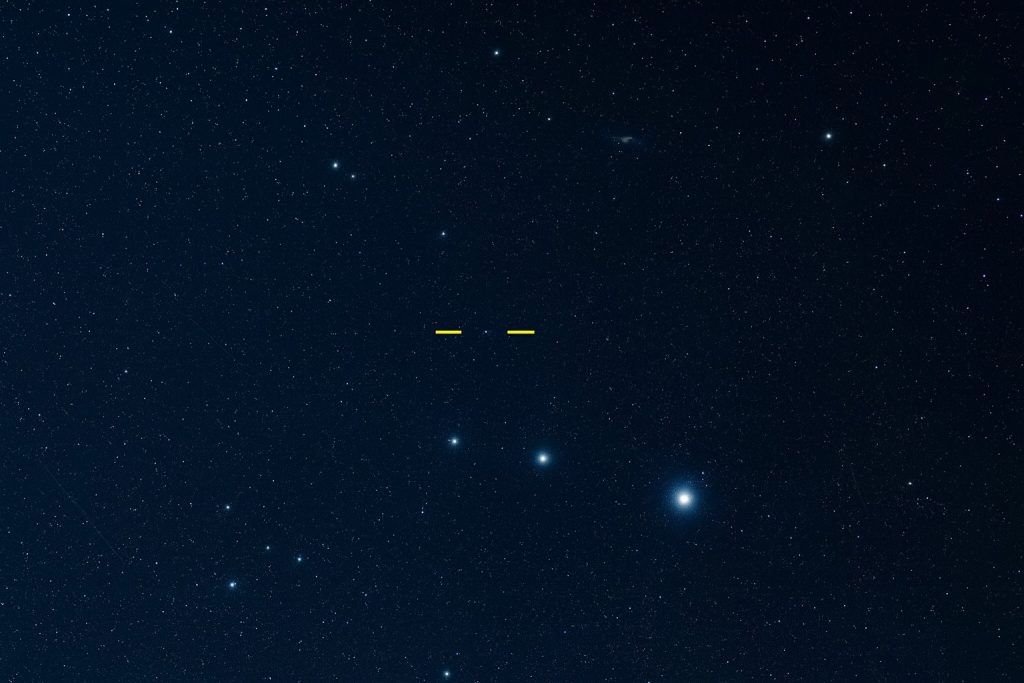
- Where and When to Spot It: Look low in the northwestern sky about 45–90 minutes after sunset on clear evenings. The comet currently appears near the constellation Boötes (below the Big Dipper’s handle and not far from the bright star Arcturus)skyatnightmagazine.com. You’ll likely need binoculars or a telescope to see its fuzzy green glow and tail, unless you have very dark skiesskyatnightmagazine.com. “The fact that you can see it easily with binoculars makes it fairly unusual… it’s something to go and enjoy, particularly if you’ve never seen a comet before,” advises Dr. Robert Massey of the Royal Astronomical Societyras.ac.uk.
- Meteor Shower Companion: Comet Lemmon’s celestial show coincides with the Orionid meteor shower (peaking around Oct. 21–22). The Orionids are debris from Halley’s Comet, meaning if you catch a shooting star while comet-gazing, you’re essentially witnessing two comets at once – the streaking meteor is a tiny piece of Halley’s Comet burning upskyatnightmagazine.com. Under moonless dark skies, about 10–20 meteors per hour might be visible at the Orionids’ peakts2.tech.
- Dynamic and Unpredictable: Like all comets, Lemmon can be capricious. In mid-October, an astrophotographer captured Comet Lemmon’s tail being “shredded” by a gust of solar wind on Oct. 18livescience.com – a spectacular disconnection event that temporarily tore off parts of its glowing taillivescience.com. The comet remained intact and continued brightening, but astronomers caution that comet behavior is hard to predict. As veteran comet observer David H. Levy quips, “Comets are like cats: they have tails, and they do precisely what they want”ts2.tech. In other words, brightness forecasts can change overnight, so seize any clear night to see it.
A Once-in-a-Millennium Visitor Lights Up the Sky
If you haven’t been skywatching lately, now is the time – Comet C/2025 A6, nicknamed Lemmon, is putting on its best show in late October 2025. This rare comet was first spotted in January by the Mount Lemmon Survey in Arizonasfgate.com. Since then it has been steadily brightening as it races toward the inner solar systemspace.com. By this week, Comet Lemmon reached magnitude ~4, making it one of the brightest comets of the year and borderline visible to the unaided eye under ideal conditionsskyatnightmagazine.com. For context, that’s about as bright as the dimmest stars in the Big Dipper. Most people will need optical aid, but even a small pair of binoculars reveals the comet’s ghostly green coma (glowing atmosphere) and faint tail against the twilight skyskyatnightmagazine.com.
What makes Comet Lemmon truly special is its rarity. It’s a long-period comet on an orbit roughly a millennium longlivescience.com. “Now’s your best chance to see Comet Lemmon, as it will soon be lost from view and not visible for another 1,300 years,” noted BBC Sky at Night Magazineskyatnightmagazine.com. In fact, once it loops around the Sun in early November and heads back to the outer solar system, it won’t return until the 32nd century! For stargazers today, that means this is literally a once-in-a-lifetime opportunity. “This will be the only chance to see this comet,” emphasized Gerald McKeegan, an astronomer at Chabot Space & Science Centersfgate.com.
Astronomers are thrilled because bright comets have been scarce in recent years. “Comet Lemmon is pretty much at its best visibility right now,” said Dr. Robert Massey, deputy director of the Royal Astronomical Societyras.ac.uk. He explained that while Lemmon “isn’t going to be like [Comet] Hale-Bopp was… or even NEOWISE in 2020” in terms of brilliance, “it’s a reasonably bright comet as they go”. The fact we can easily see it with simple binoculars “makes it fairly unusual, and I think for that reason alone it’s something to go and enjoy, particularly if you’ve never seen a comet before”*ras.ac.uk.
How to Spot Comet Lemmon Before It’s Gone
To find Comet Lemmon, timing and location are key. The comet is currently visible in the early evening, shortly after the sky gets dark. Plan to head out about 45 minutes to an hour after local sunsetsfgate.com. At that time, Lemmon appears low in the northwest sky. Observers in mid-northern latitudes have the best view. Face northwest and find the bright orange star Arcturus (in the constellation Boötes, now setting in the west). The comet has been gliding just to the left of Boötes in recent daysskyatnightmagazine.com, crossing into the faint stars of Serpens as it moves further west each nightforbes.com. It will only be above the horizon for a short window after dusk, so a clear view toward the western horizon is important.
Because Comet Lemmon is not extremely bright, get away from city lights if possible. Find a dark, open area and give your eyes time to adapt to the dark. Use binoculars or a small telescope for the best chance to spot it – through binoculars it will look like a fuzzy star with a hint of a tail. “It will stand out as a fairly bright, fuzzy object,” Dr. Massey noted of the comet’s appearance in binocularsras.ac.uk. Scanning slowly in the target area can help; some skywatchers sweep the binocular view just below the Big Dipper’s handle or near Arcturus to locate the comet’s haze. Gerald McKeegan suggests first finding Arcturus, then looking a bit below and to the right (west) of it on successive nightsras.ac.uk. As the days go by, Comet Lemmon is sliding gradually southward and lower – by the end of October it will be deeper in the twilight, so the sooner you try, the betterskyatnightmagazine.com.
Notably, a second comet is lurking in the vicinity too. Comet C/2025 R2 (SWAN), discovered just last month, made its own closest approach around October 20ts2.tech. However, Comet SWAN is smaller and dimmer – about magnitude 6 at best, right on the verge of naked-eye visibilityts2.tech. You’ll need binoculars or a telescope to see SWAN at all. It’s been spotted not far from Comet Lemmon in the sky, but generally fainter and currently visible more toward the west/southwest after sunset and also before dawn low in the eastspace.com. While SWAN is a fascinating new comet in its own right, Comet Lemmon outshines it by a couple magnitudes, making Lemmon the headline act of this cosmic duet. Seeing two comets at once in the same week is a rare treat – something that has skywatchers and astronomers abuzzts2.tech.
One advantage for observers this week: the Moon is a thin crescent and set early, so its light won’t interfere muchfacebook.com. (A waxing crescent Moon low in the southwest might be visible as a pretty backdrop after sunset, but it’s not bright enough yet to spoil the comet’s visibility.) By later next week, the Moon will grow and linger longer, adding glare to the evening sky. That’s why many are calling this weekend the “final chance” to easily spot Comet Lemmonforbes.com under dark skies. So if weather permits, seize the opportunity to comet-gaze now.
Shooting Stars from Halley’s Comet (Orionid Meteor Shower)
October’s sky show offers a two-for-one special: while you’re out looking for Comet Lemmon, you might also catch a meteor streaking across the sky. The annual Orionid meteor shower – caused by debris from Halley’s Comet – peaks in late October, roughly the nights of October 20–22ts2.tech. This year’s Orionids peak aligned perfectly with a New Moonts2.tech, meaning no moonlight washed out the meteors during the prime nights. Under clear dark conditions, observers could see on the order of 10 to 20 meteors per hour during the peakts2.tech, and a few stragglers each night through early November.
The Orionid meteors are fast and bright (Halley’s Comet’s dust hits Earth’s atmosphere at ~66 km/s, making fiery streaks)ts2.tech. They often leave persistent trains of glowing ionized gas. If you spot a meteor, try to trace its path backward – Orionid meteors will appear to originate from the direction of Orion (which rises in the east late at night). In the evening hours, Orion’s radiant point is low, so most Orionids will appear long and skim the atmosphere. By midnight to pre-dawn, Orion is higher and meteors can flash in any part of the sky.
Why is this meteor shower relevant to the comet? In a poetic twist, the Orionids are literally pieces of a comet. Halley’s Comet, during its countless trips around the Sun, has shed dust that now lies in Earth’s orbital path. Each year in October, Earth plows through Halley’s debris stream, and those bits of comet ignite as “shooting stars.” So if you manage to observe Comet Lemmon and an Orionid meteor in the same night, you’ve essentially witnessed two different comets – one with your eyes directly (Lemmon) and one indirectly (a fragment of Halley)skyatnightmagazine.com. As Sky at Night Magazine quipped, you’d be seeing “two comets in one night”skyatnightmagazine.com. It’s a great reminder that comets – whether visible as a fuzzy ball in a telescope or as a quick streak of light – are active participants in the cosmic ecosystem, delivering both breathtaking views and annual light shows.
Comet Surprises: Lemmon’s Tail Gets Ripped
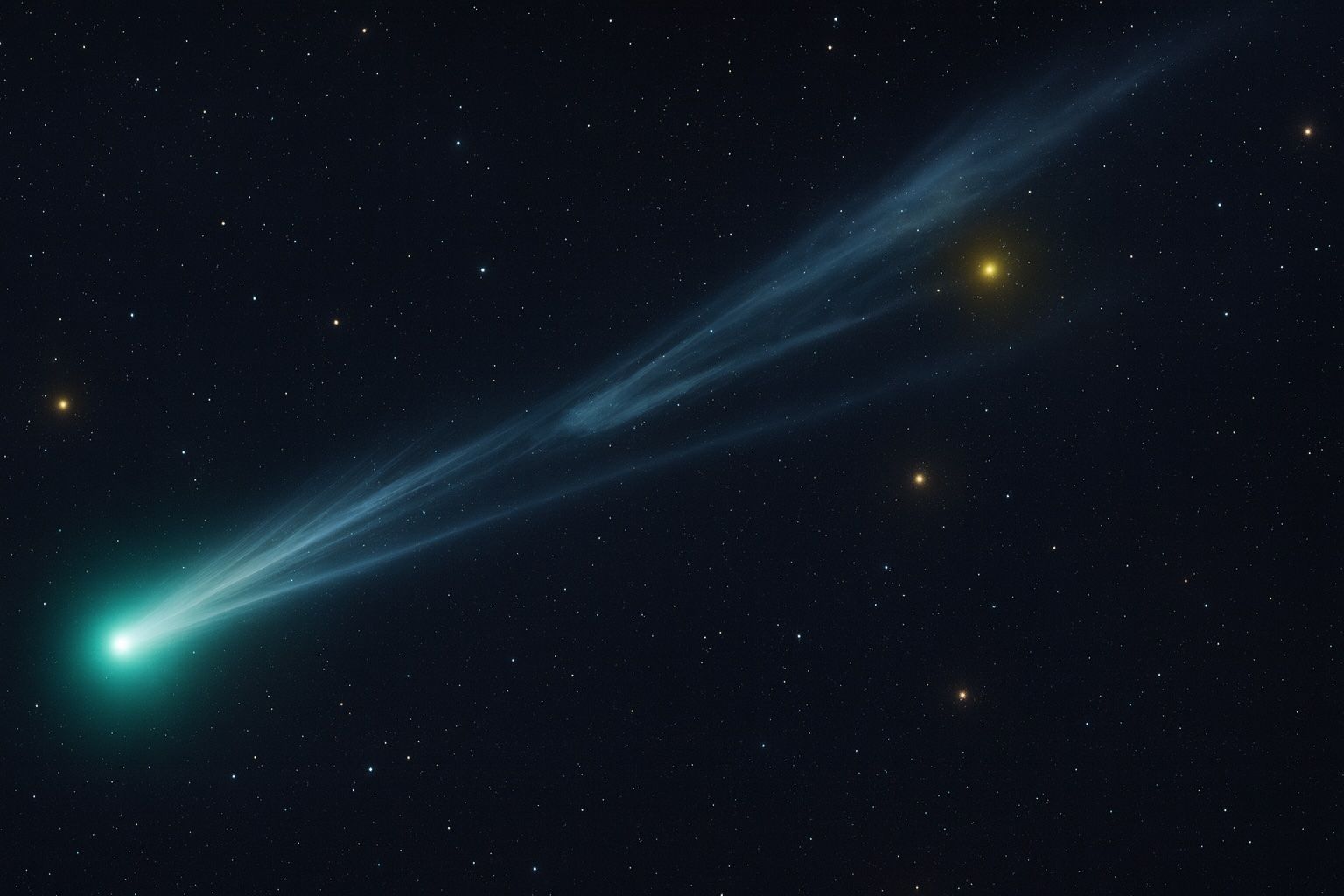
Comet Lemmon hasn’t just been a static puffball in the sky – it’s been putting on some dramatic behavior of its own. On October 18, just days before its closest approach, observers witnessed a startling event: Comet Lemmon’s long tail suddenly appeared fragmented, as if part of it had been torn away. Indeed, an astrophotographer in Europe snapped a stunning image of the comet’s “flowing tail getting shredded by a strong gust of solar wind”livescience.com. Solar wind – the stream of charged particles blowing outward from the Sun – can interact with a comet’s ion tail, sometimes causing it to twist or even disconnect. In Lemmon’s case, a particularly strong solar outflow on Oct. 18 literally broke off sections of the taillivescience.com, creating a visible gap.
These “disconnection events” are relatively rare but have happened with bright comets beforelivescience.com. (Skywatchers may recall comet Nishimura in 2023 also had its tail severed by a solar storm.) Fortunately, losing a piece of its tail doesn’t harm the comet’s core. Comet Lemmon kept sailing along its orbit, and within hours the tail likely reformed as fresh material streamed off its nucleuslivescience.com. Still, the episode underscores that comets are dynamic, living performers on the celestial stage. One night they might sport a long, elegant tail; the next night that tail could look shorter or strangely kinked. It’s all part of the excitement – you never know exactly what a comet will do.
Astronomers love to say that comets are notoriously unpredictable. Before Comet Lemmon’s arrival, forecasts estimated it “could reach around magnitude 4 (or even brighter) by late October”ts2.tech, and indeed it has roughly hit that mark. But comets have surprised us many times – sometimes flaring unexpectedly, other times fizzling out early. As comet expert David H. Levy famously joked, “Comets are like cats: they have tails, and they do precisely what they want.”ts2.tech In Lemmon’s case, its overall performance has matched optimistic predictions, and it became the year’s most observed comet. Yet the tail-tearing incident on Oct. 18 was a vivid reminder that anything can happen when a ball of ice and dust dances near the Sun.
Another quirk: Comet Lemmon’s eye-catching green color. Photographers have captured a faint emerald hue around its headts2.techsfgate.com. That green glow comes from molecules like diatomic carbon (C₂) and cyanogen in the comet’s coma; when energized by sunlight, they emit green lightsfgate.com. It’s the same reason some comets in the past (e.g. Comet Swan or Comet Lovejoy) looked teal-green. So if you do spot Lemmon through binoculars or in a time-exposure photo, don’t be surprised by its “shamrock-colored” tintsfgate.com – you are literally seeing the fluorescence of exotic gases released from a 4.5-billion-year-old time capsule.
What’s Next: Forecast and Final Thoughts
Over the coming days, Comet Lemmon will gradually shift and dim, but there’s still a bit of time to catch it. Astronomers estimate the comet could peak slightly in brightness around October 26–27 as it gets a tad closer to the Sunsfgate.com. After that, as it recedes from Earth and eventually swings around the Sun on November 8, it will likely fade from view in early November. By November 3–5, Lemmon may no longer be visible to casual observerssfgate.com, lost in the Sun’s glare and diminishing in brightness. Essentially, the window to observe it is late October into perhaps the first days of November at the latest.
Once Comet Lemmon rounds the Sun, it will head back toward the outer solar system on a trajectory that won’t bring it back our way for many centuries. In fact, due to gravitational tweaks (Jupiter’s gravity altered its orbit a bit during this pass), its next return is roughly 1,154 years from now – around the year 3179livescience.com. For all practical purposes, this is our last chance to see this comet. It joins the ranks of “once-in-a-millennium” visitors that grace our skies and then disappear into the darkness of space, destined to be seen next by future generations (or perhaps future species).
From a public interest standpoint, Comet Lemmon has been a boon. It has captivated veteran astronomers and first-time stargazers alike, trending on social media as people share their grainy comet photos and viewing tips. Telescopes and binoculars have been flying off the shelves a bit faster this month, according to some retailers, as folks seize the opportunity to witness the rare green comet. Planetariums and astronomy clubs have reported upticks in attendance for comet-watching events, leveraging the moment to educate people about the night sky (though such enthusiasm is hard to quantify in financial terms). Unlike an eclipse or a rocket launch, a comet doesn’t directly move any economic needles – there’s no “Comet Lemmon Inc.” stock to buy – but the real payoff is in inspiration. Interest in astronomy tends to spike during events like this, a positive sign for science outreach. “The excitement around a bright comet is priceless,” said one skywatcher, adding that no stock market surge can match the wonder of seeing a cosmic visitor with your own eyes.
In the end, Comet Lemmon’s legacy might be the memories it creates. If you have clear skies in the coming nights, take a few minutes to step outside and look up at the northwest horizon. You’ll be joining people around the world in bidding farewell to a cosmic traveler that won’t return for dozens of generations. Whether you glimpse it as a tiny smudge in binoculars or simply know it’s out there, Comet Lemmon is a reminder of how rare and beautiful our universe can be. Don’t miss the chance to witness this “green ghost” of the cosmos before it fades – after all, we won’t get another like it until the 1300-years-later next time!skyatnightmagazine.comsfgate.com
Sources: Comet Lemmon coverage – Forbesforbes.com; BBC Sky at Nightskyatnightmagazine.comskyatnightmagazine.com; Royal Astronomical Societyras.ac.ukras.ac.uk; Live Sciencelivescience.comlivescience.com; TS2 / Tech Timests2.techts2.tech; SFGatesfgate.comsfgate.com; Space.comspace.com; NASA/AMS Orionid forecaststs2.tech.