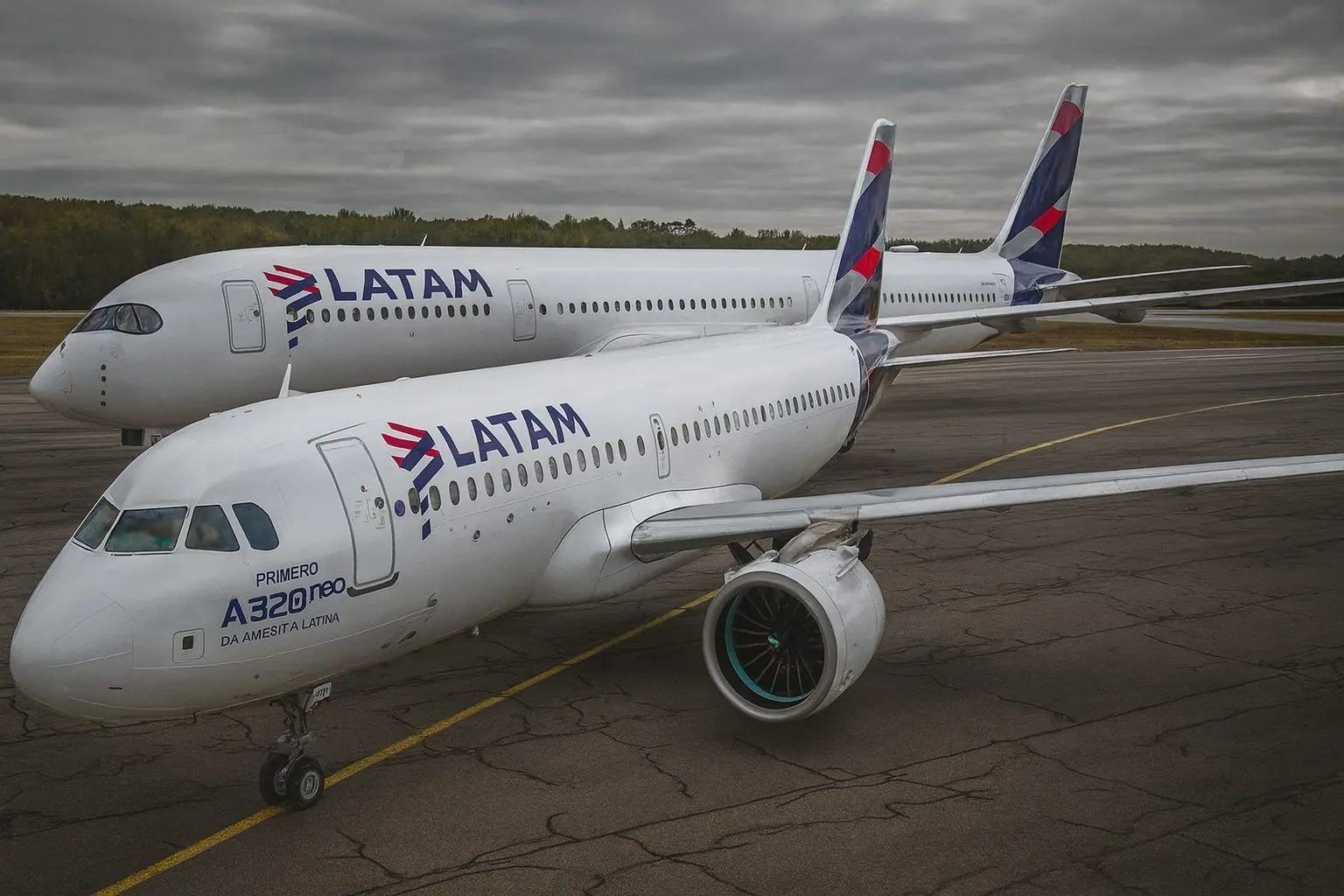
Curaçao has taken a decisive step toward deepening its ties with Latin America. On 2 December 2025, the island welcomed two inaugural LATAM Airlines flights from Bogotá and Lima, marking the first time the region’s largest airline group connects Curaçao directly with both Colombia’s capital and Peru.
As of 5 December 2025, LATAM has formalized operational details for these routes, and travel trade media across the Americas are framing the move as a turning point in Curaçao’s push to attract more South American visitors and diversify beyond its traditional European and North American markets.
The New Routes: Schedules, Flight Numbers and Aircraft
According to LATAM’s latest route bulletin for Curaçao, published on 5 December 2025, the carrier is now operating two non-stop routes into Hato International Airport (CUR):
Bogotá – Curaçao (LA4970 / LA4971)
- Route: Bogotá (BOG) – Curaçao (CUR) – Bogotá (BOG)
- Frequencies: 3x weekly – Tuesdays, Thursdays and Sundays
- Flight numbers:
- LA4970: BOG → CUR
- LA4971: CUR → BOG
- Aircraft: Airbus A320 (typical single-aisle configuration)
- Typical flight time: around 2 hours 15–20 minutes, based on initial operations and independent flight tracking data.
These flights join existing non-stops on Avianca and Wingo, bringing the total number of weekly Bogotá–Curaçao flights to around 18, spread across three airlines and using a mix of A320-family and Boeing 737 aircraft.
Lima – Curaçao (LA2426 / LA2427)
- Route: Lima (LIM) – Curaçao (CUR) – Lima (LIM)
- Frequencies: 3x weekly – Tuesdays, Fridays and Sundays
- Flight numbers:
- LA2426: LIM → CUR
- LA2427: CUR → LIM
- Aircraft: Primarily Airbus A320; LATAM has also signaled flexibility to use A319 equipment on the route, with capacities of roughly 138–174 seats depending on the model.
- Non-stop flight time: about 4 hours 40 minutes, making it the fastest available option between Lima and Curaçao.
Crucially, this Lima service is Curaçao’s first-ever direct connection to Peru, turning LATAM’s Lima hub into a new Caribbean gateway for travelers from Peru, Brazil, Chile, Argentina and other South American markets who previously had to route via Bogotá or Panama City.
Operational Update: What LATAM Announced Today (5 December 2025)
LATAM’s 5 December trade notice on “Routes to and from Curaçao (CUR)” adds several operational and regulatory details that matter for both travel planners and passengers:Latam Trade
- Start of operations: Both routes are formally listed as operating “as of December 2, 2025.”
- Cabin classes: The flights are sold in Economy and Premium Economy, aligning with LATAM’s typical A320-series configuration.
- Service animals and pets:
- Due to Curaçao’s rules on animals arriving from South America, LATAM states that pets in cabin (PETC), pets in hold (AVIH) and emotional support animals (ESAN) are not accepted on these flights.
- Service animals (SVAN) are allowed only with advance authorization from Curaçao’s Government Veterinary Service, including pre-approval, health documentation and a refundable import fee paid before travel.
- Digital immigration form: All passengers (except Curaçao residents) must complete the DICARD Curaçao Immigration Electronic Data Card within seven days before arrival and present it—digitally or printed—on entry.
From a trade perspective, the bulletin essentially confirms that these routes are not a seasonal experiment but part of LATAM’s core network, with full ancillary services enabled and standard policies applying to most special services.
Why Lima and Bogotá Change the Map for Curaçao
Industry coverage this week has consistently stressed that the real power of the new flights lies in how they plug Curaçao into LATAM’s broader South American network.
Bogotá: A Northern Andes Gateway
Bogotá’s El Dorado International Airport is among South America’s busiest hubs, serving not just Colombia’s domestic market but also acting as a bridge between the Andes, Central America and the Caribbean.
With LATAM’s entry on BOG–CUR alongside Avianca and Wingo, Curaçao gains:
- More frequency choices across three airlines and multiple daily departure windows.
- Improved connectivity from secondary Colombian cities via same-day connections in Bogotá.
- Competitive pricing pressure, as three carriers now vie for Colombian and regional traffic into Curaçao.
For Colombians, Curaçao offers a Caribbean island that’s outside the traditional mass-market circuit of Cartagena and San Andrés, but still within a short flight—roughly two hours.
Lima: LATAM’s Long-Haul Hub Joins the Party
Lima is LATAM’s key west-coast hub, consolidating traffic from Peru, Chile, southern Brazil, Argentina and Bolivia. Until now, travelers from those markets typically reached Curaçao via Bogotá or Panama City, adding both time and complexity.
With the new Lima–Curaçao non-stop:
- The fastest journey drops to about 4 hours 40 minutes, versus 6–9 hours on typical one-stop itineraries.
- LATAM can sell smooth one-ticket connections from cities like Santiago, São Paulo, Buenos Aires or La Paz via its Lima hub, leveraging existing banked schedules.
- Curaçao suddenly appears in fare searches and route maps across LATAM’s South American network, dramatically lifting its visibility with consumers and travel agents.
For Curaçao, Lima therefore isn’t just another origin city; it’s a feeder funnel from much of the southern cone.
South America’s Rising Role in Curaçao’s Visitor Mix
The new flights are landing into an island that has already been quietly shifting its tourism balance.
According to the Curaçao Tourist Board’s State of the Industry 2024 report, South America accounted for 20% of stayover visitors in 2024, up from 18% in 2023. Nights spent by South American visitors grew around 25% year-on-year, outpacing growth from other regions.
Europe still leads with roughly 42% of stayover market share, while North America sits around 30%. But the South American trendline is unmistakably upward.
More recent data underline the momentum:
- October 2025: Curaçao welcomed 61,013 stayover visitors, a 14–15% increase compared to October 2024.
- South America posted about 16% growth for the month, with Colombia alone registering roughly 4,500 visitors and 15% year-on-year growth.
South American visitors also tend to stay around 6–7 nights on average, longer than many North American travelers, and nearly 60% of them choose hotel accommodation, according to CTB’s 2024 data.
That combination—rising share, strong growth and longer stays—is exactly why Curaçao has been courting more capacity from the region and why LATAM’s new routes are arriving at a strategic moment.
Tourism Transformation: From Cruise Stop to Stayover Destination
Curaçao’s tourism story over the last few years has been one of transformation rather than simple recovery.
An in-depth analysis by hospitality consultancy HVS notes that the island hosted over 1.57 million total tourist arrivals in 2024, a significant jump from pre-pandemic 2019. More importantly, stopover arrivals by air are catching up with cruise passengers after years of cruise dominance.
This shift has been driven by:
- Investment in Curaçao International Airport, including a major terminal expansion and upgraded infrastructure to handle more long-haul and regional traffic.
- A wave of new internationally branded hotels and resorts, which has pushed hotels ahead of apartments and villas as the primary lodging choice for stopover visitors.
- Targeted marketing aimed at higher-spend segments looking for culture, dining and diving—not just sun-and-sand getaways.
South America fits neatly into that strategy. Visitors from the region tend to:
- Travel in families and couples rather than large tour groups.
- Combine shopping, gastronomy and nightlife with beach time.
- Return more often if air links are convenient and fares stay competitive.
The LATAM routes, especially via Lima, plug directly into that evolving positioning.
Capacity, Numbers and What the New Flights Could Add
While it’s too early—just a few days after launch—to measure actual load factors on the new flights, we can sketch a realistic capacity scenario using publicly available figures.
LATAM’s A320 aircraft typically seat around 174 passengers, while A319s used on similar regional routes carry about 138 passengers. LATAM has also reported a group-wide load factor of roughly 83.5% in recent quarters.
If we assume:
- 6 weekly rotations (3 BOG–CUR, 3 LIM–CUR), and
- an average of ~160 seats per flight across both routes,
that yields a weekly capacity of ~960 seats inbound to Curaçao on LATAM alone. At an 80–85% load factor, that’s roughly 3,200–3,500 passengers per month if the operation matures as expected.
For context, Curaçao’s South American arrivals in October 2025 totaled just under 13,000 visitors. Under a steady-state scenario, the LATAM routes could add 15–25% to monthly South American arrivals once fully ramped up—especially if some capacity represents net new demand rather than diverted traffic from other carriers.
These are not official forecasts, but they illustrate why Curaçao’s tourism and airport officials have treated this week’s inaugurals as the opening of a new chapter, not just another route announcement.
Impact on Hotels, Attractions and Local Business
Local tourism leaders and industry media point to several likely ripple effects from the new flights:
- Higher year‑round occupancy
South American travel patterns are less tightly tied to the July–August and December peaks that dominate European and North American demand, which could help smooth out seasonality for Curaçao’s hotels and vacation rentals. - Boost for mid‑ to upper‑scale hotels
With nearly 60% of South American visitors already opting for hotels, branded properties and full-service resorts stand to gain from increased flight connectivity and easier package-building for regional tour operators. - Growth in culture- and food-led tourism
Coverage this week in outlets like eTurboNews and Travel And Tour World has stressed Curaçao’s blend of Afro-Caribbean, Dutch and Latin American influences—music, architecture, street art and food—as a key selling point for Latin travelers seeking more than a beach-only trip. - More spend per visitor
South Americans, especially from Peru, Brazil and Chile, tend to book longer trips in the Caribbean when connectivity is good, often spending more on dining, shopping and excursions compared with short-stay cruise passengers.
Curaçao’s ongoing pipeline of hotel developments and renovations suggests that investors are betting on precisely this kind of sustained, higher-value growth from air arrivals.
Traveler Checklist: Practical Takeaways for the New LATAM Flights
For travelers and travel sellers looking to leverage the new services, a few practical points stand out from this week’s announcements and route data:
- Frequencies & days:
- Bogotá–Curaçao: Tue, Thu, Sun (LA4970/4971)
- Lima–Curaçao: Tue, Fri, Sun (LA2426/2427)
- Flight times (approximate):
- Bogotá–Curaçao: ~2h 15–20m non-stop
- Lima–Curaçao: ~4h 40m non-stop
- Cabins: Economy and Premium Economy. Business class is not offered on these routes.
- Connections via Lima: Good one-stop access from Santiago (SCL), São Paulo (GRU), Buenos Aires (EZE) and other southern cone cities through LATAM’s Lima hub, often with same-day connections.
- Immigration:
- All non-resident passengers must complete the DICARD online immigration form within seven days before arrival and carry proof (digital or printed).
- Pets & service animals:
- No pets in cabin or hold, and no emotional support animals accepted on these flights because of Curaçao’s animal-import rules from South America.
- Service animals are allowed only with advance pre-approval from Curaçao’s veterinary authorities and full paperwork presented at check‑in and on arrival.
Travelers should always verify latest requirements with LATAM and official Curaçao government sources before departure, as regulations can change.
Risks, Competition and Network Context
The Caribbean and northern South American aviation landscape remains fluid. A recent Venezuelan decision to revoke operating rights for several international airlines, including LATAM Colombia, underscored how geopolitical tensions can abruptly reshape route maps and airspace options.
Despite that, carriers like Copa and low-cost operators such as Wingo continue to provide connectivity between Venezuela, Colombia, Panama and Curaçao, and the island now hedges its exposure by being linked to multiple hubs—Bogotá, Lima, Panama City, Miami, Amsterdam, Toronto and others.
The new LATAM routes land in a competitive environment:
- On BOG–CUR, LATAM joins Avianca and Wingo, creating a three-airline corridor that should keep fares disciplined while expanding schedule options.
- On LIM–CUR, LATAM currently enjoys a unique non-stop position, with Avianca and Copa offering one-stop alternatives via Bogotá and Panama City, respectively.
In practical terms, Curaçao benefits when it is not beholden to a single carrier or hub—a lesson that many Caribbean destinations learned the hard way during the pandemic and subsequent network reshuffles.
Medium-Term Outlook: Could Latin America Rival Europe for Curaçao?
Looking beyond the first weeks of operation, the numbers hint at a plausible medium-term scenario in which South America becomes nearly as important to Curaçao as Europe:
- South America’s share of stayover visitors has already risen from 18% to 20% within a year.
- Nights spent by South American visitors are growing faster than those from any other region.
- Curaçao as a whole is tracking double-digit growth in visitor arrivals, with 2025 on course for another record year after a 13.3% increase in total visitors and more than 642,000 tourists reported in recent regional tourism coverage.
If additional Latin American capacity continues to be added—either through more frequencies on the current routes, new cities in Brazil or Argentina, or partnerships with other carriers—it is reasonable to expect South America’s share of Curaçao’s stayover market to climb into the mid‑20s over the next few years. That would still leave Europe as the single largest region, but with a far more balanced portfolio and less vulnerability to demand shocks in any one market.
For now, what’s clear is that this first week of December 2025 marks a structural shift: Curaçao is no longer just a Caribbean favorite for Dutch, U.S. and Canadian visitors. With LATAM’s new Lima and Bogotá flights, the island has formally entered the South American travel conversation—and Latin America now has a faster, more convenient pathway to one of the Caribbean’s most distinctive destinations.