NEW YORK, December 29, 2025, 06:42 ET
- A cluster of fireball reports logged around 5:59 p.m. ET Saturday spans New England and nearby states, an American Meteor Society database shows.
- The Quadrantid meteor shower is now in its active window ahead of an early-January peak, the society said.
- A bright moon near the peak is expected to wash out many faint meteors, the American Meteor Society said.
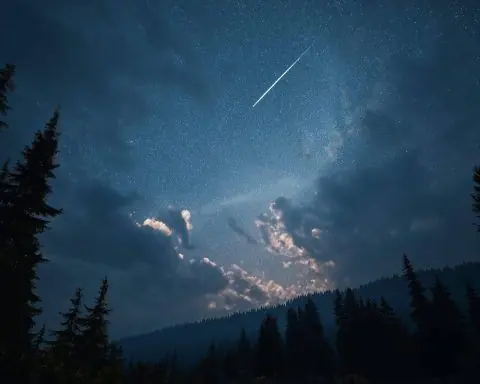
Dozens of skywatchers across New England filed reports of a bright “fireball” on Saturday evening, according to the American Meteor Society’s public log of sightings. The entries, clustered around 5:59 p.m. ET, came as the Quadrantid meteor shower’s active period begins, giving stargazers another reason to look up this week. https://fireball.amsmeteors.org/members/imo_view/browse_reports?event=PENDING&page=7
The timing matters now because the Quadrantids are one of the year’s more intense meteor showers when they peak, but the best activity typically concentrates into a narrow window. That makes planning — and timing — more important than for longer, drawn-out showers, the society said. https://www.amsmeteors.org/2025/12/viewing…
The American Meteor Society’s fireball log is crowdsourced, and many entries are marked as “pending,” meaning they have been submitted but not yet reviewed and linked to a specific event. Still, clusters of reports often flag a real, widely seen sky streak. https://www.amsmeteors.org/fireballs/fireb…
In the society’s log, multiple reports list 22:59 Universal Time (UT) — the global time standard often used in astronomy — which corresponds to 5:59 p.m. EST on Saturday, Dec. 27. Locations listed at that time include Salem, New Hampshire, and Middletown, Connecticut, along with towns in Massachusetts, Vermont and Rhode Island. https://fireball.amsmeteors.org/members/imo_view/browse_reports?event=PENDING&page=7
Other entries around the same minute appear from parts of New York and New Jersey, and some from Canada’s Quebec, suggesting the object was visible across a wide swath of the Northeast. Reports in the log also show estimated durations ranging from about 1.5 seconds to roughly 7.5 seconds. https://fireball.amsmeteors.org/members/imo_view/browse_reports?event=PENDING&page=7
A fireball is a very bright meteor — a fragment of space rock that burns up as it hits Earth’s atmosphere — often described by witnesses as a large, fast “shooting star.” The society’s database lets observers estimate brightness using “magnitude,” a scale where more negative numbers mean brighter objects. https://fireball.amsmeteors.org/members/imo_view/browse_reports?event=PENDING&page=7
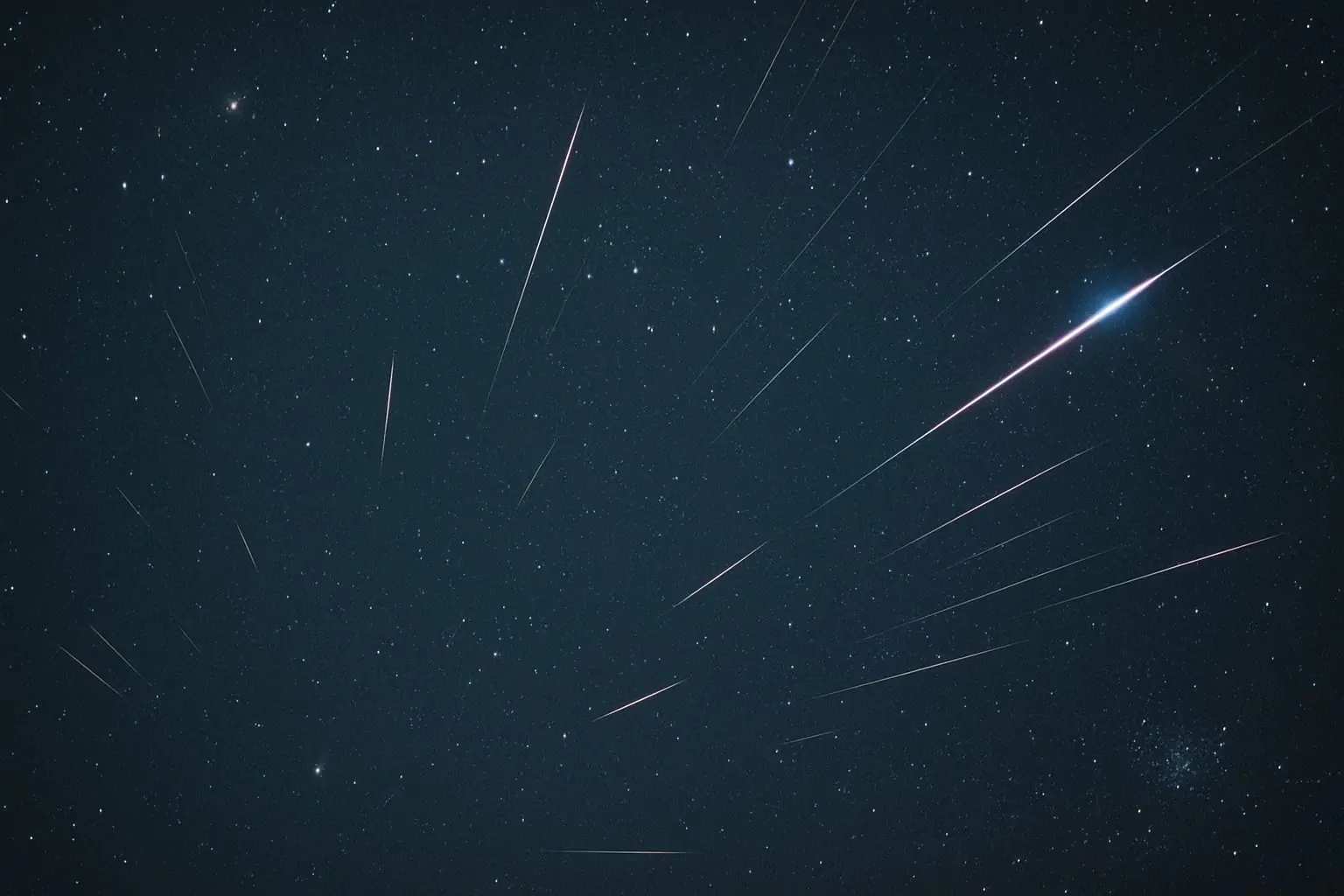
The weekend reports come as meteor watchers shift attention to the Quadrantids, a shower that becomes active in late December and typically peaks in early January. A meteor shower occurs when Earth passes through a stream of debris left behind by a comet or asteroid, producing streaks of light as particles burn up in the atmosphere. https://www.amsmeteors.org/2025/12/viewing…
“The main factor is that the display of strong activity only has a duration of about 6 hours,” Robert Lunsford of the American Meteor Society wrote in a Dec. 27 guide to the 2026 Quadrantids. He said the peak is short because the shower’s stream of particles is thin and Earth crosses it quickly. https://www.amsmeteors.org/2025/12/viewing…
Lunsford wrote that, unlike most meteor showers tied to comets, the Quadrantids have been linked to an asteroid, 2003 EH1, which takes about 5.5 years to orbit the sun. He said astronomers have discussed whether 2003 EH1 is a “dead comet,” or a rocky object that once behaved like one. https://www.amsmeteors.org/2025/12/viewing…
For viewers in the Northern Hemisphere, the guide says the shower’s “radiant” — the point in the sky from which the meteors appear to originate — starts low in the evening and becomes more favorable late at night. Lunsford said the radiant reaches a useful altitude around 2 a.m. local time, with the best chance to see meteors between then and dawn. https://www.amsmeteors.org/2025/12/viewing…
Forecasting a meteor peak is imprecise, but Lunsford wrote that predictions for 2026 range from 21:00 to 00:00 UT on Jan. 3–4, a window that favors Asia. He said lunar conditions will also weigh on viewing because the moon reaches its full phase on Jan. 3, obscuring many faint meteors. https://www.amsmeteors.org/2025/12/viewing…
Under clear skies in Asia, Lunsford wrote, observers may see about 10 to 20 Quadrantids per hour, while Europe may see roughly 10 per hour and North America less than 10 at best. He said rates are typically far higher in a darker, moonless sky, when the peak hits the right part of the world. https://www.amsmeteors.org/2025/12/viewing…
The society’s guide recommends facing the northeastern quadrant of the sky and watching for at least an hour, since short lulls and brief bursts can skew a quick look. It also urges observers who want to contribute useful data to record times and basic descriptions such as brightness and color, and to file separate reports for fireballs. https://www.amsmeteors.org/2025/12/viewing…
The American Meteor Society also encourages serious observers to submit visual observing forms to the International Meteor Organization, a separate group that collects meteor reports worldwide. https://www.imo.net