
NEW YORK, December 29, 2025, 06:44 ET
- Hubble logged a fresh 3I/ATLAS observation on Dec. 27, with more visits scheduled in early January.
- The comet is fading as it heads out of the solar system, after a December pass by Earth, NASA officials said.
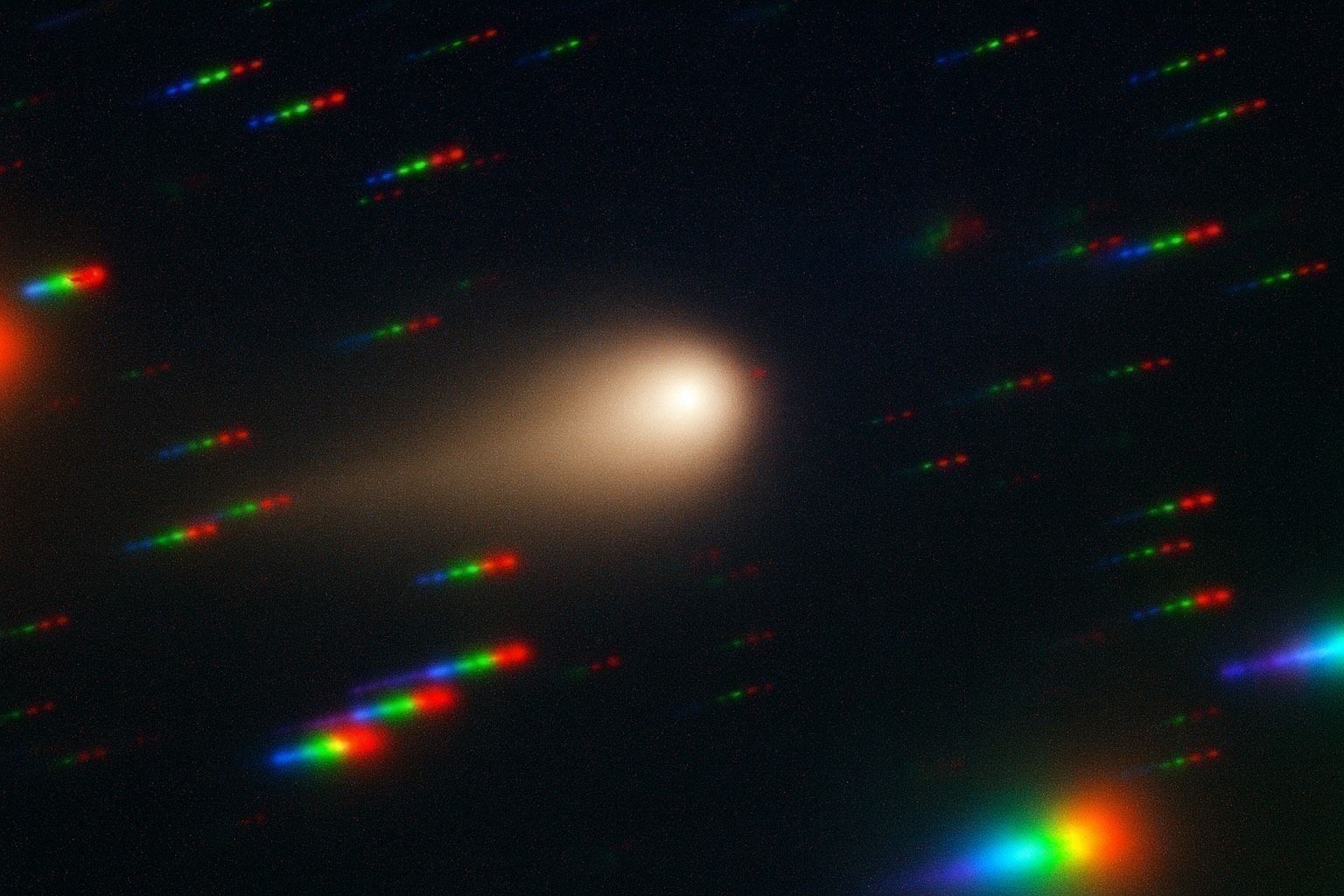
- A Harvard astrophysicist analyzing newly posted Hubble data said the object shows a double-jet structure, including a sun-facing “anti-tail.”
NASA’s Hubble Space Telescope has carried out a new observation of interstellar comet 3I/ATLAS, with the Space Telescope Science Institute’s status report showing a Dec. 27 visit now archived.
The update comes as 3I/ATLAS fades rapidly from view after swinging past Earth this month, while continuing on an outbound path that will next take it past Jupiter in March, NASA officials said in an Associated Press report.
That timing matters because 3I/ATLAS is only the third confirmed interstellar visitor ever spotted in the solar system, according to NASA, making each high-resolution look a rare chance to study material from another star system.
The STScI report shows the Dec. 27 observation is part of a continuing Hubble monitoring program and lists additional sessions scheduled from Jan. 7 onward.
Harvard astrophysicist Avi Loeb, writing about the newly available Hubble data, said the Dec. 12 and Dec. 27 images “reveal a double-jet structure,” with the brighter feature pointing toward the Sun. Loeb on Medium Medium
Loeb described the sunward feature as an “anti-tail,” a dust jet that appears to point toward the Sun rather than away from it. He said the relative brightness of the two jets changes between the two dates. Loeb on Medium Medium
“Anti-tail” is the term astronomers use when a comet shows a sun-facing dust feature — a rarer geometry than the familiar tail blown away from the Sun by light and the solar wind. Loeb on Medium Medium
NASA’s Paul Chodas, a longtime tracker of these objects, told the AP that improved observing capability should make them less unusual in the years ahead. “I can’t believe it’s taken this long to find three,” Chodas said. AP AP News
NASA says 3I/ATLAS is on a “hyperbolic trajectory,” meaning it is moving too fast to be held by the Sun’s gravity and will not loop back on a closed orbit. NASA 3I/ATLAS facts NASA Science
The comet was first flagged by the ATLAS survey telescope, a NASA-supported search system that is part of the agency’s planetary defense network.
NASA says 3I/ATLAS came closest to the Sun on Oct. 30, just outside Mars’ orbit, while Earth was on the opposite side of the Sun.
The AP report said the object remains visible to observers with powerful backyard telescopes, but is fading by the day as it recedes.
In addition to the fresh Dec. 27 Hubble data, the STScI schedule shows more planned Hubble looks in early January, offering a continuing stream of measurements as 3I/ATLAS moves farther away.
The first two confirmed interstellar objects, 1I/‘Oumuamua and 2I/Borisov, were discovered years apart. With 3I/ATLAS now exiting, NASA officials said they expect additional finds as search technology improves.