
SANTA CLARA, California, May 6, 2026, 06:08 (PDT)
- Marvell is set to deliver its fiscal first-quarter 2027 results on May 27, putting its AI infrastructure pitch to the test in the short term.
- AMD’s upbeat forecast sent U.S. chip stocks higher on Wednesday, boosting sentiment for AI infrastructure demand—Marvell also moved up.
- Investors lately have zeroed in on Marvell’s partnership with Nvidia, the slice of data-center sales in its revenue, and whether the recent run-up in the stock still offers any cushion against potential missteps.
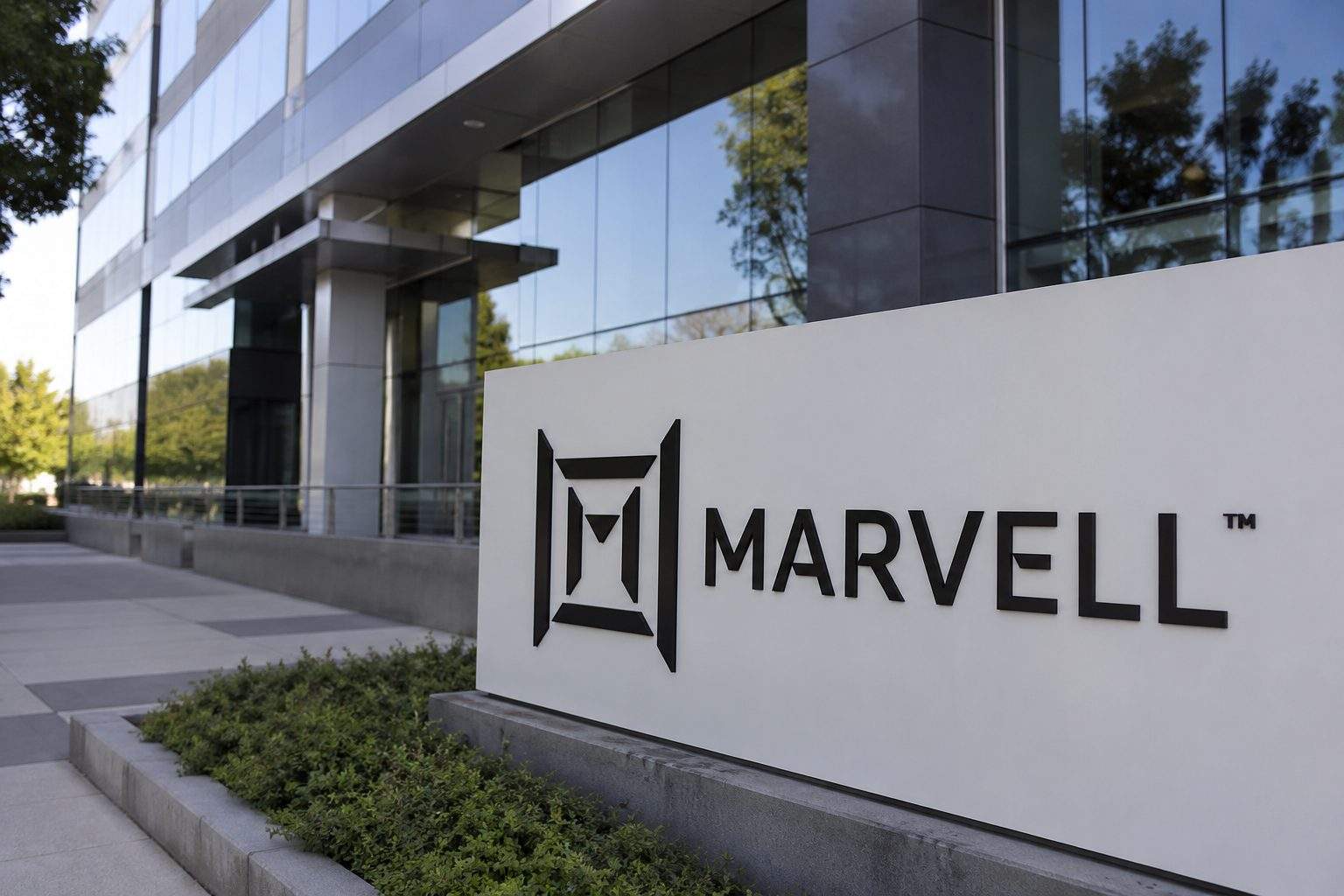
Marvell Technology’s AI-fueled surge now faces a critical test, with quarterly earnings on deck later this month. The stock has drawn a wave of investor focus lately, spotlighting its presence in data-center networking, custom semiconductors, and optical connectivity.
Timing’s key here. U.S. semiconductor stocks pushed higher Wednesday, after Advanced Micro Devices delivered an upbeat forecast. The numbers boosted confidence that AI investment is moving past just graphics processing units—GPUs, the chips powering big AI model training—into wider compute and networking hardware. “It’s becoming more about a broader compute opportunity,” Matt Britzman, senior equity analyst at Hargreaves Lansdown, told Reuters. Reuters
Marvell plans to report its fiscal first-quarter 2027 results on May 27 at 1:45 p.m. Pacific Time, with a conference call to follow. For investors, that’s now the date circled on the calendar as they wait to see if Marvell’s AI bookings and recent contracts are actually making a dent in revenue.
Marvell shares have seen a sharp run. According to Motley Fool, which referenced S&P Global Market Intelligence, the stock surged 66.7% in April, then tacked on another 2.2% in the first three sessions of May, up through May 5. Momentum has come from Nvidia’s investment, Google deal rumors, and the Polariton Technologies buyout.
Nvidia is still the main story. On March 31, Marvell and Nvidia unveiled a $2 billion investment from Nvidia into Marvell, lining up a new strategic tie-up focused on NVLink Fusion—a rack-level setup that helps customers roll out their own semi-custom AI systems. Marvell is set to deliver made-to-order XPUs, the AI accelerators, plus the matching networking gear. Nvidia brings the CPUs, network cards, DPUs, and switches to the table. “The inference inflection has arrived,” Nvidia CEO Jensen Huang said, describing a moment when AI models start showing up in practical use. Marvell Technology, Inc.
Marvell put numbers to its bullish narrative in March, posting fiscal 2026 revenue of $8.195 billion—a 42% jump—and non-GAAP earnings per share climbing 81% to $2.84. CEO Matt Murphy credited “robust AI demand” for the surge, and added that design wins hit an all-time high. Marvell Technology, Inc.
This growth is being driven by hyperscalers—think Alphabet, Microsoft, Amazon, Meta—all pouring money into AI data centers. Back in March, Reuters said Marvell was targeting nearly $15 billion in revenue for fiscal 2028, and aiming for revenue growth above 30% in fiscal 2027. That outlook hinges on increased demand for custom ASICs and interconnect technologies, which are crucial for shuttling data between chips, memory, and servers.
Competition remains tight here. Both Marvell and Broadcom work with cloud players on custom chip projects, while Nvidia continues to hold the lead in general-purpose AI processors. Back in April, Reuters reported that Alphabet’s Google was discussing two AI chip projects with Marvell, targeting improved efficiency for running models. The outlet noted it couldn’t confirm the talks, and neither Google nor Marvell responded to requests for comment.
Marvell is ramping up its optical tech offerings as data centers push for quicker, more energy-efficient connections. On April 22, the company announced it picked up Polariton Technologies, a Swiss firm specializing in plasmonics-based silicon photonics devices. Sandeep Bharathi, who heads Marvell’s data center group, called the move an extension of their optical roadmap. Marvell kept financial details under wraps.
Views among investors are split. On May 1, Seeking Alpha contributor Future Stack Investment tagged Marvell as a buy, citing that data-center revenue makes up 74% of sales and highlighting margin leverage. But there are caveats: the firm also noted risks from heavy reliance on a few customers, potential competition as hyperscalers develop their own silicon, and possible hiccups from integrating recent acquisitions.
That risk is cropping up in the options chatter as well. Trefis, via Yahoo Finance, described a play selling March 2027 $100 puts—collect the premium up front, but risk getting assigned Marvell stock if it dips under that strike. The trade highlights a familiar post-rally push-pull: investors still eye upside, though they’re angling for a deeper discount first.
The May 27 report isn’t just about the AI narrative anymore. Marvell’s custom silicon, networking, and optical offerings have to prove they’re grabbing enough share from the data-center expansion to justify a stock that’s already reflecting plenty of optimism.
Related articles: NASDAQ:MRVL





![Australia Stock Market Today 23/08/2026 [UPDATE: 08:38 AEST] [Healthcare Surge: Weekly Recap and Week Ahead]](https://ts2.tech/wp-content/uploads/2026/08/AU-market-dashboard-2026-08-23-0843-480x384.jpg "Australia Stock Market Today 23/08/2026 [UPDATE: 08:38 AEST] [Healthcare Surge: Weekly Recap and Week Ahead]")