
SANTA CLARA, California, April 24, 2026, 08:08 PDT
- Marvell has acquired Polariton Technologies, bringing plasmonics-driven silicon photonics into its lineup of optical chips.
- AI data centers are pushing for quicker, more energy-efficient connections to shuttle information between servers, and that’s what’s driving the deal.
- Early Friday, shares slipped, pulling back from a brisk AI-chip rally that’s brought fresh attention to valuation and execution risks.
Marvell Technology picked up Switzerland’s Polariton Technologies, a photonics player known for its work on speeding up optical links in AI-heavy data centers. The Santa Clara chip firm kept the price under wraps.
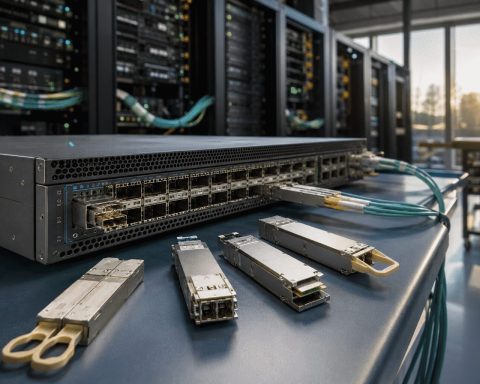
Timing’s key here. AI is hurling more data across clusters than ever, and according to Marvell, the sector is already shifting from 1.6T optical connectivity up toward 3.2T and higher—industry-speak for ultra-fast data links shuttling information inside and between data centers.
Polariton is working with plasmonics-based silicon photonics, essentially harnessing the interplay between light and electrons to transmit data using components that are smaller and use less power than traditional electrical connections. Marvell says it’s targeting the technology at coherent and data-center interconnect applications, specifically ZR and ZR+ modules that handle traffic across extended fiber links.
“Marvell continues to invest in advanced optical technologies,” said Sandeep Bharathi, president of Marvell’s Data Center Group, in the company statement. According to Bharathi, Polariton brings “differentiated modulation technology” to the table, along with a specialized team, strengthening Marvell’s optical roadmap. Marvell Technology, Inc.
Founded in 2019 by Claudia Hoessbacher, Wolfgang Heni and Benedikt Baeuerle, Polariton spun out of ETH Zurich’s Institute of Electromagnetic Fields, according to the university. ETH Zurich called Polariton the first company to bring plasmonics technology to market for electro-optical products.
Marvell shares slipped roughly 2.1% to $162.01 early Friday, backing off from an intraday peak of $175.09. Market data pegged the company’s valuation close to $140 billion.
This comes as competition heats up among AI infrastructure suppliers. On April 20, Reuters noted Marvell shares jumped almost 5% after The Information reported Alphabet’s Google was negotiating with Marvell to co-develop two AI chips. Google is already partnered with Broadcom on its tensor processing units, or TPUs—the custom chips it relies on for training and deploying AI models.
The landscape is pretty straightforward. Broadcom stands as a major competitor in custom chips, while Nvidia continues to rule the AI accelerator space. Marvell, meanwhile, is angling for a bigger share of everything else—custom silicon, switches, optical links. Russ Mould, investment director at AJ Bell, told Reuters that customers might look to “diversify their sources of supply” to hedge both technology and supply-chain risks. Reuters
Nvidia poured $2 billion into Marvell last month, betting on tighter integration between Marvell’s tailor-made AI chips and Nvidia’s own networking hardware and processors. EMarketer analyst Jacob Bourne told Reuters the move opens up Marvell’s semi-custom silicon and optical interconnects to Nvidia—key where “bandwidth and power efficiency” have hit limits. Reuters
Marvell gave investors plenty to chew on: fiscal 2026 revenue landed at $8.195 billion, a 42% jump. The real headline came from its data-center business, which pulled in $1.65 billion in the fourth quarter—accounting for 74% of total revenue that period.
Here’s the catch: turning the tech and deal rationale into actual revenue is still unproven. Marvell left the financial terms out, and highlighted potential hurdles—keeping Polariton employees, merging operations, and executing on its acquisition strategy. Shares have already surged on AI enthusiasm, so misses may hit harder now.
Chip stocks keep getting a lift. U.S. semiconductor names notched fresh records on Friday, Reuters said, after upbeat revenue guidance from Intel and ongoing optimism around AI-driven demand. “No sign that demand for AI is slowing down,” Edward Jones’ Angelo Kourkafas told Reuters. Reuters
Related articles: NASDAQ:MRVL