
Chicago — It’s May 12, 2026, and the clock just struck 08:09 CDT.
- McDonald’s slipped 0.4% to around $274.60, with shares holding close to lows not seen since August 2024. The latest price target downgrade from JPMorgan only added weight.
- This isn’t just about last quarter. Q1 topped forecasts on both profit and revenue, yet April sales dipped into negative territory, with higher gas prices and squeezed budgets weighing on lower-income diners.
- Bulls tout scale, value menus, and global expansion. Bears, though, zero in on traffic, franchisee margins, and the level of discounting McDonald’s must use to prevent visits from falling.
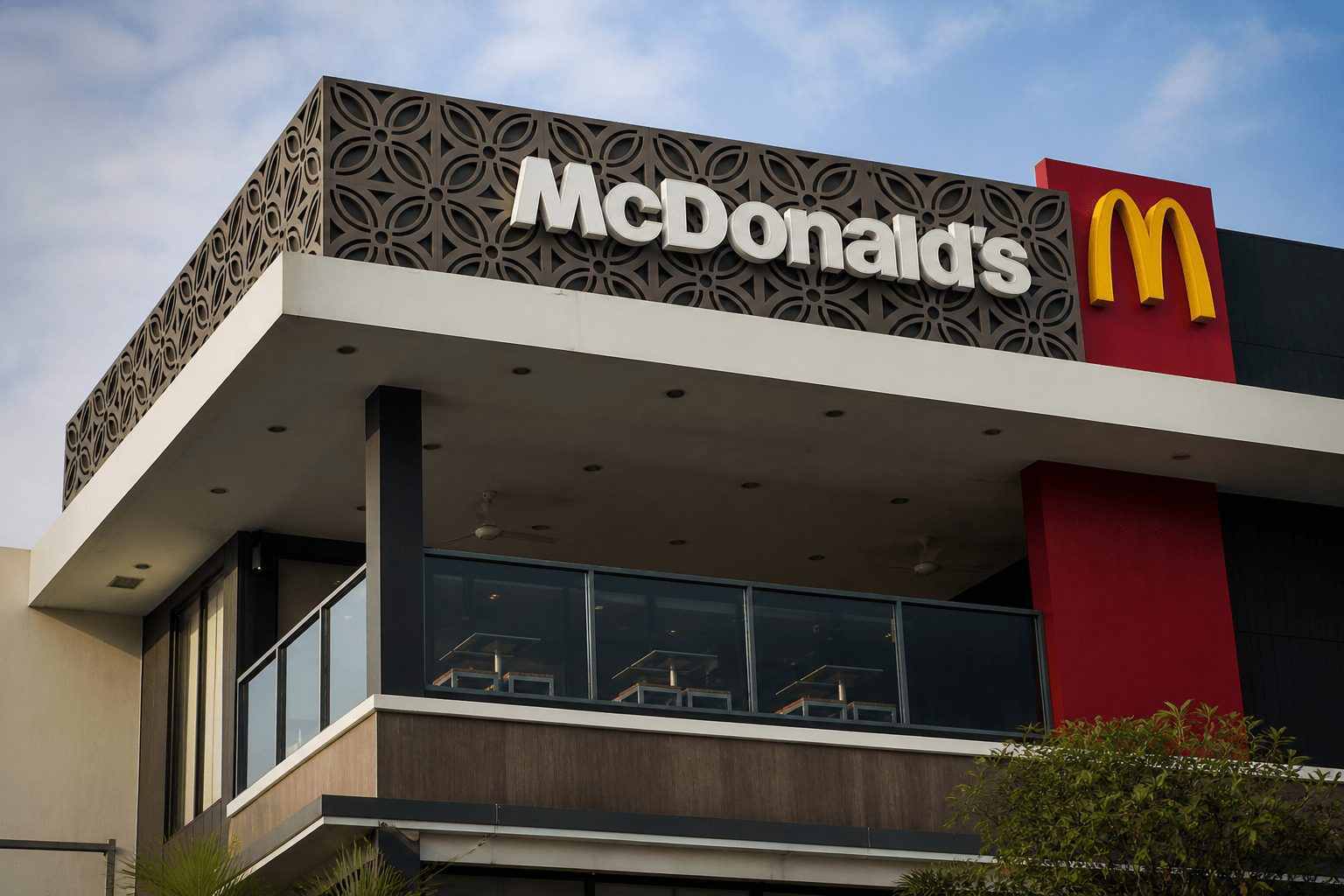
McDonald’s finds itself in a classic spot for a defensive name—solid results, shares still under pressure. Stock was trading at $274.60 early Tuesday, down 0.4%. The move tracked JPMorgan’s decision to drop its price target to $305 from $325, though analysts stuck with an Overweight call.
Timing is tripping up the market now. McDonald’s posted first-quarter revenue of $6.52 billion and adjusted earnings per share of $2.83, topping forecasts. Still, investors dumped shares after U.S. same-store sales landed below estimates and April numbers edged into the red. Same-store sales reflect locations with enough history for a fair year-over-year look, leaving out any boost from newer spots.
This explains the chart’s dip. The drop wasn’t triggered by McDonald’s missing the quarter—it was the company’s own remarks that painted the results as less of a true inflection point, more of a stopgap relying on value offerings amid a softer consumer backdrop.
Chris Kempczinski, the chief executive, didn’t mince words on the earnings call: “Elevated gas prices are the core issue.” He flagged that the macro backdrop isn’t getting any better—if anything, “may be getting a little bit worse.” That’s a darker outlook from a company used to picking up business when diners drop pricier spots. Reuters
Bulls had some ammo after the official Q1 report. Global comps climbed 3.8%, U.S. comps matched, up 3.9%, with international operated markets also logging a 3.9% gain. Systemwide sales cleared $34 billion. McDonald’s is sticking to “value leadership, breakthrough marketing, and menu innovation,” CEO Kempczinski said. PR Newswire
The softer undertone was clear enough. U.S. company-operated restaurant margins dropped 25% to $59 million from the prior year, Reuters said. CFO Ian Borden pointed to rising costs across food, paper, energy, and operations. Franchisees not passing all those costs onto customers can still keep the business profitable, just with a thinner margin for mistakes.
The bullish argument stands: McDonald’s brings unmatched scale, a vast franchise system, and a global footprint. The chain can pivot across $3 options, $4 breakfasts, chicken, drinks, and a steady churn of brand-driven promos. According to TradingView’s summary, executives on the call leaned into value, marketing, and fresh menu ideas—plus, management highlighted that McDonald’s picked up share in almost all of its ten biggest markets.
Those arguing the bear case are quick to point out: value always comes with a price. Sure, discounts might help keep visits steady, but over time, shoppers get used to waiting for bargains. JPMorgan didn’t slap a sell rating here, but the bank trimmed its same-store-sales forecasts “to reflect current environment”—a phrase that stuck with investors. TipRanks
Peers tell a mixed tale. Yum Brands slipped 1.1%, Chipotle dropped 1.7%. Starbucks, on the other hand, picked up 0.8% in the most recent quotes. That divergence isn’t trivial—investors aren’t treating restaurant stocks as a single trade. Instead, they’re picking apart each name for traffic risk, ticket size, and how tightly the brand is managed.
Analyst views haven’t fallen apart—just gotten messier. Benzinga still tags McDonald’s as a Buy, average target sitting at $334.56, with JPMorgan, RBC, and Barclays among the latest names in the mix. The stock remains a recovery prospect, though now the spread between those targets and today’s price points less to valuation tweaks and more to a question mark around consumer staying power.
CFRA’s Alex Fasciano, speaking to Reuters, noted that investors already grasp the drag from sluggish U.S. restaurant traffic and gas prices, and said McDonald’s results gave confidence on execution. So, the story here: McDonald’s hasn’t lost its footing, but investors aren’t ready to give the stock a premium just for grabbing market share in a shaky sector.
Prediction markets aren’t offering much for single-stock moves in this stretch. On the macro side, rates are clearer: Polymarket gives a 97% chance the Fed holds steady in June, and puts the odds of no 2026 cuts at roughly 61%. That’s a tough setup for any consumer stock hoping for a near-term break on rates. Still, that isn’t behind McDonald’s slide. Instead, the fast-food giant’s drop is happening against a backdrop of households already pinched by rising fuel and food bills.
Right now, McDonald’s trades more like a strong consumer name wrestling with sluggish foot traffic than as an untouchable growth machine. Where shares go next probably hinges less on EPS beats and more on whether the weak April sales were just a one-off—or a warning that its value-focused strategy isn’t connecting with shoppers who’ve had enough.
Related articles: NYSE:MCD

![Australia Stock Market Today 28/08/2026 [UPDATE: 11:35 AEST] [Xero Surges 8% as PEXA Crashes on FY27 Outlook]](https://ts2.tech/wp-content/uploads/2026/08/AU-market-dashboard-2026-08-28-1133-480x384.jpg "Australia Stock Market Today 28/08/2026 [UPDATE: 11:35 AEST] [Xero Surges 8% as PEXA Crashes on FY27 Outlook]")