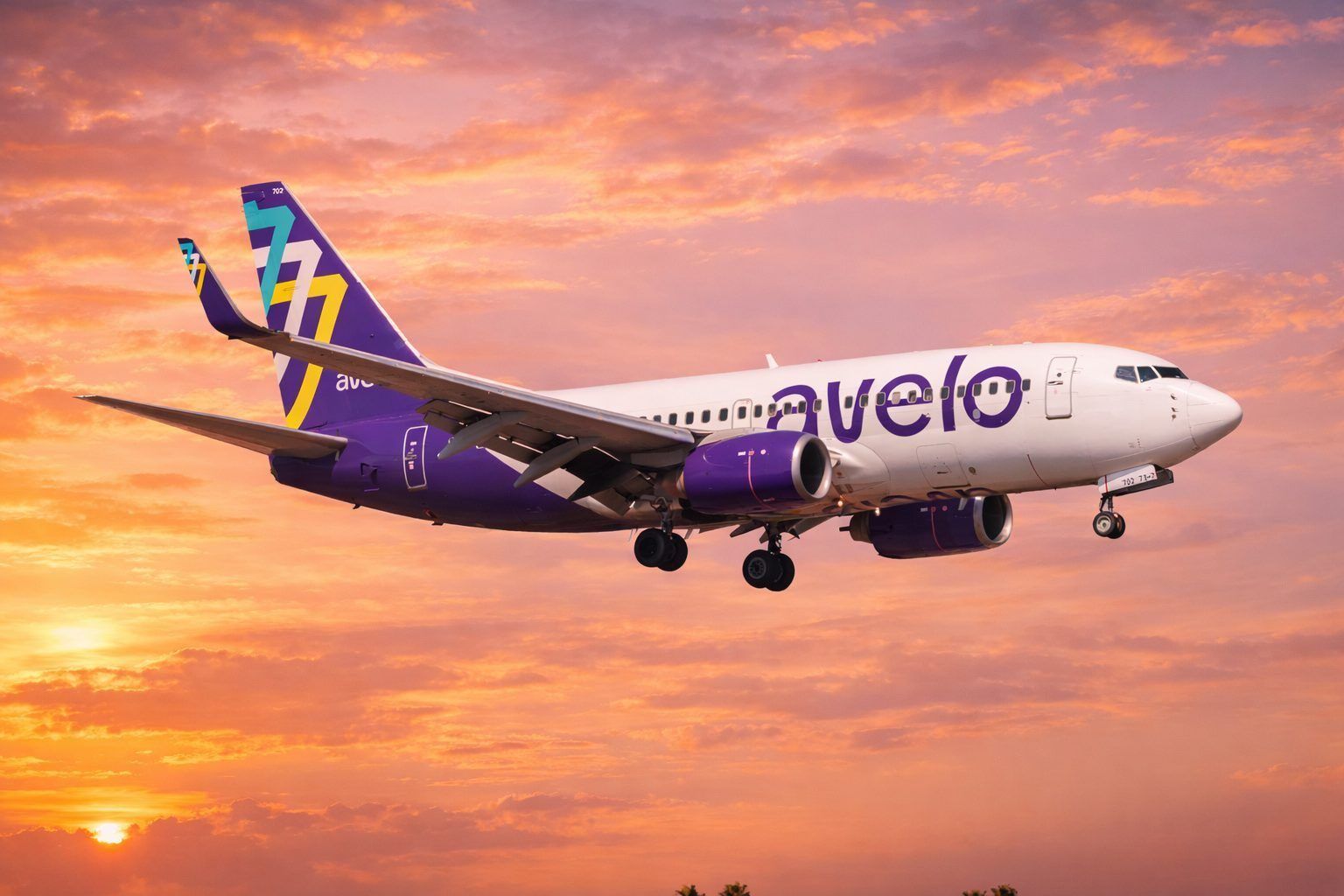
McKINNEY, Texas — A major milestone in North Texas aviation took shape this week as McKinney National Airport (TKI) secured its first commercial airline partner, signing an Airline Use and Lease Agreement with Houston-based Avelo Airlines. The deal positions Avelo as the “launch airline” for the airport’s long-planned commercial passenger terminal now under construction on the east side of the airfield. Community Impact+1
While flight schedules and nonstop destinations have not yet been announced, local officials say the agreement marks a clear step toward commercial service beginning around the time the new terminal opens—an opening that city communications and project updates have consistently pointed toward in late 2026. McKinney Texas+2Community Impact+2
What happened: Avelo becomes McKinney’s first committed airline
McKinney officials finalized a multi-year operating agreement with Avelo that sets the groundwork for the carrier to operate from TKI once the new commercial terminal is ready. According to local reporting, the agreement is structured as a five-year term with an option to extend for an additional five years. Community Impact+1
The agreement also spells out how Avelo will use airport facilities and space—ranging from airfield access to passenger-facing areas inside the terminal. Community Impact’s summary of the city’s announcement notes the deal includes conditions covering:
- Runways and taxiways
- Aircraft parking and maintenance areas
- Non-exclusive terminal areas such as check-in counters, boarding gates, and flight information displays
- Exclusive space such as designated office and administrative areas Community Impact
Separately, the Princeton Herald reported the agreement also establishes the “rates and charges” associated with airline operations at TKI, including per-passenger use fees and aircraft fuel fees. Princeton Herald
What leaders are saying: “Launch airline,” jobs, and the small-airport pitch
The city and Avelo are framing the partnership as a mix of affordability, convenience, and regional economic upside.
McKinney Mayor Bill Cox described the agreement as an “important milestone,” pointing to the airport team’s push to deliver convenient, nonstop service for residents and visitors. Community Impact
Avelo Founder and CEO Andrew Levy said the company is excited to be the “launch airline” at McKinney National Airport and emphasized the brand’s low-fare approach paired with a smaller airport experience. He also said Avelo expects to create “well over 100 jobs” in the region when service begins. Community Impact
When flights could start: routes and launch timing still TBD
The central question for travelers—when can I actually fly out of McKinney?—still doesn’t have a firm date. But multiple reports outline what to expect next:
- Avelo is expected to announce a launch date and nonstop destinations closer to the terminal opening, with the city indicating those details would come a few months prior to the commercial terminal debut. Community Impact+1
- Project updates tied to the terminal build have repeatedly pointed to late 2026 for initial operations, with one city release describing nonstop flights expected to begin in late 2026 when the terminal is completed. McKinney Texas
- In an earlier development update, Community Impact reported airport leadership expected route/destination announcements roughly six months before terminal opening and said the terminal “could begin operations” around November 2026. Community Impact
Bottom line: the agreement is signed, but the route map isn’t public yet—and that’s typical for airports and airlines timing service launches to construction and operational readiness.
What we know about planned service: up to three daily flights on Boeing 737s
Although schedules aren’t public, city documents cited in local coverage have described an early operating concept: up to three daily flights using a mix of Boeing 737 aircraft with a minimum capacity of 149 passengers. Community Impact+1
Those initial frequencies matter because they hint at what McKinney’s first phase is designed to be: a limited-but-meaningful set of nonstop routes aimed at time-sensitive local demand—especially for Collin County travelers currently driving to Dallas Fort Worth International (DFW) or Dallas Love Field (DAL).
Inside the new McKinney passenger terminal: four gates now, expansion later
McKinney’s commercial terminal project has been pitched as a modern, compact facility designed to get a new airport market off the ground without building a mega-hub on day one.
In a city release tied to the terminal groundbreaking, McKinney described a 46,000-square-foot terminal planned to open initially with four gates, with the ability to expand to six gates as demand grows. Other listed features include food and beverage concessions, open hold rooms, aircraft ramp space for multiple aircraft, a new taxiway, and significant parking capacity. McKinney Texas
The city has also highlighted a 980-space public parking lot with potential expansion to 1,450 spaces, plus onsite rental car facilities and a deicing area for winter operations. McKinney Texas+1
On passenger volume, the city has said the project is expected to initially serve about 200,000 passengers annually, with long-run capacity supported by future gate expansions. McKinney Texas+1
Why McKinney is betting on commercial flights now
McKinney National Airport has served as a general aviation airport for decades, but city leadership has argued that the region’s growth—and congestion at existing airports—justifies building a third commercial option in the DFW metro area. McKinney Texas
A separate Community Impact report on the terminal’s construction start connected the airport expansion to broader regional growth forecasts. It cited the North Central Texas Council of Governments’ long-range outlook projecting the region could grow from roughly 8.6 million residents to 12.3 million by 2050, with much of that growth expected in Collin County (which was projected in that report to increase by 70%). Community Impact
That demographic math—more residents, more business travel, more leisure trips—helps explain why low-cost airlines and smaller-airport models have become attractive tools for fast-growing metro edges.
Funding and economic impact: grants, construction costs, and projected jobs
The terminal and supporting infrastructure have been discussed in the context of both mobility and economic development.
The city has described the project as a roughly $79 million terminal and support-facilities build funded through a mix of mechanisms, including local sales tax revenue bonds, a TxDOT grant, tax increment funds, and airport-related revenues. McKinney Texas+1
More recently, the city announced that TKI accepted a $14.8 million TxDOT grant intended to support infrastructure enabling commercial passenger service, listing terminal and airfield features that funding could support. McKinney Texas
On local economic impact, Community Impact previously reported that city documents projected the terminal could generate 360 jobs and more than $10 million in tax revenue impact in its first year of operations—though those are projections, not guarantees. Community Impact
Separately, Avelo’s CEO said the airline expects to create well over 100 jobs in the region once service begins. Community Impact
The debate hasn’t disappeared: lawsuits, noise concerns, and past voter pushback
Even as the airline agreement signals forward momentum, McKinney’s airport expansion has remained controversial.
In 2025, KERA reported that the North Texas Conservation Association filed a legal challenge tied to environmental review issues, with the city stating it would “vigorously defend” the assessment and seek dismissal. KERA also noted that McKinney voters rejected a $200 million bond related to airport expansion funding in 2023, even as the city continued pursuing the project through other funding sources. keranews.org
CBS Texas similarly reported on a federal lawsuit challenging environmental studies and highlighted concerns from nearby residents about noise, safety, and neighborhood impact—issues that have been part of the public debate around shifting TKI toward commercial service. CBS News+1
For residents watching closely, the Avelo agreement answers one question—will an airline actually commit?—but does not end broader disputes about growth, environmental impacts, and quality-of-life tradeoffs.
Who is Avelo Airlines—and what does it already do in Texas?
Avelo is a low-cost carrier that began operations in 2021 and operates Boeing 737 aircraft, according to local reporting. Princeton Herald
For North Texas travelers, Avelo is not a stranger to the market: the airline has promoted service between Dallas Fort Worth (DFW) and New Haven (HVN) and notes it operates at DFW Terminal E. Avelo Airlines+1
Avelo also markets destinations across the U.S. and international leisure markets including Mexico, Jamaica, and the Dominican Republic—an example of the kind of “underserved market + nonstop leisure route” strategy that often pairs with smaller airports. Avelo Airlines+1
What happens next: route reveals, schedules, and operational readiness
For now, the agreement is a foundational step—not the finish line.
The next milestones travelers and local businesses will watch for are:
- Construction progress on the terminal and supporting airfield/ground-access infrastructure
- Avelo’s route announcement, including nonstop cities and days of the week
- Ticket sales timing, which typically begins months before first flights
- Operational approvals and staffing, including airport and airline hiring ramp-ups
As of December 17, 2025, the key development is simple but significant: McKinney National Airport has its first signed airline partner, and Avelo is now contractually positioned to be the carrier that inaugurates commercial passenger service at TKI once the new terminal opens. WFAA+2Community Impact+2