
NEW YORK, Dec. 28, 2025, 3:03 p.m. ET — U.S. stock market closed (weekend).
Mechanics Bancorp (NASDAQ: MCHB) heads into Monday’s reopening with a simple setup: the stock finished Friday at $14.67, up about 3.5% on the day, in what was widely described as a thin, post-holiday market.
While there have been no major new company press releases in the last 24–48 hours, investors are still digesting a string of recent, high-impact catalysts: the bank’s post–HomeStreet integration, a pending agreement to sell its Fannie Mae DUS (Delegated Underwriting and Servicing) business line to Fifth Third, and fresh third‑party credit commentary and ratings that help frame the “new” Mechanics Bancorp for the market. Mechanics Bank+3Business Wire+3SEC+3
Friday’s close: where MCHB stands going into Monday
MCHB ended the last regular session (Friday, Dec. 26) at $14.67, with a $14.02–$14.69 day range. The stock’s 52‑week range sits at $8.41–$15.90, putting shares closer to the top end of the past year’s trading band than the bottom.
Volume was roughly 670,000 shares, a meaningful number for a regional-bank name that can sometimes move sharply on modest liquidity—especially around year-end.
Market backdrop: year-end “thin tape,” records nearby, and rates in focus
Mechanics Bancorp isn’t traded in a vacuum—bank stocks tend to take their cues from interest-rate expectations, credit conditions, and broad sector rotation. Heading into the last trading week of 2025, the overall tape has been dominated by two forces: (1) a strong year for U.S. equities, and (2) an ongoing debate about how quickly the Federal Reserve may cut rates next year.
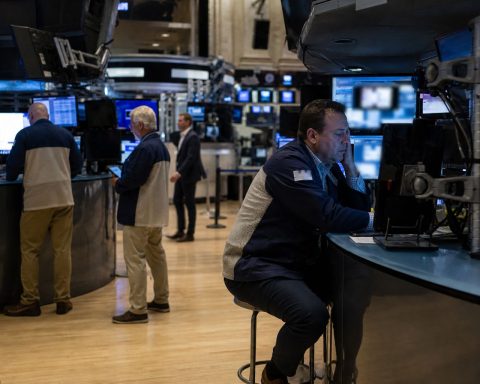
On Friday, U.S. stocks finished slightly lower in light trading as markets returned from the Christmas holiday. The S&P 500, Dow, and Nasdaq each slipped by less than 0.1%, while the Russell 2000 lagged more noticeably.
Reuters’ “Week Ahead” framing is that the market is still leaning bullish into year-end, with major indexes near record highs and the S&P 500 about 1% away from 7,000. Paul Nolte, senior wealth adviser and market strategist at Murphy & Sylvest Wealth Management, told Reuters that “Momentum is certainly on the side of the bulls,” while warning that surprises can still change the tone quickly. Reuters
The same Reuters report underscored why bank investors are paying such close attention to the Fed: the central bank cut rates by 75 basis points across its last three meetings of 2025, bringing the benchmark range to 3.50%–3.75%. With the path of 2026 rate cuts still uncertain, Reuters noted investors are watching for further guidance, including upcoming Fed communications and the release of December-meeting minutes.
That rate story matters to Mechanics Bancorp because shifts in yields and policy expectations flow through to bank fundamentals—deposit pricing, funding costs, loan demand, and net interest margin (the spread between what a bank earns on loans and pays on deposits).
The big Mechanics Bancorp catalysts still “active” into next week
Even without fresh headlines over the weekend, MCHB has several narratives that can reprice quickly when trading volume is thin.
1) Pending sale of the Fannie Mae DUS business line to Fifth Third
On Dec. 9, Mechanics Bancorp announced that its subsidiary, Mechanics Bank, entered a definitive agreement to sell its Fannie Mae DUS business line to Fifth Third Bancorp in an all‑cash transaction. The company said the deal is subject to conditions including Fannie Mae approval of Fifth Third as an authorized DUS lender, and it is expected to close in Q1 2026.
Key deal details that investors tend to track closely:
- The DUS unit includes an approximately $1.8 billion servicing portfolio, and Fifth Third would hire the employees operating the DUS business line, according to the company’s announcement.
- An SEC filing describing the agreement pegged cash consideration at approximately $130 million (subject to adjustments tied to fair value at closing for certain assets being transferred).
For shareholders, the immediate watch items are timing (approvals and closing), capital implications, and what the transaction means for the bank’s future mix of businesses.
2) Post–HomeStreet integration and what the last quarter revealed
Mechanics Bancorp’s most recent quarterly update (for the quarter ended Sept. 30, 2025) made two things clear: (1) the balance sheet is now much larger following the HomeStreet transaction, and (2) reported results were “materially impacted” by the merger that closed on Sept. 2, 2025. Mechanics Bank
Highlights from that release included:
- $22.7 billion in total assets and $55.2 million in net income, or $0.25 per diluted share (company reported).
- $19.5 billion in total deposits, with noninterest-bearing deposits at $6.7 billion (about 35% of total deposits) as of Sept. 30 (company reported).
- A reported CET1 ratio (Common Equity Tier 1—a key bank-capital measure) of 13.42% (preliminary) and book value per share of $12.54.
In plain English: Mechanics is presenting itself as a scaled West Coast community bank, now operating with the enlarged footprint and funding base that came with HomeStreet.
3) Credit/rating view: KBRA’s “Stable” outlook and what it emphasized
One of the more concrete third‑party analyses in recent weeks came from KBRA (Kroll Bond Rating Agency), which on Dec. 10 assigned Mechanics Bancorp a BBB+ senior unsecured rating and a Stable outlook (and assigned ratings to its main subsidiary, Mechanics Bank).
KBRA’s rationale is particularly relevant for equity investors because it highlights balance‑sheet strengths and risks in a way that complements earnings commentary. Among KBRA’s key points:
- KBRA said Mechanics’ ratings are supported by “strong ownership and experienced management,” noting Ford Financial Fund as the majority shareholder (about 74% ownership following the HomeStreet merger). KBRA
- KBRA emphasized a funding profile with a high share of noninterest‑bearing deposits (35%), “minimal reliance on wholesale funding,” and a 1.45% total cost of funds in 3Q25, which KBRA called among the lowest in its rated universe. KBRA
- KBRA also said the company’s CET1 ratio was 13.4% on a pro forma basis at 3Q25 and projected it could rise toward 14% by year‑end 2026, even while “targeting an 80%–90% payout ratio” due to expectations for a stable or modestly smaller balance sheet. KBRA
KBRA’s analytical contacts listed on the release include John Rempe (Lead Analyst), Brian Ropp, and Ian Jaffe (Rating Committee Chair)—useful names for investors tracking the credit narrative around the company.
Dividend recap: what investors know heading into Monday
On Nov. 26, Mechanics Bancorp declared a cash dividend of $0.21 per share of Class A common stock (and $2.10 per share of Class B common stock), payable Dec. 15 to shareholders of record as of Dec. 8. CEO C.J. Johnson said the HomeStreet integration was “progressing smoothly” and pointed to stronger-than-anticipated regulatory capital ratios as context for accelerating capital return with a “fourth quarter dividend.” Mechanics Bank
Because that payment date has passed, Monday’s trade is less about an imminent dividend catalyst and more about whether investors view the payout as a steady policy signal going into 2026—especially if the DUS sale proceeds as planned and the balance sheet continues to normalize post-merger.
Wall Street forecasts: limited coverage, but a “Hold” consensus and tight targets
For many smaller or newly reconfigured bank stories, traditional sell-side coverage can be thin—and Mechanics Bancorp is no exception. Still, some published analyst targets exist.
TipRanks shows a Hold consensus and an average price target of $14.50. The detailed forecast list includes Wood Lay (KBW) with a target move from $14 to $14.50 alongside a reiterated Hold/Market Perform stance (dated Oct. 20, 2025), and Matthew Clark (Piper Sandler) shown with a reiterated $14 target and Hold (dated July 29, 2025).
With MCHB closing Friday at $14.67, that cluster of targets implies the market is already pricing the stock close to where at least some published analyst models have landed—meaning the next leg up (or down) likely requires either a clearer earnings trajectory post‑integration, a material update on the DUS deal, or a shift in the interest-rate narrative that changes how investors value bank earnings streams.
What investors should know before the next session
Because it’s Sunday, investors can’t act on MCHB until markets reopen Monday—so preparation matters. Here’s the practical checklist going into the next trading day:
Expect liquidity quirks. Late‑December trading can exaggerate moves, especially in less‑liquid names. Friday’s broad-market commentary repeatedly emphasized light volumes.
Watch rates first, banks second. Reuters flagged that investors remain focused on how many rate cuts could arrive next year and how soon they might start, with the Fed’s communications a key driver of sentiment.
Track deal‑progress risk around the DUS sale. The transaction depends on approvals (including Fannie Mae authorization), and any update can become a near‑term catalyst—positive (approval/closing timeline) or negative (delay/changed terms).
Re-anchor on post-merger fundamentals. The last reported quarter reflected a dramatically larger platform following the Sept. 2 merger close; investors often reassess banks like this on deposit mix, capital ratios, and integration execution rather than on headline EPS alone.
Bottom line
Mechanics Bancorp stock enters the final trading week of 2025 with momentum from Friday’s jump, but without fresh company-specific headlines in the last 48 hours. The market’s attention is likely to stay macro-heavy—Fed expectations, yields, and year-end positioning—while MCHB-specific attention remains anchored to three “living” catalysts: integration execution after the HomeStreet merger, the pending DUS sale to Fifth Third, and the valuation framework set by limited analyst coverage and KBRA’s credit-focused assessment of funding strength and capital. TipRanks+4Reuters+4Mechanics Bank+4