
Mexico City, July 13, 2026, 16:07 (CST)
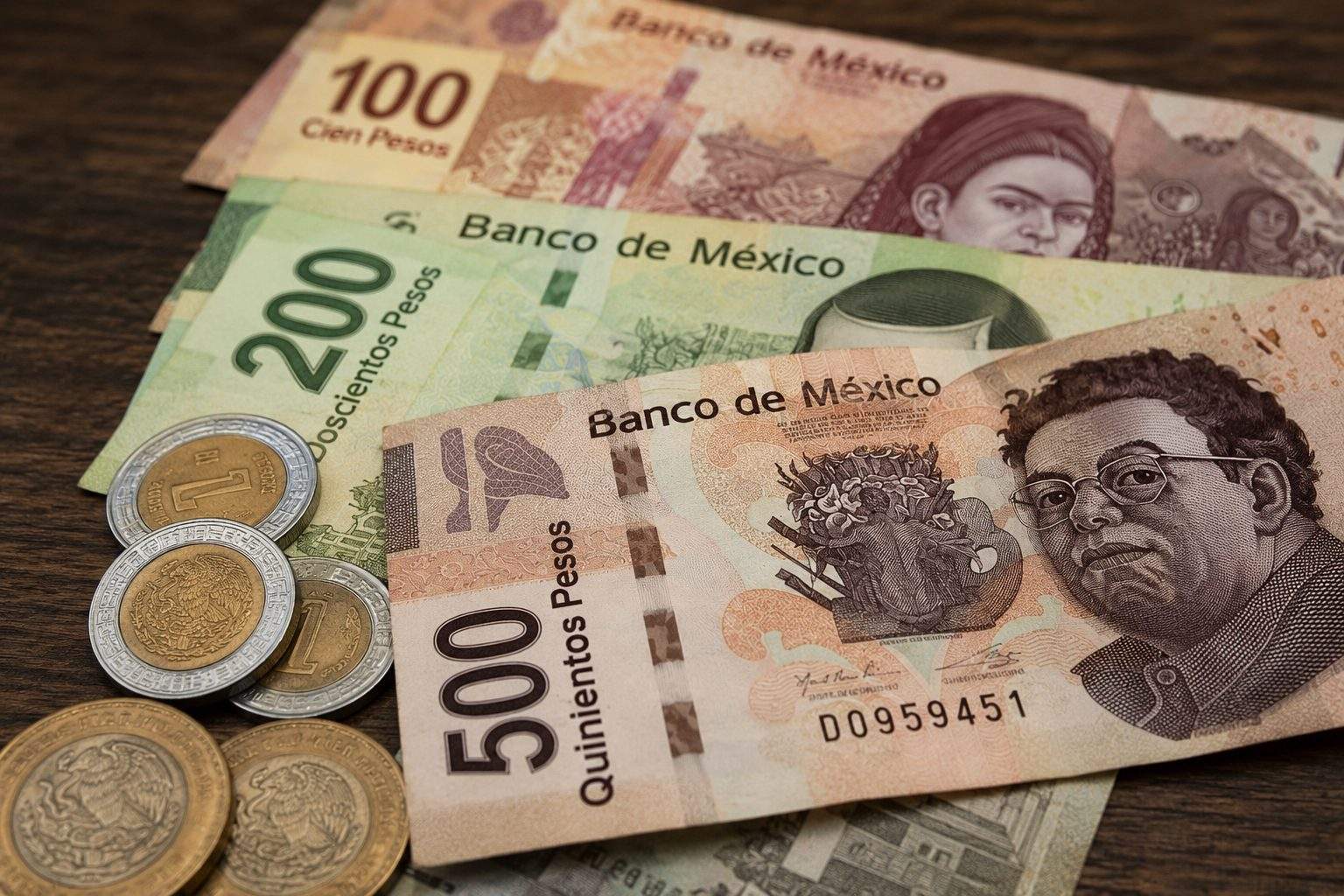
Mexican peso slipped around 0.35% to about 17.52 per dollar late Monday while Brent crude jumped 9.6% after new U.S.-Iran fighting near the Strait of Hormuz. The peso’s move wiped out about a month’s worth of Mexico’s gross policy-rate edge over the U.S.
The peso is still a common carry trade pick. Traders use dollars or other lower-yielding currencies to buy assets in pesos, betting on higher returns. The latest oil shock hit right before two key events that could shake up the U.S. side: June inflation numbers out at 8:30 a.m. ET Tuesday, and Fed Chair Kevin Warsh’s first major policy testimony at 10 a.m. ET.
The peso lost ground in a controlled trading session, not a sharp drop. The dollar started near 17.47 pesos, ticked up to 17.48 by 7:40 a.m., moving in a band between 17.46 and 17.53. Banxico numbers later put it at 17.52, putting the peso down 0.26%. The FIX rate, Banxico’s official settlement reference, landed at 17.5023. Janneth Quiroz Zamora at Monex said the peso started off pressured as investors stepped back from emerging-market currencies with geopolitical worries in the air. Felipe Mendoza of EBC Financial Group said this is a market highly sensitive to global risk. The local S&P/BMV IPC equity index dropped 0.79%, a bigger move than the peso.
The peso’s resilience comes down to carry costs, which aren’t always obvious. Banxico’s overnight target sits at 6.50%, while the Fed’s range of 3.50%–3.75% has a 3.625% midpoint. That puts the headline gap at 2.875 points. On 252 trading days, that is around 1.14 basis points a day. One basis point equals 0.01 percentage point. The reported 0.26%–0.35% spot currency loss lines up with about 23–31 days of that rate spread. This example is unhedged and doesn’t include forward pricing, funding, taxes or costs.
| Illustrative carry calculation | Latest |
|---|---|
| Banxico overnight target | 6.50% |
| Fed target-range midpoint | 3.625% |
| Mexico-U.S. policy-rate gap | 2.875 percentage points |
| Gross gap per trading day | 1.14 basis points |
| Reported peso loss | 0.26%–0.35% |
| Carry-equivalent loss | 23–31 trading days |
A same-vendor look at three Latin American peers gives a more mixed view than the wider EM ranking. Mexico’s peso trailed Brazil’s real and Peru’s sol but beat Chile’s peso by a wide margin. Chile’s peso got hit harder due to its link to global growth and copper prices during the dollar’s rally. Negative numbers below mean the currency lost ground to the dollar.
| Currency | Monday move versus dollar | Difference from peso |
|---|---|---|
| Brazilian real | -0.20% | 0.15 percentage point stronger |
| Peruvian sol | -0.31% | 0.04 percentage point stronger |
| Mexican peso | -0.35% | — |
| Chilean peso | -0.89% | 0.54 percentage point weaker |
Mexico saw June annual inflation at 3.37%, with core inflation staying up at 4.03%. Domestic price data have kept the yield cushion in place. The central bank, Banxico, left rates steady at 6.50% last month. “The headline decline will be welcomed by Banxico and means that interest rates will remain on hold in the near term,” Capital Economics analyst Kimberley Sperrfechter said after the inflation numbers, citing figures from INEGI.
Support from the U.S. is fading. Fed Governor Christopher Waller said officials are “at a crossroads” and signaled that if core inflation heats up again, the Federal Open Market Committee will have to look at near-term tightening. Consumer price data comes Tuesday, with producer prices on Wednesday. That gives markets two chances to check if inflation pressure was building, even before oil surged on Monday. Federal Reserve
The latest poll from 24 FX strategists out July 1 shows a median 12-month USD/MXN forecast at 17.78. That suggests the peso could lose about 1.5% from Monday’s 17.52 mark. That depreciation is still smaller than the 2.875-point policy-rate gap. There’s about 1.4 points of gross buffer, but that’s only if rates hold steady and the currency call is correct.
The trade isn’t without risk. If U.S. inflation comes in hot, the Fed could hike rates and cut Mexico’s yield edge. Ongoing trouble in Hormuz could boost the dollar and pull Treasury yields up. Just a 1% drop in the peso would wipe out almost four months of the gross rate advantage before costs. Oil and the dollar climbing together on Monday show both threats can hit at once.
The peso is still getting paid to take on global risk. On Monday, the yield remains a draw for buyers, but even a modest currency shift can wipe out what the peso picks up in a month. Traders will watch the next U.S. inflation print and Fed testimony to gauge how much more volatility buyers will sit through.
Related articles: Oil Prices