
NEW YORK, August 24, 2026, 07:40 EDT
- SpaceX was last priced at $134.10 ahead of Monday’s open, marking a 2.10% drop from Friday’s closing value.
- Goldman reported that both hedge funds and mutual funds held overweight positions in the shares.
- The deal comes with SpaceX trading at close to 93 times its projected 2027 earnings.
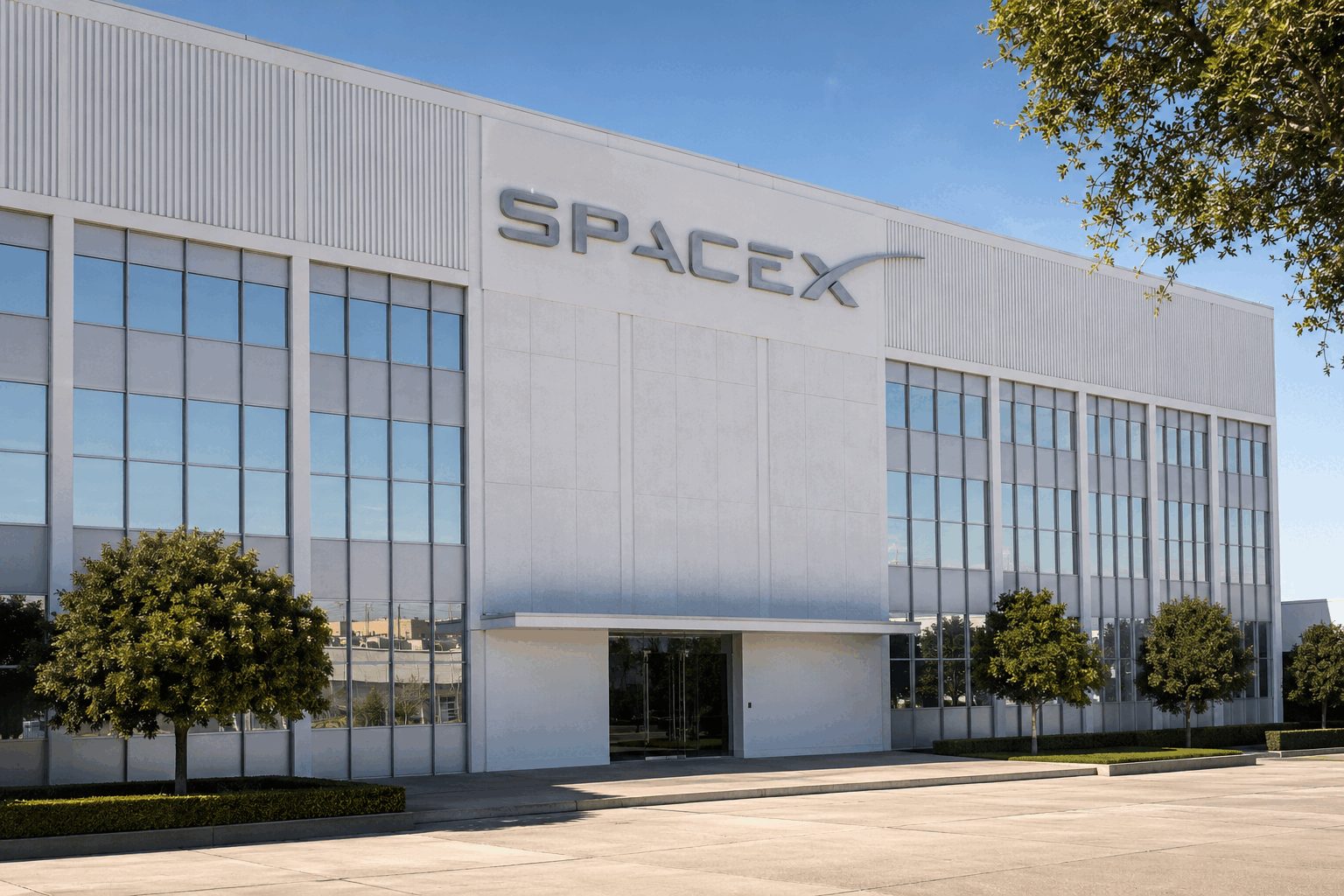
Shares of Space Exploration Technologies Corp. NASDAQ:SPCX dropped 2.10% to $134.10 in premarket trade on Monday, giving up the majority of Friday’s 2.22% gain and pulling the stock under its IPO level of $135. The price was registered at 07:27 EDT.
The decline comes after a rare instance of institutional alignment. Goldman Sachs Group Inc. NYSE:GS reported that both hedge funds and mutual funds hold overweight positions in SpaceX, despite typically having different investment timeframes.
This deal forms the basis of the investor narrative. Goldman analyzed about $10 trillion in disclosed positions from regulatory filings. The firm’s most recent analysis of fund holdings identified SpaceX as one of just six overlapping top picks.
| Market checkpoint | Price | Move |
|---|---|---|
| August 17 close | $146.23 | up 4.45% |
| August 20 close | $134.00 | down 4.05% |
| August 21 close | $136.97 | up 2.22% |
| August 24 premarket, 07:27 EDT | $134.10 | down 2.10% |
Friday’s advance failed to recover the week’s losses. SpaceX ended the week 6.3% under its August 17 closing level. With Monday’s opening price, the stock remained down 40.6% from its June intraday high of $225.64.
Goldman’s six joint top picks climbed 29% in 2026, outpacing the S&P 500’s 16% advance during the same timeframe. The resulting 13-point difference illustrates why managers maintained exposure even with high valuations.
| Valuation and scale | Latest value | Investor read-through |
|---|---|---|
| Market capitalization | $1.86 trillion | Highly concentrated mega-cap |
| Trailing revenue | $23.04 billion | Growth rate at 121.9% |
| Forward P/E | 105.6 times | Minimal tolerance for missteps |
| Goldman forward P/E estimate | About 93 times | Remains at an elevated valuation |
Underlying operational growth accounts for a portion of that premium. Revenue for the second quarter climbed to $7.8 billion, representing a 92% increase compared to the same period a year ago. Net loss for the quarter decreased to $541 million, and adjusted EBITDA jumped 191% to $3.5 billion.
Connectivity brought in $4.3 billion in revenue for the quarter. AI accounted for $2.6 billion, while capital expenditures totaled approximately $18.4 billion. Of that, around $15.8 billion was allocated to AI compute infrastructure.
Chief Financial Officer Bret Johnsen stated the business mix “continues to drive improved operating leverage.” During the same call, it was revealed that capital expenditures exceeded quarterly revenue by more than twofold.
| August analyst recommendations | Count | Share |
|---|---|---|
| Strong Buy | 22 | 62.9% |
| Buy | 6 | 17.1% |
| Hold | 5 | 14.3% |
| Sell | 0 | 0.0% |
| Strong Sell | 2 | 5.7% |
Wall Street consensus is still positive, though estimates vary significantly. The mean price target stands at $213.50, with forecasts spanning from $75 to $450, reflecting an uncommon level of uncertainty about long-term earnings strength.
| Recent analyst action | Rating | Target | Date |
|---|---|---|---|
| Adam Jonas, Morgan Stanley | Buy, maintained | $300 | August 20 |
| Markus Leistner, DZ Bank | Sell, downgraded | Not stated | August 20 |
| Brian Dobson, Clear Street | Buy, reaffirmed | $217 | August 18 |
| Edison Yu, Deutsche Bank | Buy, kept | $235 | August 17 |
Additional supply of shares has created fresh pressure. Approximately 319 million shares held by early investors and employees became available to trade on August 20. The stock dropped 4.05% on that day, before rebounding on Friday as buyers absorbed some of the increased float.
The next question is if long-only buying counters the available supply. Early trading weakness indicates uncertainty remains. Climbing back over $135 would reclaim the IPO reference, and $131.22 stands as Friday’s lowest point.
Risks: SpaceX faces exposure to potential launch failures, delays related to Starship, AI budget overruns, and additional share unlock events. Losses may be intensified by institutional crowding if funds simultaneously cut comparable holdings.
Investors face a clear dilemma. SpaceX enjoys substantial fund support and strong expansion. Its valuation already reflects expectations that both will continue.
Related articles: NASDAQ:SPCX