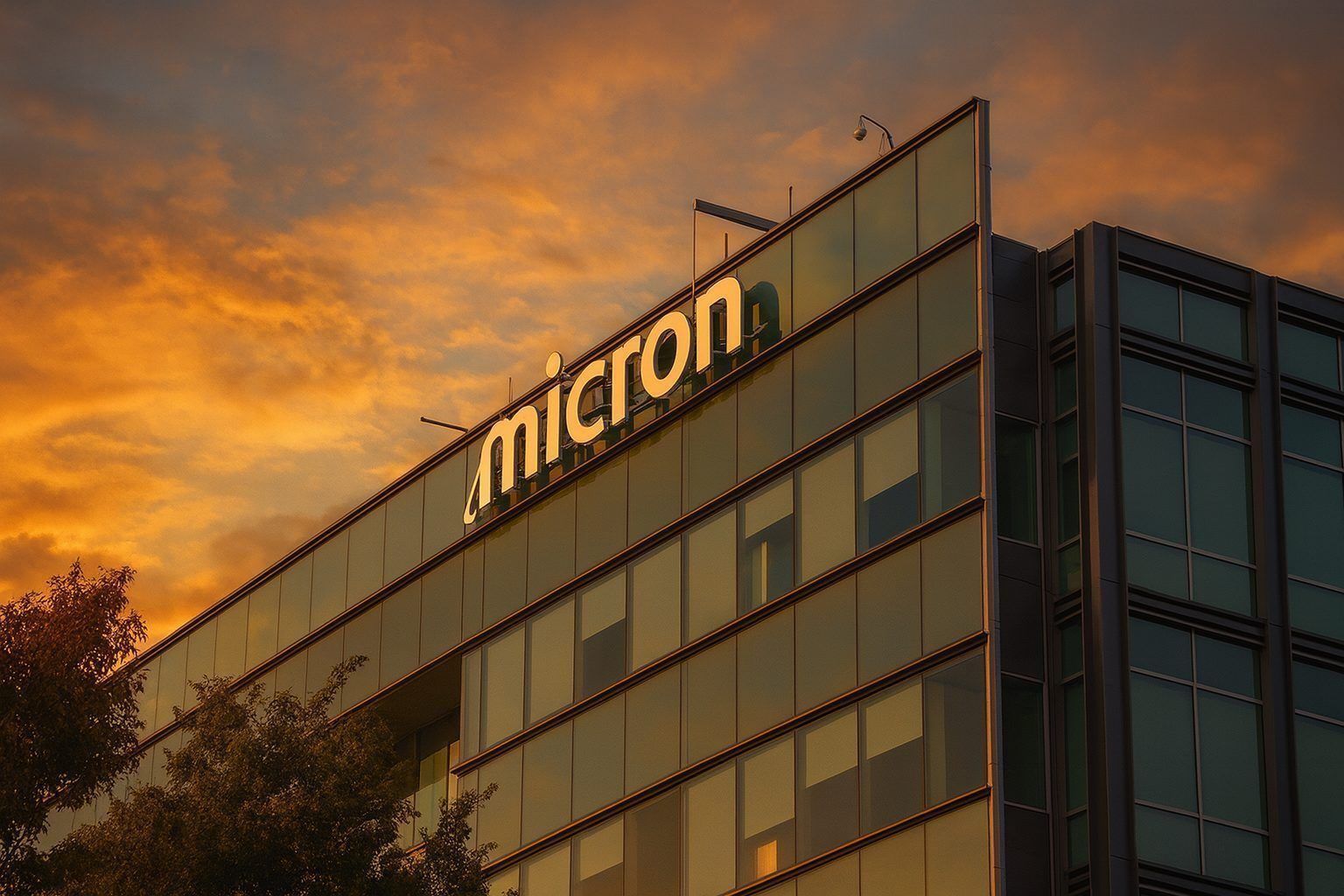
Micron Technology is abandoning nearly three decades of selling Crucial‑branded RAM and SSDs to everyday PC users so it can funnel more memory into high‑margin AI data centers, deepening a global memory chip crunch and reshaping the PC DIY market. Axios+2Reuters+2
On December 3, 2025, Micron formally announced it will exit its Crucial consumer business, halting sales of Crucial‑branded memory and storage at retailers and e‑tailers worldwide by February 2026. Shipments will continue through the end of Micron’s fiscal Q2, and the company says it will honor warranties and support existing products. Micron Technology+1
The move comes as AI data centers swallow unprecedented amounts of DRAM and high‑bandwidth memory (HBM), pushing prices sharply higher and leaving PC builders, smartphone makers and cloud giants competing for limited supply. Reuters+1
What Micron Announced Today
In its press release, Micron said it will: Micron Technology
- Exit the Crucial consumer business, ending Crucial‑branded sales through global retail and distribution channels.
- Continue shipping Crucial products to consumer channels until February 2026.
- Maintain warranty service and support for existing Crucial drives and memory kits.
- Keep selling Micron‑branded enterprise products through commercial channels.
- Redeploy affected staff into other open roles where possible, aiming to limit layoffs.
Sumit Sadana, Micron’s EVP and chief business officer, tied the decision directly to AI:
The AI‑driven growth in the data center has created a surge in demand for memory and storage, pushing Micron to focus on larger, faster‑growing strategic customers.
That quote appears across Micron’s own release, Axios’ coverage, and Reuters’ write‑up of the news. Micron Technology+2Axios+2
According to Reuters, Micron shares fell about 2.6% in afternoon trading after the announcement, as investors weighed the loss of a long‑running consumer franchise against the company’s pivot toward more profitable AI‑oriented chips. Reuters+1
The End of Crucial: A Big Blow to Budget PC Builders
For decades, Crucial has been one of the go‑to brands for: The Verge+1
- Affordable DDR4 and DDR5 RAM kits
- Solid‑state drives (from SATA SSDs to high‑end PCIe Gen5 NVMe drives)
- Easy‑to‑use upgrades marketed directly at consumers and small businesses
The Verge notes that Crucial’s reputation for budget‑friendly, reliable RAM and SSDs made it a staple among PC builders and gamers. Its exit removes one of the most price‑competitive options in the memory market at exactly the moment prices are spiking. The Verge+1
Community reaction has been swift. On PC‑building forums and Reddit, users are already calling the shutdown “terrible news for budget builds,” pointing out that some of Crucial’s Gen5 NVMe drives were among the fastest on the market. Reddit+1
With Crucial gone, consumers will lean more heavily on rivals like Samsung, SK Hynix (often via OEM or partner brands), Western Digital, and others. But those companies are also under pressure to feed AI data centers first, not the DIY upgrade market. Reuters+1
Why Micron Is Walking Away From Consumers: AI’s Hunger for Memory
Micron’s Crucial exit isn’t about weak demand for RAM or SSDs — it’s about too much demand in the wrong places.
According to Micron and multiple news reports, there are three key forces behind the pivot: Micron Technology+2Reuters+2
- AI data centers are consuming enormous amounts of memory.
High‑bandwidth memory (HBM) is essential to feed GPUs used for training and running large AI models. Stacking DRAM vertically, HBM delivers far higher bandwidth at lower power, and it commands significantly better margins than commodity desktop RAM. - Micron’s HBM business is booming.
In its August quarter, Micron’s HBM revenue climbed to nearly $2 billion, implying an annualized run rate of roughly $8 billion, Reuters reports. That makes advanced memory for AI one of Micron’s most attractive growth engines. Reuters - Global memory supply is severely constrained.
A separate Reuters investigation describes an “acute” worldwide shortage spanning almost every type of memory—from flash storage to HBM. Prices in some segments have more than doubled since early 2025, inventories have shrunk to mere weeks, and major AI and cloud companies are lobbying suppliers for more chips at almost any price. Reuters
The result: it is far more profitable—and strategically important—for Micron to allocate wafers to HBM and advanced DRAM for AI servers than to keep churning out consumer‑grade RAM sticks and SSDs for retail.
Where Crucial once provided a steady, lower‑margin outlet for Micron’s chips, the company now sees that capacity as valuable fuel for the AI “supercycle,” where every extra gigabyte can be sold into data centers instead. Reuters+1
A Wider Memory Chip Crisis, Not Just a Micron Story
Micron’s move lands in the middle of a broader global memory crisis that has escalated throughout 2025: Reuters+2Axios+2
- Prices soaring: Research firms cited by Reuters say memory prices have already jumped by around 30% this year and could rise another 20% into early 2026.
- Supply rationing:
- Japanese electronics retailers are limiting how many SSDs, hard drives and RAM kits shoppers can buy to discourage hoarding.
- In Tokyo’s Akihabara district, some high‑end DDR5 kits for gamers have more than doubled in price in just weeks. Reuters
- Smartphone sticker shock: Chinese phone makers like Xiaomi and Realme warn they may have to raise handset prices by 20–30% by mid‑2026 due to soaring memory costs. Reuters
- Shortage lasting years: SK Hynix has told analysts it expects memory shortages to persist through late 2027, as new conventional memory fabs won’t come online until 2027–2028. Reuters
At the same time, Samsung has reportedly raised prices for server memory chips by up to 60%, underscoring how much leverage suppliers now wield. Reuters+1
Against this backdrop, Micron’s choice to deprioritize consumers looks less like an isolated business decision and more like a signal that the AI boom is reshaping the entire memory industry.
What Happens to Crucial Products and Customers Now?
If you already own Crucial RAM or SSDs, today’s news doesn’t mean your hardware suddenly loses support. Micron says it will: Micron Technology+1
- Keep shipping Crucial‑branded consumer products through February 2026
- Offer ongoing warranty service and support for Crucial devices
- Continue Micron‑branded enterprise products for commercial customers
For consumers and small businesses, the practical implications over the next 12–18 months are likely to include:
- Gradual disappearance from shelves
- Expect Crucial drives and RAM kits to remain available through early 2026, with stock gradually drying up toward the end of Micron’s fiscal Q2.
- Once retail inventories are depleted, there will be no new Crucial‑branded consumer products entering the market.
- Rising prices and fewer options
- With one fewer major player, and remaining competitors also prioritizing AI, consumer memory prices could climb even faster or stay elevated for longer.
- Prebuilt PCs, laptops and mini‑PCs that previously used Crucial parts will likely shift to other brands—potentially at higher cost or lower capacity.
- Warranty still matters
- Crucial’s existing warranty commitments are still in force. If a drive or memory kit fails, customers should be able to go through normal RMA channels, though some replacements may be refurbished or cross‑shipped with equivalent products as inventories shrink.
How Investors Are Reading the Pivot
From Wall Street’s point of view, Micron is trading a small, lower‑margin consumer segment for bigger exposure to the AI memory supercycle—but not without risk. Reuters+2MarketBeat+2
Key investor takeaways emerging today:
- Consumer business was relatively small.
Analysts quoted by Reuters emphasize that Crucial is not a major profit driver for Micron compared with its AI‑related offerings. - HBM and advanced DRAM are far more lucrative.
HBM chips used alongside Nvidia and other AI accelerators sell at a premium, with Micron’s HBM revenue now on a multi‑billion‑dollar annual run rate. - Stock reaction is cautious, not panicked.
MarketBeat data shows Micron closed down just over 2% on the day, as investors digest both the long‑term upside of higher‑margin AI business and the near‑term disruption of shutting down a well‑known brand. MarketBeat+1
The overall narrative in analyst commentary: strategically logical, operationally tricky. Micron is aligning itself with the sector’s most profitable growth area, but execution—managing partner relationships, reallocating capacity and dealing with the optics of abandoning consumers—will be closely watched.
Who Fills the Consumer Memory Gap?
With Crucial leaving the stage, several players are poised to absorb demand: Reuters+2Google+2
- Samsung – A dominant DRAM and NAND supplier with strong retail presence, but currently prioritizing server and AI memory and raising contract prices.
- SK Hynix – A powerhouse in HBM, supplying Nvidia and major cloud providers, with limited appetite to flood the low‑margin consumer channel while supply is tight.
- Western Digital / Kioxia – Major NAND and SSD producers that could expand their consumer SSD lines, depending on their own supply constraints.
- Smaller DRAM brands and OEMs – May gain share with house‑brand RAM and SSDs, particularly in emerging markets, but often source chips from the same constrained giants.
The Verge and other tech outlets already frame Crucial as an early “casualty” of AI’s memory hunger—implying that other consumer‑facing brands could eventually face similar pressure if supply remains tight and AI margins stay high. The Verge+1
What PC Builders and Consumers Can Do Right Now
If you’re planning to buy or upgrade RAM or SSDs in the next year, Micron’s announcement and the broader shortage suggest a few practical moves:
- Avoid waiting until the last minute
- If your workflow or gaming rig needs a memory or storage upgrade in the near term, it may be safer to buy when you see a fair price rather than betting on big discounts that might never come in this cycle.
- Be flexible on brand, not on specs
- With Crucial gone, you may need to consider alternatives like Samsung, Kingston, G.Skill, Corsair, WD, or others. Focus on capacity, speed and warranty rather than brand loyalty alone.
- Watch capacity cuts in prebuilt systems
- PC and laptop makers facing higher memory costs may keep sticker prices flat by shipping machines with less RAM or storage. Check configurations carefully—16GB vs. 8GB of RAM or 512GB vs. 256GB of SSD can make a huge difference to real‑world performance.
- Keep an eye on used and refurbished markets
- As Reuters reports, shortages and price hikes are already driving some buyers to second‑hand memory. Used or pulled server RAM and SSDs can be cost‑effective, but require more caution around compatibility and reliability. Reuters
- Don’t hoard beyond your needs
- While it might be tempting to stockpile, aggressive hoarding can worsen shortages and lock you into parts you may never use. A reasonable buffer—spares for critical systems—is fine; filling a closet with DDR5 “just in case” is probably not worth the risk or expense.
A Turning Point for the Consumer PC Era
Micron’s decision to kill off Crucial is about more than one brand disappearing from online retailers. It marks a symbolic turning point:
- For years, consumer PC components were cheap, abundant and often sold at razor‑thin margins.
- Now, AI has made memory a strategic resource, and chipmakers are signaling that the most advanced capacity will flow to data centers first, households second.
Other suppliers may step in to fill some of the gap, and shortages will eventually ease as new fabs come online. But for at least the next few years—by SK Hynix’s estimate, through 2027—PC builders, gamers and small businesses should expect higher prices, fewer choices, and slower upgrades as the AI era rearranges the memory hierarchy of the entire tech industry. Reuters+1