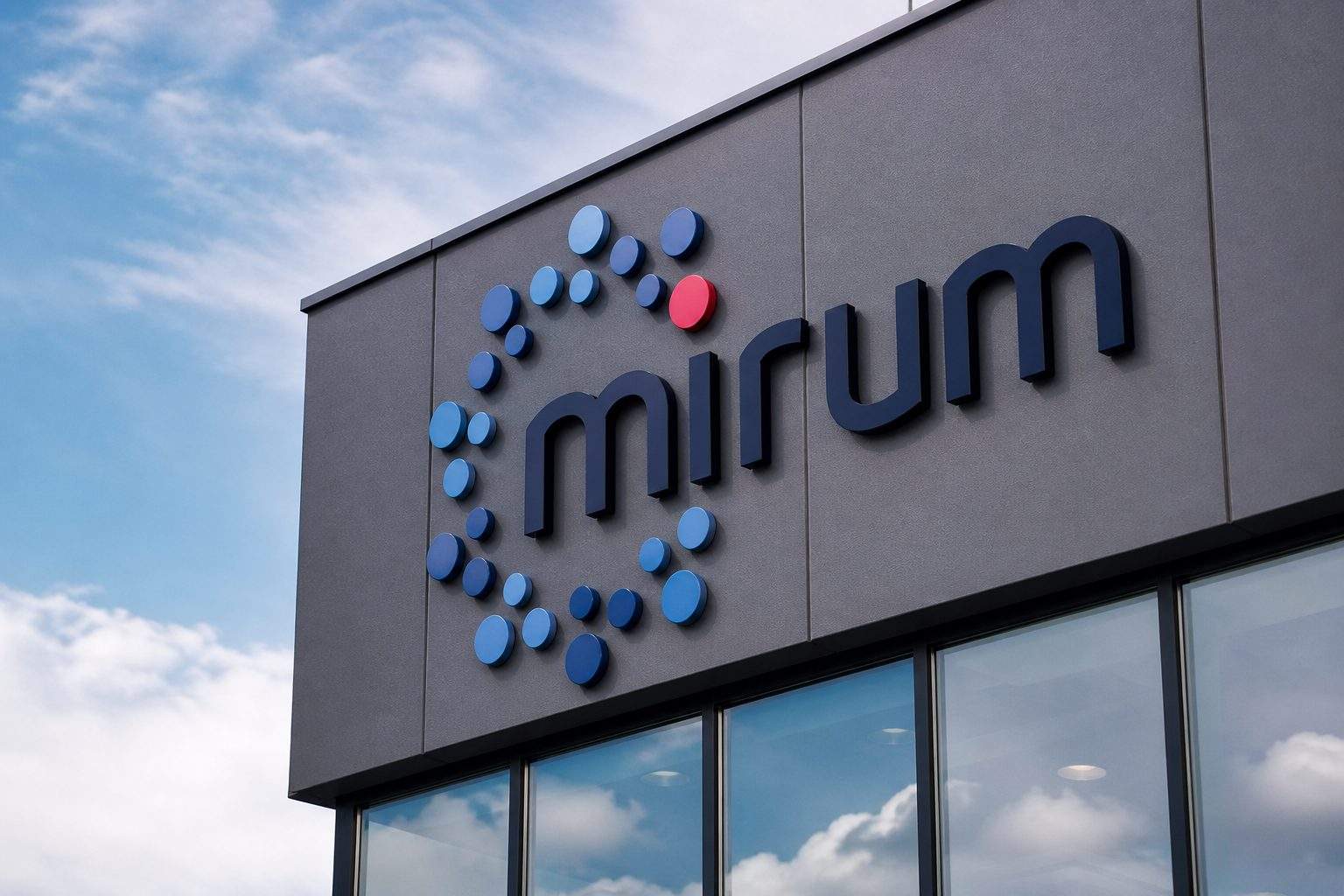

FOSTER CITY, California, May 4, 2026, 13:04 PDT
- Mirum reported that volixibat hit its primary endpoint in a Phase 2b trial involving 158 patients with primary sclerosing cholangitis, a rare liver disorder currently lacking any approved treatments.
- The company is eyeing a pre-NDA sit-down with the FDA this summer. It’s targeting a U.S. filing for the second half of 2026. An NDA marks the official request for U.S. approval.
- Mirum shares jumped roughly 9% on Monday, hitting an intraday peak of $110.48 before settling back.
Shares of Mirum Pharmaceuticals surged Monday, after the company announced its experimental therapy volixibat hit the primary endpoint in a Phase 2b study targeting primary sclerosing cholangitis, or PSC—a rare liver condition marked by scarring of the bile ducts and potential liver failure. The study zeroed in on cholestatic pruritus, the intense itching caused by impaired bile flow and notorious as one of PSC’s toughest symptoms.
The readout looms large as Mirum speeds toward regulatory milestones. The Foster City, California biotech lined up a pre-New Drug Application meeting with the U.S. Food and Drug Administration for the summer. An NDA filing is on the calendar for the back half of 2026.
PSC Partners Seeking a Cure notes that the FDA hasn’t approved any drugs to treat or cure PSC. That fact puts extra significance on the volixibat results, despite the trial focusing on itch and not endpoints like transplant-free survival or disease progression.
The VISTAS study enrolled 158 PSC patients, splitting them between volixibat 20 milligrams twice daily and placebo. Researchers focused the primary analysis on 111 patients dealing with moderate to severe itch, while a separate set of 47 participants started the trial with only mild itch.
Volixibat patients saw itch scores drop by 2.72 points from baseline on the Adult ItchRO scale, while those on placebo reported a 1.08-point reduction—a placebo-adjusted difference of 1.64 points. Zero marks no itch and 10 is the worst possible. In the main cohort, 55.6% of those taking volixibat achieved at least a two-point reduction, compared to 26.3% for placebo.
Joanne Quan, Mirum’s chief medical officer, described the results as a “clear and compelling efficacy signal,” emphasizing that the data suggest volixibat could help with “one of PSC’s most burdensome” symptoms. “Very limited options” exist for cholestatic pruritus in PSC, according to Kris Kowdley, a VISTAS investigator and director at Liver Institute Northwest. Mirum Pharmaceuticals
Volixibat, an IBAT inhibitor, works by blocking a transporter in the intestine that normally sends bile acids back to the liver. According to Mirum, the drug led to a statistically significant drop in serum bile acids—a blood marker that signals bile-acid burden. Full results are expected May 30 at the European Association for the Study of the Liver International Liver Congress.
Still, the safety results raise questions for regulators. Among patients on volixibat, 93.5% had treatment-emergent adverse events, compared to 84.0% for placebo. Diarrhea turned up in 40.3% of those receiving volixibat versus just 8.6% on placebo. Serious adverse events hit 10.4% in the volixibat group, with placebo at 6.2%. Mirum flagged more frequent liver lab elevations with volixibat as well.
Mirum shares climbed to $105.52, up about 9%, after hitting an intraday peak of $110.48. That high marked a new record for the stock, according to Investor’s Business Daily, before some gains slipped away.
Mani Foroohar at Leerink Partners said the results “open the door to another $1B+ commercial opportunity,” per Investor’s Business Daily. Over at RBC Capital Markets, Lisa Walter called volixibat “a drug” and argued the data cut some risk from Mirum’s wider bile-acid lineup. Investors
Competition isn’t standing still, just not directly in PSC. Back in March, the FDA signed off on GSK’s Lynavoy—linerixibat—for cholestatic pruritus linked to primary biliary cholangitis, another rare bile-duct disorder. GSK is handing global rights to Italy’s Alfasigma. Ipsen, for its part, sells Bylvay, an IBAT inhibitor, for pediatric liver conditions marked by cholestatic pruritus, including Alagille syndrome and progressive familial intrahepatic cholestasis.
Mirum now faces the question of whether FDA staff will see the VISTAS data as sufficient for filing in PSC-related itch. Meanwhile, topline results from the VANTAGE Phase 2b trial testing volixibat in primary biliary cholangitis have been pushed back; the company now expects them in the first quarter of 2027.
Mirum will post its first-quarter numbers on May 6. The company’s latest forecast puts 2026 global net product sales between $630 million and $650 million, following $521.3 million booked in 2025, driven mostly by rare-disease brands Livmarli, Cholbam, and Ctexli.
Related articles: Biotechnology


![Asia Stock Market Today 28/08/2026 [UPDATE: 00:51 SGT] [Salesforce Leads KASE Global Into Final Minutes After Asia’s Split Close]](https://ts2.tech/wp-content/uploads/2026/08/Asia-market-dashboard-2026-08-28-0051-480x384.jpg "Asia Stock Market Today 28/08/2026 [UPDATE: 00:51 SGT] [Salesforce Leads KASE Global Into Final Minutes After Asia’s Split Close]")