
NEW YORK, April 15, 2026, 08:49 EDT
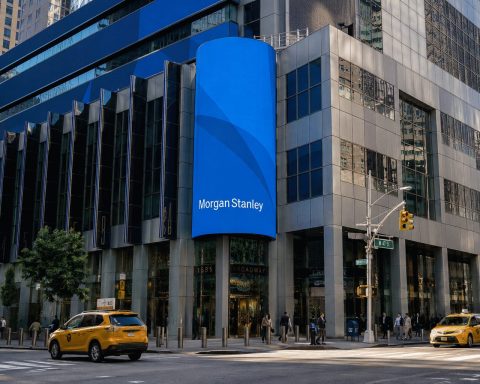
Morgan Stanley topped forecasts for the first quarter, with equities trading hitting new highs and dealmaking showing more muscle—driving revenue to a fresh record. Shares traded up roughly 1.2%, at $183.34 as of 8:31 a.m. EDT. The bank posted profit of $3.43 per share on revenue of $20.6 billion, compared to last year’s $2.60 a share on $17.7 billion.
These figures carry weight now, building on what’s already been a robust kickoff to earnings for major U.S. banks and highlighting how last quarter’s turbulence energized trading operations, with M&A activity holding steady. The Iran conflict, tech selloffs, and wild oil swings pulled clients back into the fold. A less hostile regulatory tone also kept deals coming, so investors are tuned in to bank reports, hunting for signals about corporate momentum and the broader economy.
“Record quarter,” is how Ted Pick, chairman and chief executive at Morgan Stanley, put it. Net income applicable to Morgan Stanley jumped to $5.57 billion, up from $4.32 billion the previous year. Return on tangible common equity reached 27.1%—a measure that excludes goodwill and other intangibles. Morgan Stanley
Institutional securities drove the gains. Investment-banking revenue jumped 36% to $2.12 billion, with advisory fees climbing to $978 million from $563 million. Equities brought in a record $5.15 billion, while fixed-income surged 29% to $3.36 billion. Among the big mandates: Morgan Stanley’s work on Unilever’s planned food-business combination with McCormick.
Morgan Stanley’s wealth management division, the business the firm has steadily built up over years, notched another record quarter. Revenue at the unit climbed 16% to $8.52 billion, with a pretax margin of 30.4%. Clients poured in $118.4 billion in net new assets. Of that, $53.7 billion came in as fee-based flows — dollars heading into accounts that collect ongoing management fees. On the other hand, investment management came in lighter: revenue slipped 4% to $1.54 billion.
Morgan Stanley’s numbers echo what’s happening elsewhere on Wall Street. JPMorgan reported that its markets revenue jumped 20% to $11.6 billion. At Citigroup, total markets revenue climbed 19% to $7.2 billion. Goldman Sachs, for its part, delivered record equities revenue of $5.33 billion. That kind of volatility has fattened trading desks at the industry’s giants.
The situation stays shaky. Oil’s still trading roughly 31% above where it was before the war. The IMF has trimmed its global growth forecast, and some analysts are cautioning that stocks could be ignoring the risk of fresh flare-ups. On Tuesday, JPMorgan’s Jamie Dimon called it an “increasingly complex set of risks.” Morgan Stanley pointed to higher provision for credit losses in institutional securities, citing certain commercial real estate loans and greater macro uncertainty. Reuters
Morgan Stanley bought back $1.75 billion in shares for the quarter, declared a $1.00 dividend, and wrapped up March posting a 15.1% common equity tier 1 ratio—a crucial capital measure. Execs will break down the results on a 9:30 a.m. ET call.
Related articles: NYSE:MS