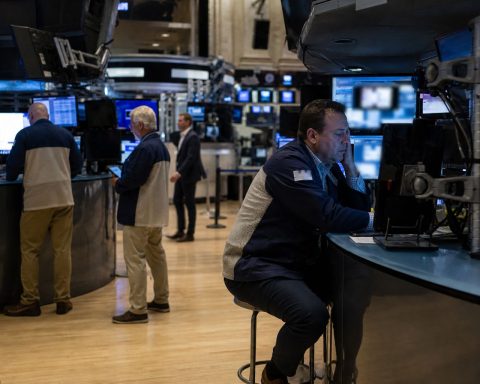

New York, January 8, 2026, 10:41 EST — Regular session
- Natural gas futures fell after weekly U.S. storage data, tugging at gas-linked stocks
- U.S. producer EQT and Marcellus peers edged lower; gas-tracking ETFs moved more
- Traders now watch late-January weather shifts and the next storage report, while investors eye February earnings
Shares of EQT Corp slipped on Thursday as the natural gas price turned lower after a government storage report. EQT was down 1.1% at $53.88, while Henry Hub natural gas futures fell 2.7% to $3.431 per million British thermal units (mmBtu) by mid-morning.
The weekly storage figure is the market’s gut check in winter. It feeds straight into expectations for how tight supply will look if cold snaps arrive, or don’t.
The U.S. Energy Information Administration (EIA) reported a 119-billion-cubic-foot (Bcf) withdrawal for the week ended Jan. 2, leaving working gas in storage at 3,256 Bcf. That put inventories about 1% above the five-year (2021–25) average, and the agency’s next report is due Jan. 15.
The reversal came a day after the February contract jumped, with the front month settling at $3.525 on Wednesday. Commodity Weather Group pointed to a colder window around Jan. 17-21 across the Midwest and East, a forecast that helped spark short covering earlier in the week.
Other Appalachia-focused names eased alongside. Antero Resources fell 0.8% and Range Resources dropped 1.3%, while the United States Natural Gas Fund (UNG) — an exchange-traded fund that tracks near-term gas futures — slid 3.3%.
Moves were sharper in leveraged products. ProShares Ultra Bloomberg Natural Gas (BOIL), which targets twice the daily move in gas futures, fell 5.1%, while the inverse ProShares UltraShort Bloomberg Natural Gas (KOLD) rose 5.4%.
But the weather trade cuts both ways, and it can turn fast when forecasts shift. On the chart, some traders are watching support near $3.43 and resistance around $3.60 in the February contract.
For EQT investors, the next company catalyst is earnings: MarketWatch’s calendar shows the producer is due to report on Feb. 18.