NEW YORK, March 17, 2026, 15:34 EDT
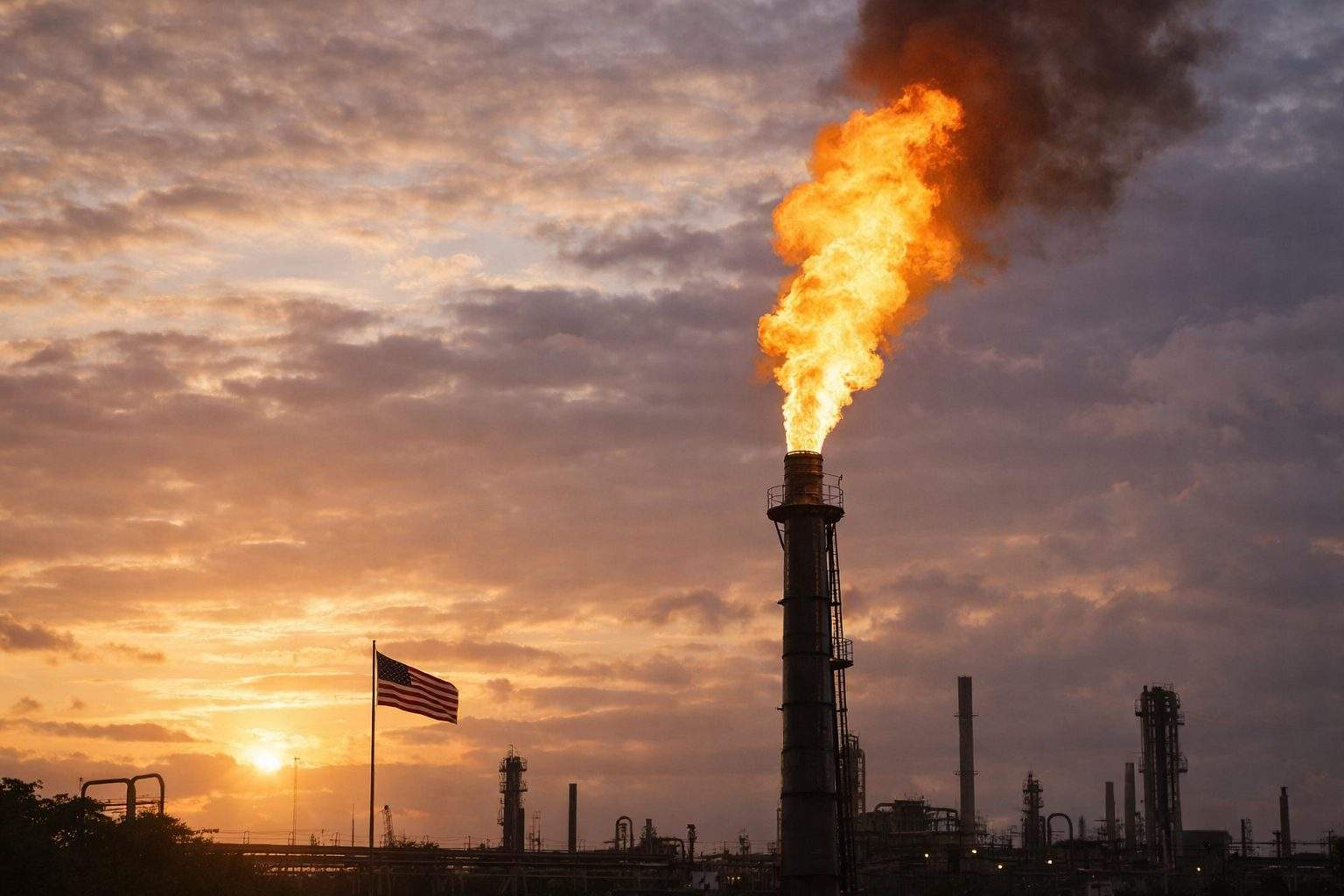
U.S. natural gas struggled on Tuesday, with Henry Hub trading around $3.03 per million British thermal units in early afternoon action. The contract slipped after Monday’s drop, weighed down by higher production and weaker demand outlooks. Henry Hub serves as the key U.S. gas benchmark. markets.businessinsider.com
This matters right now with the market drifting into the spring shoulder season—heating use tapers off and utilities turn to restocking. That’s been a brake on U.S. gas, keeping it in check even as Brent has climbed past $100 on Strait of Hormuz tensions and global LNG markets have been shaken. U.S. Energy Information Administration
LSEG numbers put Lower 48 gas production at 110.0 billion cubic feet per day for March, edging up from February’s 109.2 bcfd. Demand, exports included, is set to retreat—down to 115.8 bcfd next week after hitting 123.6 bcfd this week. On the LNG side, feedgas deliveries to the nine largest U.S. plants slipped in March, averaging 18.4 bcfd, compared with February’s all-time high of 18.7 bcfd. Business Recorder
The shift toward a looser supply-demand balance is showing up in storage numbers. According to the U.S. Energy Information Administration, gas inventories are expected to close out March at roughly 1,840 billion cubic feet—right in line with the five-year average. After a warmer-than-normal February padded gas stocks, the agency trimmed its 2026 Henry Hub price forecast to about $3.80 per mmBtu. U.S. Energy Information Administration
Things look even rougher in West Texas. By Monday, Waha cash prices had spent a record 27 days stuck in negative territory, with pipeline logjams pinning gas in the Permian. Just four days back, Waha was averaging minus $6.34 per mmBtu. EBW Analytics Group put it bluntly: “continued negative pricing in the Permian is expected for much of the spring.” Business Recorder
For pure-play gas, names like EQT, Coterra Energy, and Range Resources stand out as the key stocks to watch. EQT’s main focus is Appalachia, according to Reuters company profiles, while Coterra splits its base between the Permian and Marcellus. Range, meanwhile, operates squarely in the Marcellus in Pennsylvania. Reuters
Beyond U.S. borders, the picture shifts. Asian spot LNG prices have surged, now sitting at a three-year peak—doubling from earlier levels. “The conflict will significantly reduce Asian LNG demand growth in 2026,” Wood Mackenzie’s Lucas Schmitt said, pointing to early signs of demand destruction as high prices squeeze importers. Reuters
Venture Global’s CEO Mike Sabel sounded more measured on the outlook, brushing off the recent LNG price swings as “very short-term.” He expects liquefaction prices to stabilize when new supply hits the market, despite roughly 20% of global LNG capacity currently offline due to Qatar shutdowns. Reuters
There’s still a shot the U.S. balance flips quickly. With heating demand tracking close to typical through March 31, any sudden California heat wave would ramp up gas burn for power generation. On top of that, Permian bottlenecks could crimp national output, leaving Henry Hub in a tight spot—caught between lackluster weather-driven demand and the real risk of a supply squeeze. Business Recorder
Oil can shift fast—Brent climbed 1.3% to $101.53 a barrel on Tuesday. IG’s Tony Sycamore said, “The risks remain stark,” pointing out that a single missile or mine hitting a tanker could rattle a key waterway responsible for around 20% of the world’s oil and LNG flows. Still, EIA continues to see U.S. gas prices as relatively shielded, at least for now.