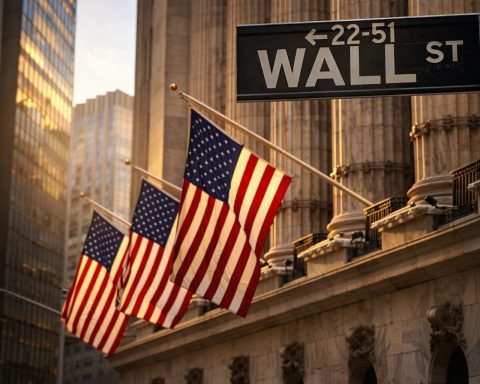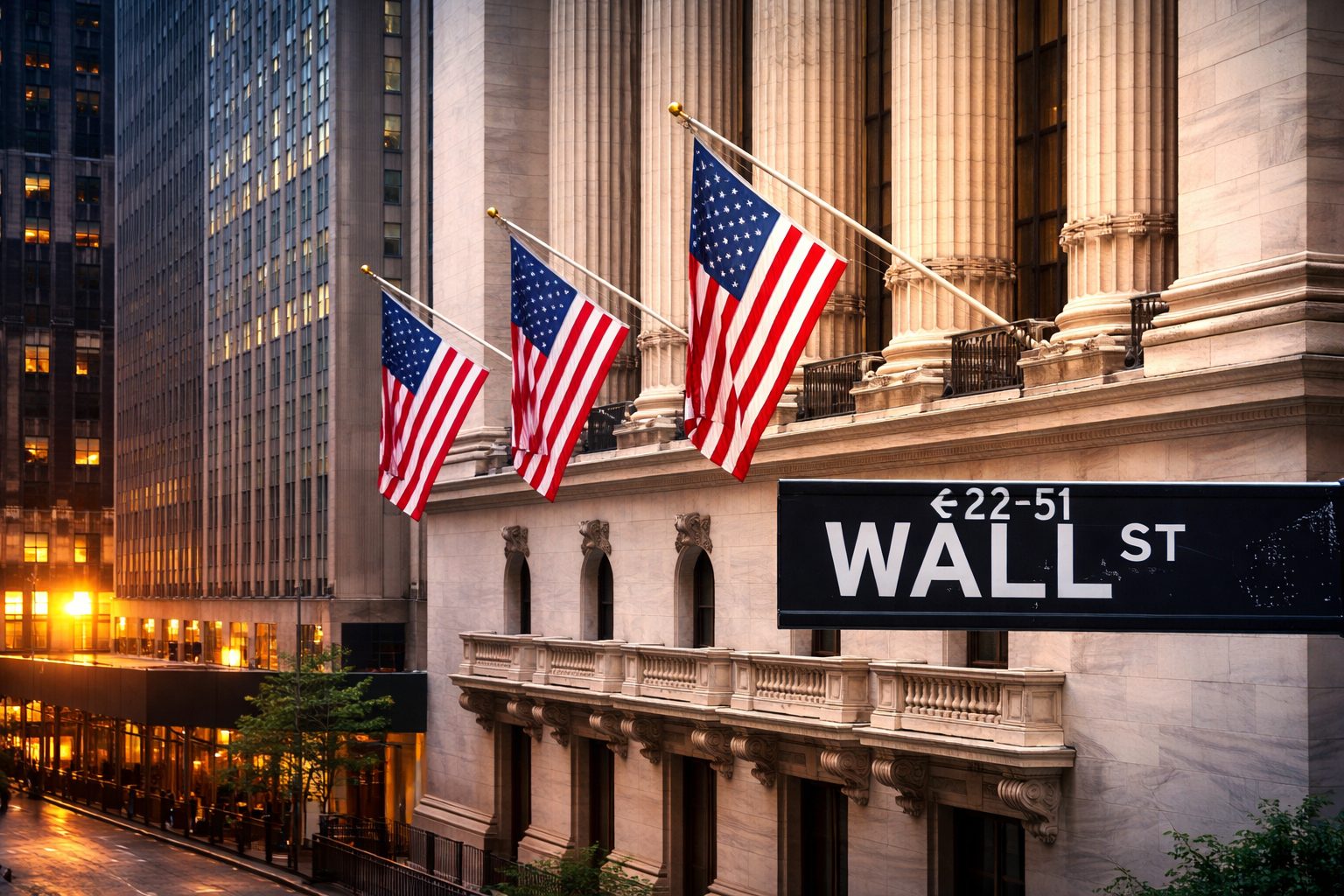
NEW YORK | December 20, 2025 — The New York Stock Exchange is heading into the final stretch of 2025 with two big stories colliding at once: a jittery year-end tape (driven by shifting rate-cut expectations and fresh scrutiny of AI spending) and a structural overhaul of U.S. equity trading that could reshape how—and when—NYSE-listed stocks trade in 2026 and beyond. Reuters
At the same time, NYSE’s parent, Intercontinental Exchange (ICE), is using year-end to underscore a third theme: capital formation is back. NYSE says it captured seven of the 10 largest IPOs of 2025 and doubled down on ETFs and digital-asset market access—while rivals like Nasdaq are pushing hard on listings and near-round-the-clock trading. Intercontinental Exchange+1
Below is what matters most as of Dec. 20, 2025 for anyone tracking the NYSE, U.S. stock market structure, and the forward-looking forecasts shaping 2026.
The NYSE mood into year-end: strong 2025, choppy December, and two drivers behind the swings
Broadly, U.S. equities are still on track for a strong year, but the ride into the finish line has been bumpier than the holiday-season stereotypes suggest.
Reuters points to two dominant themes behind the late-December swings:
- AI “capex” anxiety — investors are asking harder questions about when massive data-center and infrastructure spending translates into profits.
- The 2026 Fed path — expectations around future rate cuts keep shifting, and the market is reacting in real time. Reuters
There’s also a quietly important “data-quality” subplot: investors recently digested economic releases that were delayed by a 43-day federal government shutdown, creating uncertainty about how cleanly the data reflect underlying conditions (especially around holiday discounting effects). Reuters
What to watch next: the coming week’s macro calendar—GDP, durable goods, and consumer confidence—will likely matter more than usual because markets are trying to infer whether the Fed can keep easing into 2026 without inflation re-accelerating. Reuters
NYSE holiday trading schedule: what’s open, what closes early, and what changed after the White House order
Because today (Dec. 20) is a Saturday, the NYSE is closed—but the schedule for the holiday week is the practical question for most traders and issuers.
Here’s the key timeline for U.S. stock markets around Christmas and New Year’s:
- Wednesday, Dec. 24, 2025 (Christmas Eve): U.S. stock market closes early at 1:00 p.m. ET (bond market closes early at 2:00 p.m. ET). Investopedia
- Thursday, Dec. 25, 2025 (Christmas Day): markets closed. Investopedia
- Friday, Dec. 26, 2025: exchanges operate as scheduled (a regular session). Reuters
- Thursday, Jan. 1, 2026: markets closed for New Year’s Day. Investopedia
A headline twist this week: Reuters reported that major U.S. exchanges—including NYSE, Nasdaq, Cboe, and IEX—said they would stick to their planned trading calendars (including the early close on Dec. 24 and a normal session on Dec. 26) after President Donald Trump ordered the federal government closed on those days. In other words: government closure ≠ market closure. Reuters
NYSE’s 2025 “scorecard”: IPO wins, ETF dominance, and tech infrastructure bragging rights
In a year-end recap, NYSE (via ICE) put hard numbers to its 2025 claims:
- Seven of the 10 largest IPOs of 2025 listed on the NYSE, according to the exchange’s year-in-review release.
- NYSE says it led large technology IPOs, representing nearly 70% of proceeds raised in 2025, citing examples like Klarna, Figma, Circle Internet Group, and Bullish. Intercontinental Exchange
- On market infrastructure, NYSE highlighted its Pillar trading technology, saying it processed more than 1.1 trillion messages in a single day while maintaining processing times around 30 microseconds. Intercontinental Exchange
- On ETFs, NYSE says it welcomed 428 new ETFs in 2025 with $64.62 billion in assets under management (AUM), and described itself as the largest ETF marketplace, representing more than $10 trillion of listed AUM. Intercontinental Exchange
Two items in that recap are especially “strategic” (not just marketing):
- NYSE Texas: NYSE says its Texas-incorporated exchange launched in March and has surpassed 100 dual listings representing more than $2 trillion in combined market capitalization. Intercontinental Exchange
- The AstraZeneca transfer: NYSE calls AstraZeneca’s intent to make NYSE its listing home the largest transfer in NYSE history, signaling that listing-venue competition is no longer just about IPOs. Intercontinental Exchange
IPO market outlook: a 2026 pipeline is forming—and the NYSE/Nasdaq rivalry is getting spicy
The U.S. IPO market is no longer in “hibernation mode.” In a Reuters interview, Nasdaq’s head of listings described a robust pipeline for IPOs that could raise more than $1 billion in 2026—and Dealogic data cited by Reuters put U.S. IPO proceeds at $74.7 billion in 2025, up about 80% from the same period last year. Reuters
But here’s the NYSE-relevant part: that same Reuters report says Nasdaq benefited from 22 companies transferring from the NYSE in 2025—including Walmart—with a combined market value of about $1.2 trillion. That’s a direct signal that listing decisions (and fees, liquidity profiles, index inclusion narratives, and brand positioning) are back in play. Reuters
So the story isn’t “NYSE winning” or “Nasdaq winning.” It’s more interesting:
- NYSE is emphasizing blockbuster IPO capture, ETF scale, and market-structure credibility. Intercontinental Exchange
- Nasdaq is emphasizing IPO pipeline depth and high-value listing transfers. Reuters
In plain English: the exchanges are fighting for the most valuable corporate moments—IPOs, transfers, and the future of trading hours.
Forecasts and analysis for 2026: Santa rally hopes, bullish targets, and crash-risk hedges
The near-term: “Santa Claus rally” season is here—maybe
Reuters notes that since 1950, the so-called Santa Claus rally period (the last five trading days of the year plus the first two of January) has averaged a 1.3% gain for the S&P 500, and this year that window starts midweek and runs through Jan. 5. Reuters
But the same Reuters analysis warns that December has been unsettled, and the market remains hypersensitive to (1) AI-spending narratives and (2) shifting rate-cut expectations. Reuters
The 2026 base case: many strategists still lean bullish
A notable bullish marker earlier this month: Reuters reported that Oppenheimer Asset Management set a 2026 year-end S&P 500 target of 8,100, described as the most bullish among major broker forecasts at the time, implying about 18% upside from the referenced level and assuming $305 in earnings per share. Reuters
Meanwhile, Barron’s (Dec. 20) summarized a still-optimistic “consensus vibe” for 2026—while emphasizing that optimism isn’t the same thing as certainty. Barron’s
The tail risk: a crash isn’t most people’s forecast… but the options market is pricing something
Barron’s also flagged an eye-catching statistic attributed to TS Lombard’s Steven Blitz: the market is implying roughly a 10% chance of a 30% drop in 2026, even as most strategists remain constructive overall. Barron’s
This is less “doom prophecy” and more “price of insurance”: when hedging demand rises, crash probabilities can look alarmingly large even if the median forecast stays bullish.
The Fed wildcard: rate cuts are the fuel—unless stagflation kills the engine
Market narratives for 2026 keep circling back to one central question: Will the Fed keep cutting?
Reuters notes the Fed has cut rates at three consecutive meetings and that investors are parsing upcoming data to judge when easing could resume in 2026—complicated by the distortions of shutdown-delayed statistics. Reuters
But the downside scenario is straightforward: if inflation re-accelerates while growth cools, the Fed’s room to cut shrinks.
Business Insider highlighted Apollo chief economist Torsten Sløk warning that stagflation risk could push rate cuts further out, undercutting one of the major supports for the stock market rally narrative into 2026. Business Insider
The biggest NYSE “future” story: 24/5 markets are moving from talk to filings
If you want the real “why this matters” NYSE story for the next 12–24 months, it’s not one IPO. It’s not one week’s CPI print.
It’s this: U.S. equity markets are building the plumbing for near-round-the-clock trading.
Nasdaq’s move: formal steps toward 23-hour weekday trading
Reuters reported that Nasdaq planned to submit paperwork to the SEC to expand trading toward 23 hours a day, five days a week, aiming for a launch in the second half of 2026—driven by global demand for U.S. equities. Reuters
Nasdaq’s filing (public PDF) underscores the key market-structure reality: outside “regular trading hours,” important features like NBBO-linked protections and certain Reg NMS guardrails don’t function the same way, and liquidity is typically thinner—meaning wider spreads and more volatility risk. Listing Center
NYSE Arca’s plan: near-continuous trading with a daily break
NYSE’s own extended-hours FAQ describes NYSE Arca operating nearly continuously at 23 hours per day, five days a week, with a one-hour break designed for clearance, maintenance, and processing—targeting end of 2026, but dependent on SIP availability, DTCC modernization, and SEC approvals. New York Stock Exchange
The “plumbing” breakthrough: SIPs filed to extend operating hours
Here’s the piece non-market-structure nerds often miss: even if an exchange wants longer hours, the consolidated market data system has to be able to support it.
On Dec. 19, the SIP Operating Committees announced they submitted a Plan Amendment to the SEC to extend SIP operating hours to accommodate overnight trading, targeting a December 2026 launch (pending SEC review). The proposed SIP hours would run from 9:00 p.m. Sunday to 8:00 p.m. Friday (ET) with a one-hour technical pause beginning at 8:00 p.m. Monday through Thursday. PR Newswire
That’s a foundational step because SIPs are the mechanism that consolidates protected quotes and trades across the U.S. market into widely consumed data feeds—critical for transparency and price discovery. PR Newswire
Wall Street isn’t universally thrilled
Reuters reported that major banks are preparing for near-constant trading, but reluctantly, citing concerns about investor protections, costs, thin overnight liquidity, and volatility risk—while acknowledging that competitive pressure may eventually force broader participation. Reuters
Put differently: 24/5 trading is increasingly a when, not an if—but the debate is about market quality, not just convenience.
Crypto meets the NYSE: listings, ETFs, and a potential MoonPay investment
NYSE’s year-in-review also framed 2025 as a year where traditional exchange infrastructure and digital assets grew closer. NYSE says it listed crypto-related names including Circle Internet Group and Bullish, and launched 25 digital-asset ETFs (and described itself as the top venue for U.S. crypto ETF trading). Intercontinental Exchange
And the corporate-finance crossover may be accelerating: a Reuters item citing Bloomberg News reported that ICE (NYSE’s owner) is said to be in talks to invest in crypto firm MoonPay, with MoonPay reportedly targeting a valuation of about $5 billion. TradingView
Whether or not that deal materializes, the direction of travel is clear: major exchange operators are positioning themselves for a market where tokenization, crypto-linked products, and global access are no longer niche side quests.
What to watch next week on the NYSE: catalysts, calendar quirks, and the year-end liquidity trap
With only a handful of sessions left in 2025, the NYSE setup is classic “late December”: headlines can move prices more than usual because liquidity thins.
Key watch items include:
- Holiday-shortened week mechanics: early close Dec. 24; normal Dec. 26. Investopedia+1
- Macro releases: GDP, durable goods, consumer confidence—important for rate-cut expectations and risk appetite. Reuters
- AI narrative sensitivity: anything that changes the story on infrastructure spending, margins, and payoff timelines can swing megacap-heavy indexes. Reuters
- Positioning into 2026: profit-taking, tax considerations, and institutional rebalancing can create moves that look “fundamental” but are really flows.
Bottom line
As of Dec. 20, 2025, the New York Stock Exchange sits at the intersection of three forces:
- A year-end market that wants a Santa rally but keeps getting distracted by AI and the Fed. Reuters
- A renewed IPO and listings cycle—where NYSE and Nasdaq are openly competing for the next generation of winners. Intercontinental Exchange+1
- A market-structure revolution—23/5 or 24/5 trading—that is now deep into filings and infrastructure upgrades, targeting late 2026. PR Newswire+2New York Stock Exchange+2
The oddly poetic part: the exchange that began as a physical meeting place under a tree is now preparing for a world where trading may barely sleep—while humans still do.