SACRAMENTO, March 19, 2026, 09:40 PDT
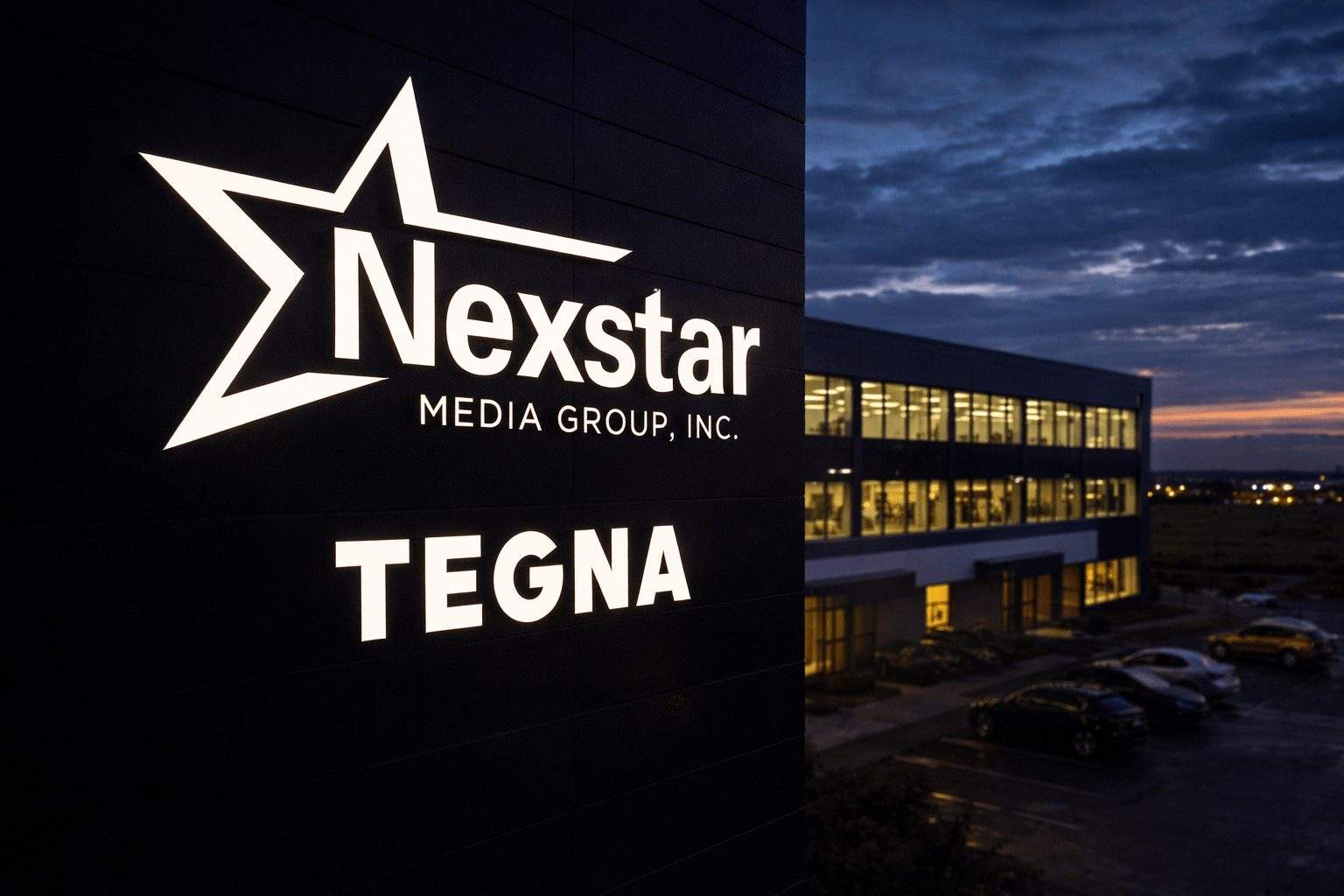
California, along with seven other states, filed suit late Wednesday aiming to halt Nexstar Media Group’s $6.2 billion deal for Tegna, a move that would vault Nexstar to the top spot among local TV station owners in the U.S. In a complaint lodged in federal court in Sacramento, the states argue the merger threatens to boost pay-TV prices and erode local news coverage by folding competing stations under one operator. Reuters
The case arrives just as the deal hangs in the balance. President Donald Trump and FCC Chair Brendan Carr have each endorsed the transaction, but it can’t move forward unless the FCC changes or waives the national audience cap—currently blocking any single company from reaching over 39% of U.S. TV homes. Carr’s position: national networks like NBC, owned by Comcast, and Disney’s ABC already wield outsized influence. Axios
This tug-of-war comes down to scale. Local broadcasters have been bleeding audience and losing subscribers as streaming and social media platforms eat into their turf. Nexstar claims snapping up Tegna would give it a better shot at surviving the shift. When the deal was announced in August, Nexstar put down a $22 per share offer, pegging the deal at $6.2 billion including debt and fees. CEO Perry Sook said the acquisition would let the company “compete more effectively” with both Big Tech and traditional media players. On Thursday, both firms declined to comment. Reuters
The states allege in their complaint that after the merger, the combined company would oversee 265 stations in 44 states plus Washington, D.C. That’s a reach into roughly 80% of U.S. households, with control over 221 Big Four affiliates—ABC, CBS, NBC, and Fox—stations known for drawing top local news, sports, and prime-time audiences. The filing details a footprint spanning 132 local TV markets, including nine of the 10 largest and 41 of the top 50. New York State Attorney General
According to New York’s attorney general, 31 markets where Nexstar and Tegna both have stations would see that direct competition disappear. The states claim retransmission fees—what cable and satellite companies pay broadcasters for local channels—are likely to rise, and warn that distributors could risk losing access to several major-network stations simultaneously if negotiations falter. New York State Attorney General
DirecTV piled on Thursday, launching its own antitrust lawsuit in Sacramento. The pay-TV company argued the merger could push up consumer prices, squeeze out local rivals, and make blackouts and newsroom closures more likely. PR Newswire
California Attorney General Rob Bonta slammed the merger as illegal, warning it would create “incredibly high levels of concentration” in local TV markets. Bonta argued the transaction hands “more broadcast programming in the hands of fewer people,” with the potential to drive up cable and satellite bills nationwide. California Attorney General
New York Attorney General Letitia James echoed those concerns, arguing the merger could undermine local news and drive up consumer costs by consolidating control of hundreds of stations. Her office pointed specifically to Buffalo as one of the overlap markets that would feel the effects if the deal goes through. New York State Attorney General
Nexstar slipped roughly 1.5% in U.S. morning trading, while Tegna dropped around 1.3%.
The lawsuits aren’t the whole story here—Carr voiced his backing for the deal back in February. Nexstar reiterated just last month that it’s planning to close in the back half of 2026. Still, these new legal battles could force the companies into selling assets, dealing with significant delays, or even walking away if judges side with the states and DirecTV over concerns about price increases and local news. Reuters