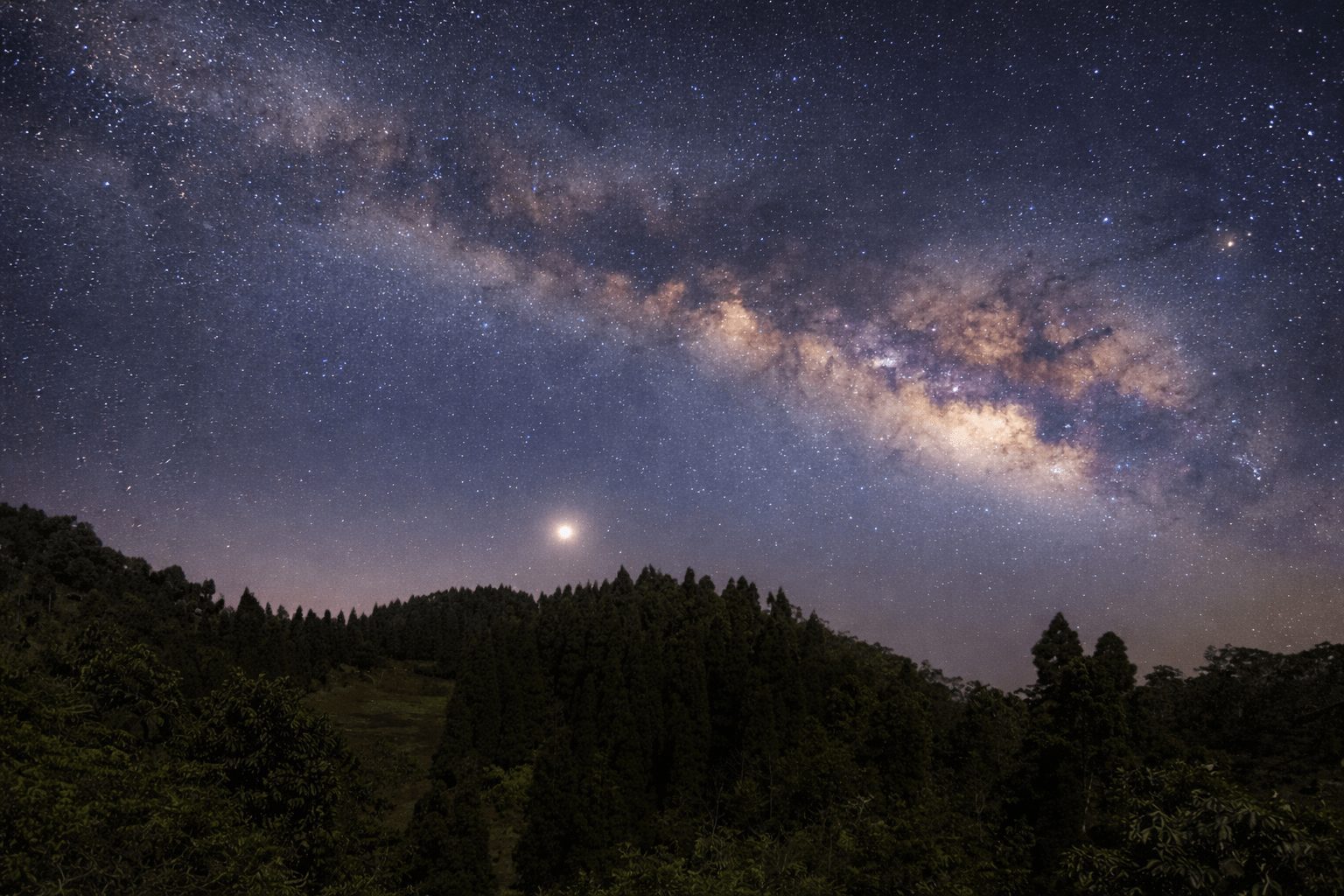
Christmas Eve 2025 arrives with a sky that’s doing the most — in the best way. Tonight’s waxing crescent Moon is growing brighter (roughly “one-fifth lit” by evening), setting the stage for easy naked-eye stargazing, quick telescope looks at lunar craters along the day-night line, and a clean backdrop for planets and satellites. Space+1
And yes: there’s also a very real chance you’ll see a bright, silent “moving star” glide overhead — the International Space Station — timed so neatly around the holiday that it’s already become part of the day’s skywatching headlines. Space+1
Below is a detailed, news-driven guide to the night sky tonight (December 24, 2025), pulling together what astronomy outlets, space-weather forecasters, and planetariums are highlighting for today. Space+2Fairbanks Museum Planetarium+2
Tonight’s Night Sky Headlines for Dec. 24, 2025
Here’s what stands out most for “Night Sky Today” on 24.12.2025:
- Waxing crescent Moon in the southwest after dark, a prime phase for seeing crater shadows and spotting subtle Earthshine (sunlight reflected off Earth onto the Moon’s night side). Space+1
- Saturn remains a bright, steady point in the western evening sky in December, with star-hopping help from nearby bright stars depending on your timing and latitude. EarthSky+1
- Jupiter is the big show-off: bright, obvious, and climbing higher each evening as it approaches its January opposition. EarthSky+1
- ISS flybys are a major Christmas-week storyline, with notable visibility for early risers in parts of North America and Europe. Space+1
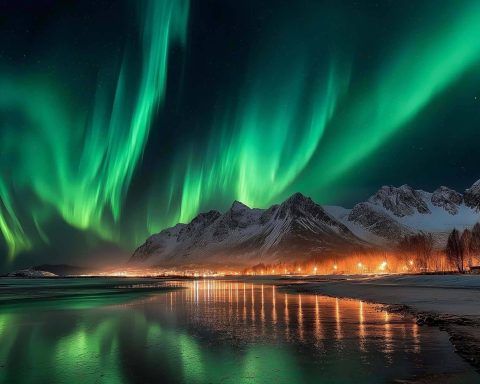
- Aurora odds are elevated (especially at higher latitudes) due to fast solar wind and the possibility of a glancing CME influence around Dec. 24, according to space-weather coverage and forecasts. Space+2EarthSky+2
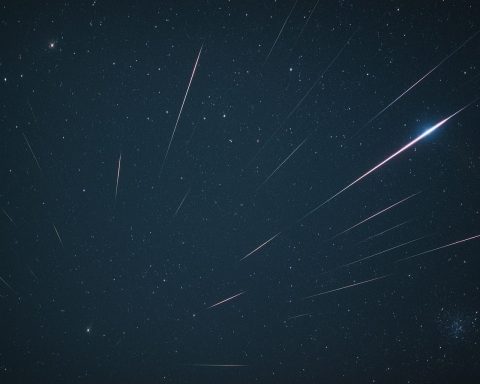
- Ursid meteors are still active (the shower runs through late December), though the peak was earlier this week. Darker skies from the modest Moon help the odds. Live Science+1
The Main Event: A Christmas Eve Crescent Moon (and Why It’s Worth Your Time)
The Moon is the easiest “wow” object tonight — and it’s not just because it’s seasonal and photogenic. A crescent Moon is also the best phase for beginners with binoculars or a small telescope: the boundary between lunar day and night (the terminator) throws long shadows that make mountains and crater rims pop in high contrast. Space+1
Tonight’s crescent is widely described as around 20–21% illuminated in skywatching coverage for Dec. 24, while lunar phase trackers show the Moon increasing through the teens today and heading toward First Quarter on Dec. 27 (19:09 UTC). Space+1
How to see it: step outside shortly after sunset and look toward the southwest as twilight deepens. If you can, give yourself 10–15 minutes away from bright indoor lighting — your eyes will thank you. Space+1
Bonus challenge: look for Earthshine, a faint “ghost glow” on the Moon’s dark portion. It’s subtle, but on a clear evening it can be unmistakable once you notice it. Space+1
Saturn and the Southwest Sky: A Calm Planet Near a Famous Lonely Star
Saturn is still one of the most satisfying naked-eye planets because it doesn’t twinkle much — it looks like a steady golden point compared with most stars.
Multiple observing guides this week flag the southwest-to-western evening sky as the place to look for the Moon and Saturn Christmas Eve, and some explicitly pair the scene with Fomalhaut (a bright star low in the south) as an easy reference point. Space+1
EarthSky’s December planet visibility guide also notes Saturn’s prominence in the western evening sky this month and places it among the stars of Aquarius while it heads toward earlier setting times. EarthSky
What you can do with gear:
- Binoculars: Saturn stays star-like, but binoculars help you compare its steadier light to nearby stars.
- Small telescope: even a modest scope can reveal Saturn’s rings as a tiny, unmistakable “handle” when the seeing (atmospheric steadiness) cooperates. Sky at Night Magazine
Jupiter Is the Bright “Christmas Star” Candidate This Week
If you only want to find one planet tonight and you want it to be dramatic, choose Jupiter.
Jupiter is climbing into prime viewing season and is headed toward opposition on January 10, 2026, when it will be at its biggest and brightest for the year. EarthSky+1
BBC Sky at Night Magazine’s Christmas-season planet guide calls Jupiter the standout planet of December 2025 and notes it sits in Gemini, near the bright twin stars Castor and Pollux — a helpful triangle for spotting it even from moderately light-polluted areas. Sky at Night Magazine
When to look: any time after dark, but Jupiter becomes more impressive as it climbs higher above the horizon (less atmosphere = sharper views). Sky at Night Magazine+1
What to look for in a telescope: Jupiter’s cloud bands are usually the first reward, and on steady nights you can catch the Galilean moons lined up like tiny beads. Sky at Night Magazine
The ISS Christmas Flyby: The “Bright, Silent Light” That Isn’t a Plane
One of the most shared skywatching stories of the day is the International Space Station appearing as a bright, steady light moving smoothly across the sky — no blinking navigation lights like an aircraft, and no engine sound. Space+1
Space.com’s reporting highlights that early risers in parts of North America and Europe may have strong viewing opportunities on Dec. 24 and Dec. 25, with example windows over major cities. For instance, the article lists (weather permitting) passes such as:
- New York (Dec. 24): 6:43–6:48 a.m. EST
- Chicago (Dec. 24): 5:42–5:45 a.m. CST
- Toronto (Dec. 24): 6:42–6:47 a.m. EST
- London (Dec. 24): 7:04–7:10 a.m. GMT Space
Exact timing depends strongly on your location, so the best “official” way to confirm is NASA’s Spot the Station (web and app), which provides flyover schedules and alerts for where you are. NASA+1
Quick spotting tip: the ISS typically “appears” suddenly, brightens as it catches sunlight, then fades as it slips into Earth’s shadow — the whole show can be only a few minutes. Space
Northern Lights Watch: Space Weather Is Slightly Spicy for Christmas Eve
Aurora forecasting is the part of astronomy that most resembles weather: it’s real science, but it’s chaotic, and the best answer is often “check updates close to launch.”
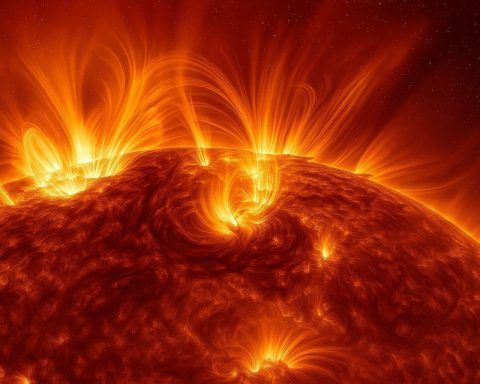
That said, today’s space-weather storyline is clear: fast solar wind plus the possibility of a glancing coronal mass ejection (CME) influence could keep geomagnetic conditions elevated through Christmas Eve. Space+1
EarthSky’s solar activity update describes fast solar wind conditions and notes an earlier CME is expected to pass close to Earth on December 24, with guidance suggesting a glancing rather than direct impact — still potentially enough to enhance auroral activity at higher latitudes. EarthSky
Space.com similarly frames this as not likely a major event, but “unsettled” conditions that can boost aurora odds, especially in typical auroral-zone locations (think Alaska, northern Canada, Greenland, Scandinavia). Space
For the most up-to-the-minute viewlines and nowcasts, NOAA’s Space Weather Prediction Center maintains tools like its Aurora Dashboard and daily forecasts. NOAA Space Weather Prediction Center+1
Meteor Shower Update: The Ursids Are Still Active (Even If the Peak Has Passed)
The Ursid meteor shower is the quieter sibling of December’s headline-grabber, the Geminids — but it has two things going for it this week:
- it runs through late December, and
- the Moon is still relatively modest in brightness compared with what’s coming. Live Science+1
LiveScience notes the Ursids are active into late December and that the best viewing is typically in the hours before dawn, with the radiant near the Little Dipper region of the sky. Live Science
Time’s coverage also emphasizes favorable conditions this year thanks to minimal moonlight around the peak period — and while tonight isn’t peak night, a darker sky always improves the odds of catching faint meteors. TIME
Practical expectation: on non-peak nights, treat meteors as a “bonus feature,” not a guaranteed show. Bring patience, bundle up, and keep your eyes on the widest patch of sky you can manage. Live Science+1
Seasonal Sky Fun: Winter Stars… and a Surprise “Summer Triangle” Encore
If you’re in mid-to-high northern latitudes, one of the charming December quirks is that you can catch a hint of “summer” while standing in winter air.
A daily “Eye on the Night Sky” update from the Fairbanks Museum & Planetarium notes that tonight’s Christmas Eve sky can include the Summer Triangle lingering in western skies during twilight, while the crescent Moon sits partway up in the southwest. Fairbanks Museum Planetarium
Meanwhile, the deeper the evening gets, the more the classic winter constellations start to dominate. If you’re looking for a simple “learn the sky” target tonight, start with Orion rising into prominence later in the evening — it’s the gateway constellation that leads you to bright stars and excellent binocular objects nearby. Sky Telescope+1
For Telescope Users: A One-Night “Double Star” Moment with Dwarf Planet Ceres
If your idea of holiday fun includes chasing faint solar system objects (respect), today’s observing notes include a niche-but-cool target: dwarf planet Ceres in Cetus.
An Astronomy.com skywatching item for Dec. 24 says Ceres passes very close to a background star in Cetus, creating a temporary “double star” effect for observers tonight. Astronomy
A separate weekly skywatching roundup (also circulating online this week) describes Ceres at about 9th magnitude in Cetus and specifies the background star as HD 3126 for the close pass. wausaupilotandreview.com
This is not a naked-eye target — you’re in small telescope territory — but it’s a fun reminder that the solar system is always moving, even when the constellations look fixed.
How to Get the Best View Tonight (Fast, Practical, No Nonsense)
- Start with the Moon in twilight (southwest after dark). It’s your anchor object. Space+1
- Then grab a planet: Saturn in the west earlier; Jupiter rising and taking over later. EarthSky+1
- Check ISS timing before you commit to a wake-up: use NASA’s Spot the Station for your exact location. NASA+1
- For aurora: check NOAA’s aurora tools close to your observing time; conditions change fast. NOAA Space Weather Prediction Center+1
- Don’t overthink it: even 10 minutes outside can turn into a memorable skywatching moment on a night like this. Space