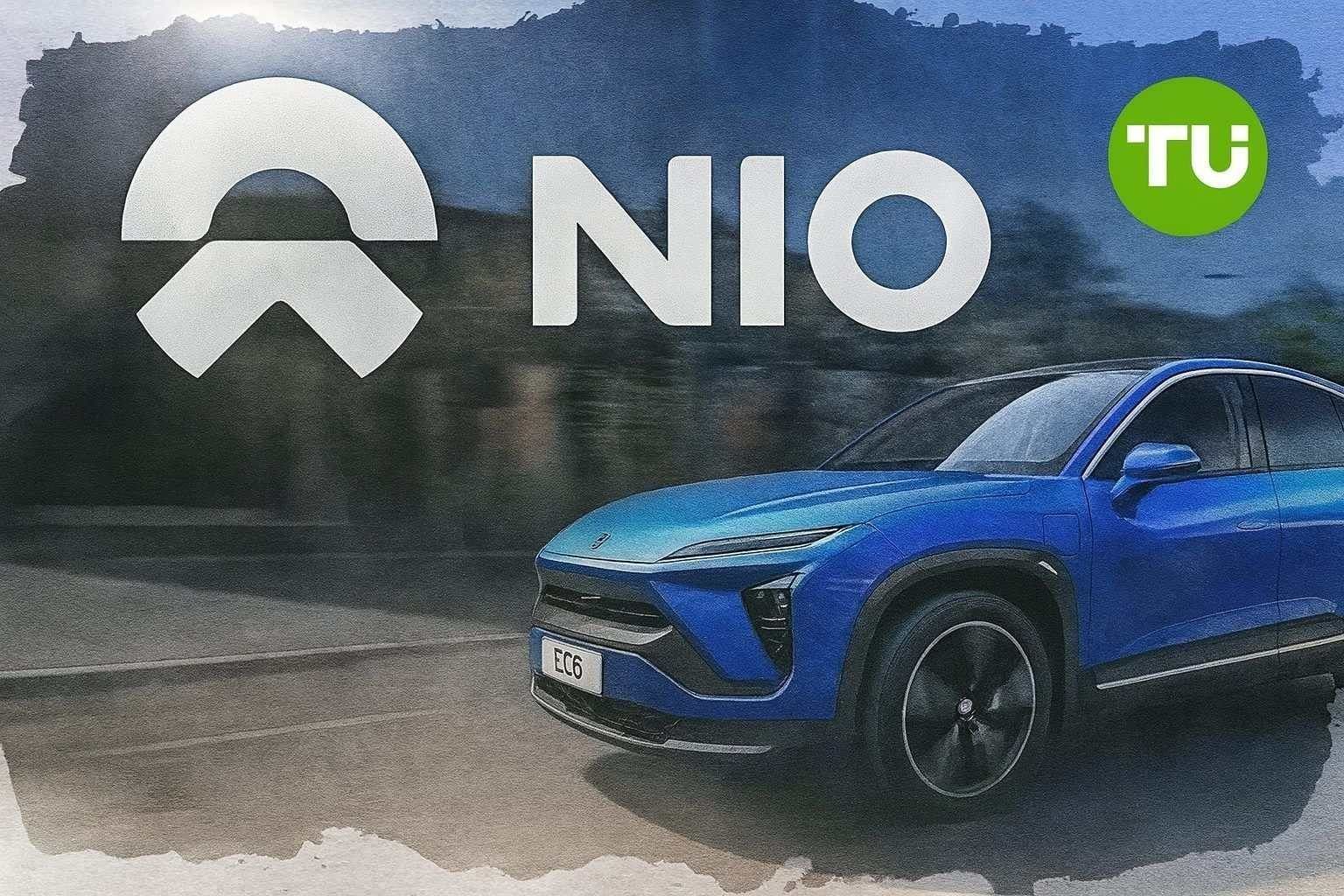
NIO Inc. (NYSE: NIO), often branded the “Tesla of China,” is closing 2025 with a strikingly mixed picture: record deliveries and improving margins on one side, a bruised share price and persistent losses on the other.
As of the U.S. session on December 8, 2025, NIO’s New York–listed shares trade around $5.12, up modestly on the day but still well below recent highs. Data from independent equity research platforms indicates the stock has fallen roughly 29% over the past month, even while remaining about 12% higher than a year ago. Simply Wall St
Against that backdrop, new data on November deliveries, detailed third‑quarter 2025 earnings and a fresh wave of analyst forecasts are shaping how investors are reassessing NIO stock today.
NIO stock price today: where the market is valuing NIO
Based on live market data, NIO stock is trading near $5.12 per share on December 8, 2025, with intraday trading between about $5.03 and $5.23.
Despite the small gain today, valuation remains compressed:
- Simply Wall St estimates NIO’s price‑to‑sales (P/S) ratio at roughly 1.2x, very close to the U.S. auto industry median of about 1.1x. Simply Wall St
- Their analysis notes that while NIO’s revenues have grown about 68% over the last three years, the share price has struggled to keep up, with near‑term sentiment damaged by the recent 29% monthly drawdown. Simply Wall St
In other words, the market is currently pricing NIO more like a mid‑pack automaker than a hyper‑growth tech story—despite fundamentals that still look more “high growth” than “mature OEM.”
Q3 2025 earnings: record revenue and narrower losses, but still in the red
NIO’s third‑quarter 2025 results, released on November 25, are the key fundamental backdrop for today’s trade. Nasdaq+1
Operational performance (Q3 2025):
- Vehicle deliveries: 87,071 units, up about 40–41% year over year and roughly 21% quarter over quarter.
- Brand mix: about 36,928 NIO premium brand vehicles, 37,656 ONVO (family brand) and 12,487 FIREFLY (small high‑end EVs). Nasdaq
Financial performance (Q3 2025):
- Total revenue: RMB 21.79 billion (~US$3.06 billion), up 16.7% year over year and 14.7% vs. Q2 2025. Nasdaq+1
- Vehicle sales revenue: RMB 19.20 billion, up 15.0% YoY and 19.0% QoQ. Nasdaq+1
- Gross profit: RMB 3.02 billion, improving more than 50% YoY and nearly 60% QoQ.
- Gross margin:13.9%, versus 10.7% a year earlier and 10.0% in Q2—its best level since mid‑2022. Nasdaq+1
- Vehicle margin:14.7%, up from 13.1% in Q3 2024 and 10.3% in Q2 2025, reflecting cost reductions and a richer model mix. Nasdaq+1
Crucially, NIO is still unprofitable, but losses are shrinking:
- Net loss: RMB 3.48 billion, an improvement of about 31% YoY and 30% QoQ. Nasdaq+1
- Adjusted (non‑GAAP) net loss: RMB 2.74–2.74 billion range depending on methodology, down roughly 38% YoY and 34% QoQ, according to both NIO’s own release and independent coverage. Nasdaq+2CnEVPost+2
Management has repeatedly signaled a goal of achieving its first non‑GAAP quarterly profit in Q4 2025, contingent on execution and model mix. CnEVPost+1
Balance sheet and funding:
- As of September 30, 2025, NIO reported RMB 36.7 billion (about US$5.1 billion) in cash, restricted cash, short‑term investments and long‑term time deposits. Nasdaq
- On September 17, 2025, the company raised about US$1.16 billion via a registered equity offering of roughly 209 million new Class A shares. On October 22, it issued another 55 million shares to its ADS depositary to support employee incentive plans. Nasdaq
Those capital raises improved liquidity but also diluted existing shareholders, a point that features prominently in many current bearish arguments on the stock.
November 2025 deliveries: strong growth but a worrying slowdown
On December 1, NIO announced that it delivered 36,275 vehicles in November 2025, an increase of 76.3% year over year. nio.com+1
The brand breakdown underscores the importance of its multi‑brand strategy:
- NIO brand: 18,393 vehicles
- ONVO: 11,794 vehicles
- FIREFLY: 6,088 vehicles nio.com+1
Key milestones and context:
- November was NIO’s fourth consecutive month above 30,000 deliveries, helped by ONVO’s family‑oriented SUVs and FIREFLY’s small, high‑end EVs. GlobalChinaEV
- NIO says it has now delivered a cumulative total of 949,457 vehicles since inception, with about 797,712 from the core NIO brand, 119,415 from ONVO and 32,330 from FIREFLY. nio.com+1
- Year‑to‑date 2025 deliveries have crossed 270,000 units, according to the company’s November update. Yahoo Finance+1
However, the headline growth number hides a month‑on‑month slowdown:
- Deliveries fell about 10% from October’s 40,397 units to November’s 36,275, according to both NIO’s results and independent coverage. Nasdaq+2Primary Ignition+2
- A December 8 analysis highlighted that domestic sales dropped roughly 10% month over month, while exports slipped a few percent. At the same time, China’s broader NEV (battery EV + plug‑in hybrid) market hit a record 1.32 million units in November, up around 3% from October, implying that NIO lost relative share in a growing market. Primary Ignition
This divergence—strong year‑over‑year growth but weakening sequential momentum—is one of the main reasons investors are cautious despite the big delivery numbers.
Q4 guidance: can NIO hit its targets?
On its Q3 earnings call and in subsequent commentary, NIO guided for Q4 2025 vehicle deliveries of 120,000 to 125,000 units and revenue of RMB 32.76–34.04 billion, implying mid‑60s to low‑70s percent year‑over‑year growth. CnEVPost+1
Independent EV analysts have broken down what that means in practice:
- NIO delivered 40,397 vehicles in October and 36,275 in November, for a Q4 total so far of 76,672 units.
- To hit the low end of its guidance (120,000), NIO would need to deliver at least 43,328 vehicles in December; to reach the high end (125,000), that number rises above 48,000. Nasdaq+1
That would require a sharp ramp‑up in December—not impossible, but demanding, especially amid signs of industry‑wide demand pressure after some subsidies were phased out in mid‑October. GlobalChinaEV+1
NIO has pointed to the new ES8 and the ONVO L90 as key drivers for this year‑end push, targeting a richer mix and higher margins in the final quarter. GlobalChinaEV+1
Strategy update: multi‑brand push and right‑hand‑drive expansion
Recent analysis makes clear that NIO is no longer just a single‑brand luxury EV maker. Its growth now hinges on three pillars: NIO, ONVO and FIREFLY.
A late‑November piece highlighted that:
- The Firefly brand delivered 5,912 units in October alone (about 14% of NIO’s monthly total at the time), positioning it as a key lever in global expansion. CoinCentral
- NIO has shipped its first right‑hand‑drive vehicles to Singapore and plans to enter Thailand and Great Britain in 2026, targeting the compact‑car segment where Firefly is designed to compete. CoinCentral
This international push is partly a response to intense price competition at home. Analysts note that China’s EV sector is in a “brutal price war,” with many automakers battling over capacity and margins. Exporting to Europe and emerging right‑hand‑drive markets helps NIO utilize factories more efficiently while diversifying away from purely domestic demand. CoinCentral+1
NIO also continues to invest heavily in its battery‑swap and charging ecosystem. Zacks notes that NIO now operates more than 3,600 battery‑swap stations and over 27,000 chargers, strengthening its Battery‑as‑a‑Service (BaaS) moat relative to competitors that rely solely on fast‑charging. TradingView
Funding, leverage and institutional selling: the bear case in focus
While NIO’s operating metrics are improving, several recent developments are weighing on sentiment:
- Equity dilution: The US$1.16 billion share offering in September, followed by another 55 million shares issued in October for incentive plans, expanded the share count materially. Nasdaq
- Block trade in Hong Kong: On December 8, a Hong Kong block trade saw around 914,600 shares of NIO’s HK‑listed stock (09866) change hands for roughly HK$36.5 million, widely interpreted as a large holder reducing exposure. Primary Ignition
- High leverage and spending: Zacks flags NIO’s long‑term debt‑to‑capital ratio as substantially above the auto industry average and points to elevated SG&A expenses—even as R&D spending has been cut significantly. CnEVPost+1
There is also concern that the phaseout of trade‑in and replacement subsidies in mid‑October could pressure demand, particularly for ONVO’s more price‑sensitive models L60 and L90, just as NIO is trying to accelerate volumes. TradingView+1
Put together, critics argue that NIO may need to raise additional capital again in the future, increasing dilution risk, and that the recent share‑price decline partly reflects markets repricing that possibility.
What Wall Street is saying: NIO stock forecasts and price targets
Despite the recent sell‑off, sell‑side analysts remain, on balance, moderately constructive on NIO stock—though opinions are far from unanimous.
Consensus price targets
- MarketBeat reports that 13 analysts covering NIO have a 12‑month average price target of about $6.73, with a high of $8.50 and a low of $4.00. At recent prices, that implies roughly 31% upside. MarketBeat
- StockAnalysis, using a similar dataset, also lists an average target around $6.73, and classifies the consensus rating as “Buy.” StockAnalysis
- TipRanks shows a broader set of 9 Buy, 15 Hold and 2 Sell ratings, with an average target of $6.54, describing the consensus as “Moderate Buy.” TipRanks
A separate 24/7 Wall St forecast article pegged the average target near $6.75, equating to roughly 40% upside from the then‑current share price at the time of publication. 24/7 Wall St.
Recent analyst moves
Recent weeks have brought several notable rating and target changes: StockAnalysis+1
- Goldman Sachs raised its NIO price target from $4.30 to $7.00, maintaining a neutral rating, citing improved competitiveness of new models and raising its 2026–2030 sales forecasts by mid‑single‑digit percentages. The bank now expects NIO to reach break‑even around 2028, one year earlier than previously assumed. CoinCentral
- Freedom Capital Markets upgraded NIO from Hold to Strong Buy, lifting its target from $6.50 to $7.00.
- Citigroup reaffirmed a Strong Buy but trimmed its target from $8.60 to $6.90 after Q3 results.
- Macquarie cut its rating from Buy to Hold, with a lower target of $5.30, reflecting a more cautious near‑term stance. StockAnalysis
The spread between the most bullish targets (near $8.50) and the most bearish (around $4.00) highlights how polarizing NIO has become among professionals.
Revenue and earnings forecasts: growth vs. profitability
Analyst models still treat NIO as a high‑growth, not‑yet‑profitable EV manufacturer.
According to consensus estimates compiled by StockAnalysis: StockAnalysis+1
- 2025 revenue is expected to reach roughly RMB 89.3 billion, up about 36% from 2024.
- 2026 revenue is projected at around RMB 130.8 billion, another 46% jump.
- Over the next few years, analysts surveyed by independent platforms see NIO’s revenue growing about 30% per year, versus roughly 17% for the broader auto industry, a wide growth gap. Simply Wall St+1
On the profit side:
- EPS is still forecast to be negative in 2025 and 2026, improving from about ‑6.9 CNY per share in 2025 to around ‑2.4 CNY in 2026, with many models assuming break‑even only late in the decade. StockAnalysis+1
The investment case, therefore, remains a classic “growth versus dilution versus execution” puzzle: can NIO sustain rapid top‑line growth and margin expansion long enough to reach profitability before shareholders tire of new equity issuance?
Key bull and bear arguments for NIO stock right now
Bull case: why some investors are buying the dip
Current bullish research and commentary tend to focus on a few themes: Simply Wall St+4CnEVPost+4GlobalChinaEV+4
- Record deliveries and strong growth: NIO is delivering more cars than ever, with November 2025 volumes up over 76% YoY and four consecutive months above 30,000 units.
- Improving margins: Vehicle margin has risen into the mid‑teens, with management and external analysts talking about the potential for 20%+ vehicle margins as new high‑end SUVs like the ES8 and L90 scale.
- Compelling product and ecosystem: A wide model lineup across NIO, ONVO and FIREFLY, combined with one of the most extensive battery‑swap networks in the industry, gives the company a differentiated customer proposition.
- Global expansion optionality: The right‑hand‑drive launch in Singapore and planned entries into Thailand and the U.K. in 2026 give NIO multiple new demand pools beyond China.
- Valuation not excessive: With a P/S near the industry median despite much faster expected growth, optimists argue NIO doesn’t need perfection to justify upside; it just needs to come “close enough” on volumes and margins.
Bear case: why others remain skeptical
Skeptics, on the other hand, stress risk factors that are very much front‑of‑mind today: Simply Wall St+4Primary Ignition+4Nasdaq+4
- Chinese EV price war: Heavy discounting and a brutally competitive domestic market compress margins and make long‑term forecasting uncertain.
- Sequential softness and guidance risk: The November delivery slowdown and the need for >43,000 units in December to hit Q4 guidance leave little room for operational missteps.
- Dilution and leverage: Recent equity offerings, high debt levels and concerns about future capital needs mean shareholders could face further dilution if cash burn doesn’t come down fast enough.
- Policy headwinds: The phaseout of some subsidies and looming changes to purchase‑tax incentives complicate demand, especially in lower‑priced segments.
- Execution complexity: Running three brands across multiple regions, while building and maintaining a large swap‑station and charging network, is operationally complex and capital‑intensive.
In short, NIO is a high‑beta, high‑uncertainty growth story. The fundamental improvements are real—but so are the risks.
What to watch next for NIO stock
For investors tracking NIO into 2026, several near‑term milestones will likely define the stock’s narrative:
- December 2025 deliveries (due early January 2026):
- These numbers will show whether NIO can meet its 120,000–125,000 Q4 guidance and how much momentum it carries into the new year. GlobalChinaEV+1
- Q4 2025 results and the profitability goal:
- The key question: does NIO achieve its targeted first non‑GAAP quarterly profit or at least get close enough that markets believe it can reach full‑year profitability later in the decade? CnEVPost+1
- Further capital‑raising signals:
- Any new equity or convertible offerings—especially if announced while the share price is depressed—would likely weigh on sentiment but improve liquidity.
- Policy and competitive landscape in China and Europe:
- Changes to tariffs, subsidies and EV standards in China, Europe and potential new markets such as the U.K. will shape NIO’s margin and volume trajectory.
Bottom line
As of December 8, 2025, NIO stock sits at the intersection of powerful but opposing forces: accelerating deliveries, improving margins and ambitious global expansion on one side; intense competition, policy shifts and dilution concerns on the other.
Current Wall Street targets cluster in the mid‑$6 range, implying upside from today’s price, but the wide dispersion of estimates signals genuine uncertainty rather than consensus conviction. MarketBeat+2StockAnalysis+2