
Helsinki—April 26, 2026, 17:56 EEST.
- Nokia shares, traded in both Helsinki and New York, will go ex-dividend on Monday, April 27. The move follows a strong run-up driven by AI-fueled earnings.
- Comparable operating profit for the first quarter jumped 54% to 281 million euros, topping what analysts had predicted.
- AI and cloud customers make up 8% of group sales—still a modest slice of Nokia’s revenue, but that share is picking up pace.
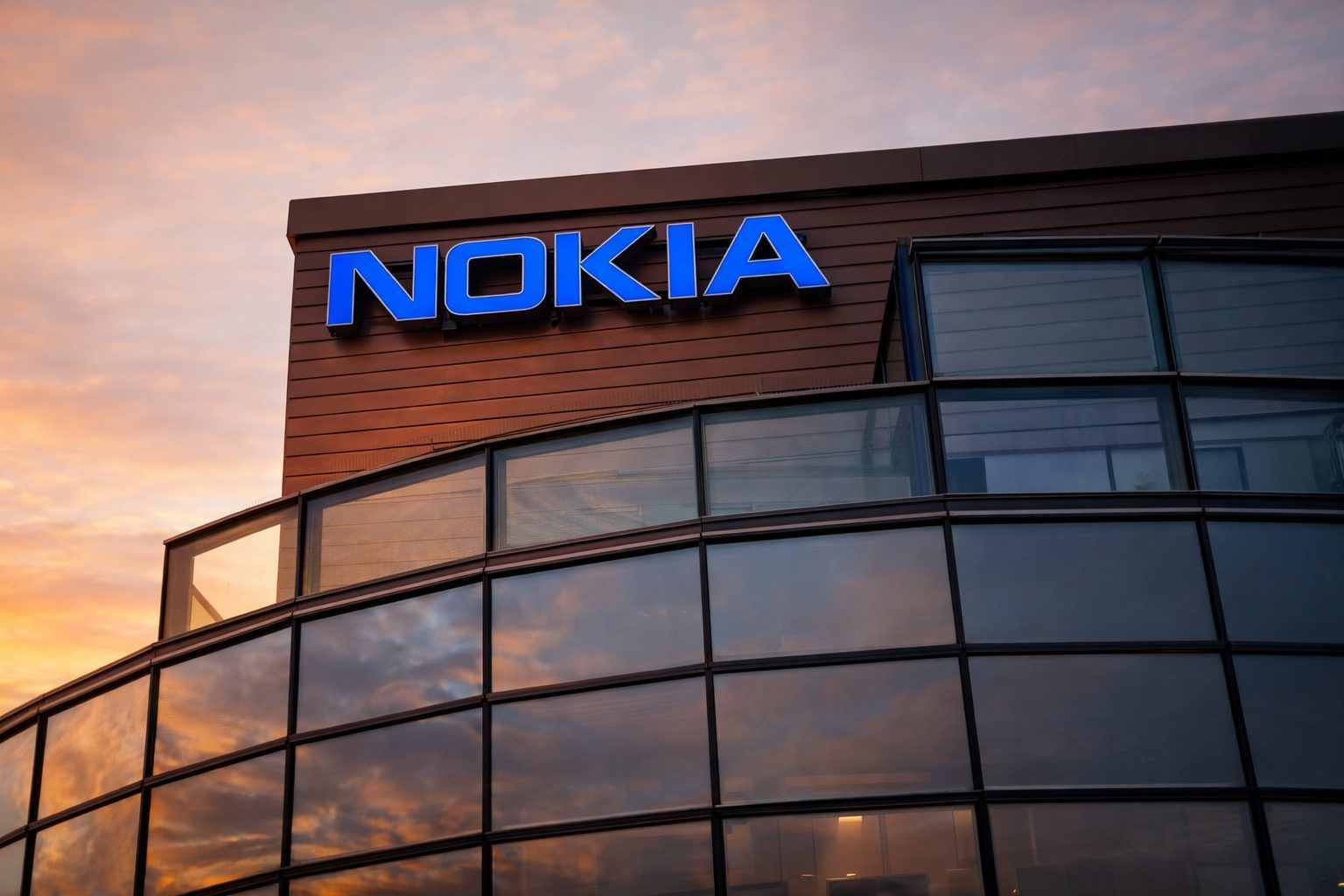
Nokia Oyj’s AI-fueled share surge runs into a hurdle Monday, as the Finnish network gear maker’s stock goes ex-dividend after Q1 results turned the spotlight back on optical and cloud infrastructure. The ex-date lands April 27 on both Nasdaq Helsinki and the NYSE, with a 0.04 euro payout for Helsinki and $0.0468 gross on the New York line.
The timing is key here. Nokia’s new step isn’t only a payout story. The stock saw a re-rating after the company reported that AI and cloud clients — hyperscalers among them, those major cloud operators running sprawling data centers — boosted both orders and profit during the first quarter.
Nokia’s U.S. ADRs wrapped Friday at $10.46, marking a 1.2% gain from the prior session. Roughly 126.6 million shares changed hands, market data show. U.S. exchanges were shut over the weekend, so Monday’s ex-dividend session will offer the next signal on whether investors are still chasing the AI narrative.
The company posted a comparable operating profit of 281 million euros for Q1, a jump of 54% year-on-year and topping the 250 million euro consensus from analysts surveyed by Infront. Following the results, Nokia shares surged to their highest mark since April 2010 in early Helsinki trading, Reuters said.
Nokia reported a 4% increase in comparable net sales, measured on a constant-currency and portfolio basis. Network Infrastructure picked up 6%, with Optical Networks surging 20%. AI and cloud customer net sales soared 49%—those clients accounted for 1 billion euros in orders for the quarter, according to Nokia.
Chief Executive Justin Hotard, in the company’s first-quarter update, said, “We are increasing our growth assumption for Optical and IP Networks and we are investing to capture accelerating demand from AI & Cloud customers.” AI and cloud business has now climbed to 8% of group sales, Hotard noted. Nokia Corporation | Nokia
Nokia is looking for Network Infrastructure net sales to climb 12% to 14% come 2026. For Optical Networks and IP Networks combined, the forecast is slightly higher—a gain of 18% to 20%. The company hasn’t adjusted its full-year comparable operating profit target, still aiming for 2.0 billion to 2.5 billion euros, though management says performance is tracking a bit above the midpoint.
Nokia’s move takes it further from its traditional telecom hardware roots. While Ericsson stands as its Nordic rival in mobile, surging AI data-center investment drags Nokia’s optical and IP lineup into a different fight—now brushing up against offerings from Ciena and Cisco. When Reuters stacked up Nokia’s latest rally, it slotted the company alongside Ericsson, Ciena, Arista, and Cisco. The comparison highlights one thing: investors increasingly slot Nokia into the AI-networking camp, not just the old 5G playbook.
Hotard called it an infrastructure race. “The issue today is Europe doesn’t have the infrastructure,” he told Reuters, pointing out that AI buildouts demand more than factories—they need connectivity and data-center muscle. He warned that without enough capacity, business and developers might shift to China and the U.S. Reuters
The rally isn’t without hazards. Nokia pointed to competitive heat, evolving customer network spending linked to AI and data-center expansion, increased R&D outlays, rising chip costs, and possible supply-chain hiccups as factors that could shift its forecast. Should cloud spending stall or parts supply tighten, the first-quarter surge could prove tough to sustain.
The setup’s straightforward for once: an old-school telecom equipment player is making its case as a contender in the AI infrastructure race, even as it continues to return cash to investors. The ex-dividend trade on Monday won’t settle that debate, but it does set the next price marker for the stock.
Related articles: NYSE:NOK