
New York, June 5, 2026, 18:06 EDT
- Sandisk dropped 11.4% to finish at $1,559.32, with shares earlier reaching $1,861.
- The PHLX Semiconductor Index, which tracks big chip names, saw its worst loss since March 2020. That’s when the drop hit.
- Valuation and supply-cycle risks are back in focus, even as analysts and executives keep mentioning tight AI-related storage demand.
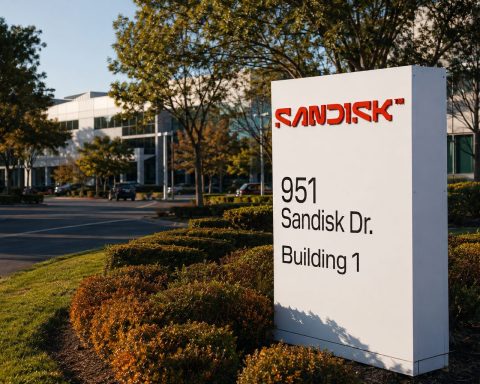
Sandisk Corp fell 11.4% on Friday, dropping $201.21 to finish at $1,559.32 after traders sold off memory and AI chip names. The stock had been coming off a steep runup to record highs. During the session, shares touched a low of $1,513.07. Sandisk’s market cap was about $244.8 billion, according to market data.
Sandisk mattered since it was a clear trade on AI storage demand. Its main business is NAND flash memory—chips that keep data when the power is off. That’s in short supply as AI systems now deal with bigger files, code and corporate data.
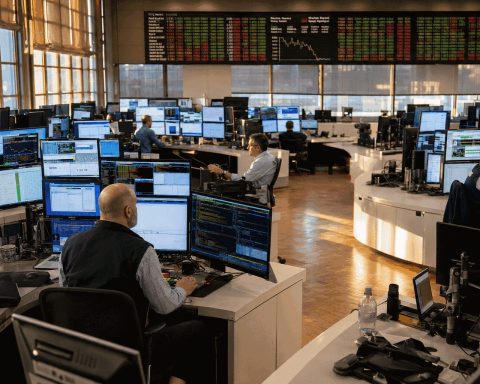
Selling spread beyond Sandisk on Friday. U.S.-listed chip stocks lost around $1.3 trillion in value, and the PHLX Semiconductor Index (SOX) slid 10.3% for its steepest one-day loss since March 2020, according to Reuters. Broadcom’s AI-chip update earlier in the week disappointed some, and weighed on the sector.
Micron Technology slumped 13.3% to $864.01. Seagate Technology shed 8.5%. Western Digital fell over 11%, according to Investor’s Business Daily. Sandisk was at $1,861 before reversing.
“Blindly buying the dip had been winning you money, but that ended today,” Dennis Dick, a prop trader at Triple D Trading, told Reuters. Ohsung Kwon, the chief equity strategist at Wells Fargo, said chips had been “way overbought,” but said he doesn’t see the move as the end of the chip bull run. Reuters
Sandisk shares fell after the company posted fiscal third-quarter revenue of $5.95 billion on April 30, nearly doubling from the previous quarter. GAAP net income came in at $3.62 billion. Non-GAAP earnings were $23.41 a share. Sandisk said data-center revenue jumped 233% from the previous quarter, citing both higher-value customers and higher prices.
Sandisk CEO David Goeckeler called the quarter a “fundamental inflection point” in the company’s earnings release, citing more data-center demand and longer customer contracts with financial backing. Sandisk
Deals are key for the stock. Reuters said Sandisk landed five big supply agreements, three of those totaling $42 billion. The company also said it will buy back $6 billion of shares. “The bane of this industry has been the boom-bust cycle,” Goeckeler told Reuters. “We want to get out of that.” Reuters
The company put out a fiscal fourth-quarter revenue forecast of $7.75 billion to $8.25 billion, with adjusted profit seen at $30 to $33 per share. Both figures are above Wall Street forecasts, according to Reuters. Michael Ashley Schulman, a partner at Cerity Partners, said Sandisk and Western Digital’s outlooks were “failing to provide the necessary ‘wow factor’” after storage stocks had soared. Reuters
Morgan Stanley analysts said tight supply is still propping up the sector this week, according to Investopedia. They said there’s “no quick fix” for the memory shortage tied to AI demand and warned the crunch might stretch on for another two to three years. Investopedia
But there’s no hiding the risk anymore. If AI storage orders slow, if buyers push back on higher NAND prices, or if contracts can’t blunt the old memory swings, Sandisk’s earnings might prove less steady than bulls hoped in the rally. The same squeeze boosting prices can flip fast if supply rebounds or demand takes a break.
Sandisk is next set to appear at the Mizuho Technology Conference on June 9, with management scheduled for webcast presentations available on its investor relations site. Traders want to hear confirmation on whether Friday’s drop was just a reset on valuation or if it signals deeper trouble in the AI memory trade.
Related articles: NASDAQ:SNDK