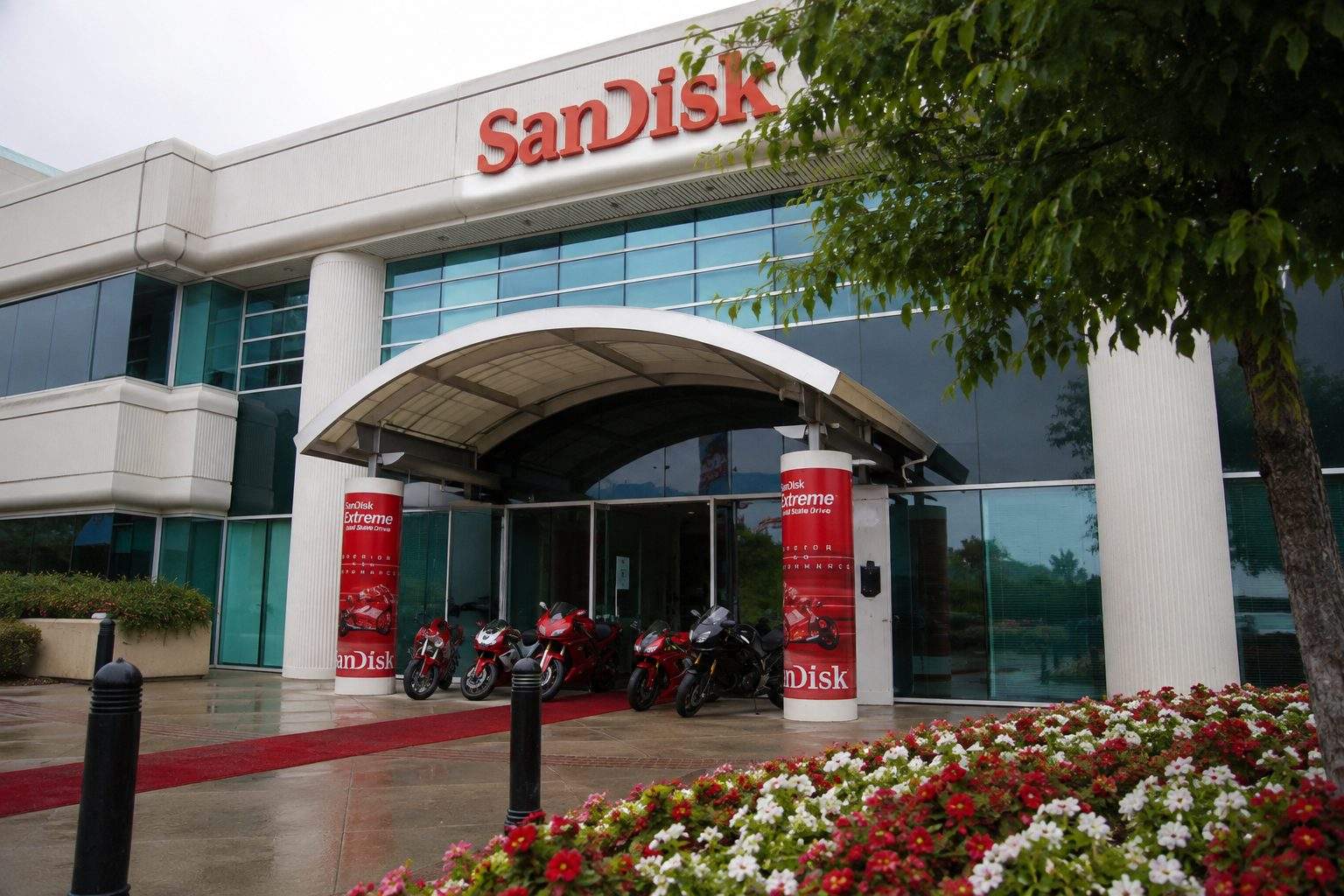

NEW YORK, August 5, 2026, 17:10 EDT — U.S. markets have closed with after-hours trading underway.
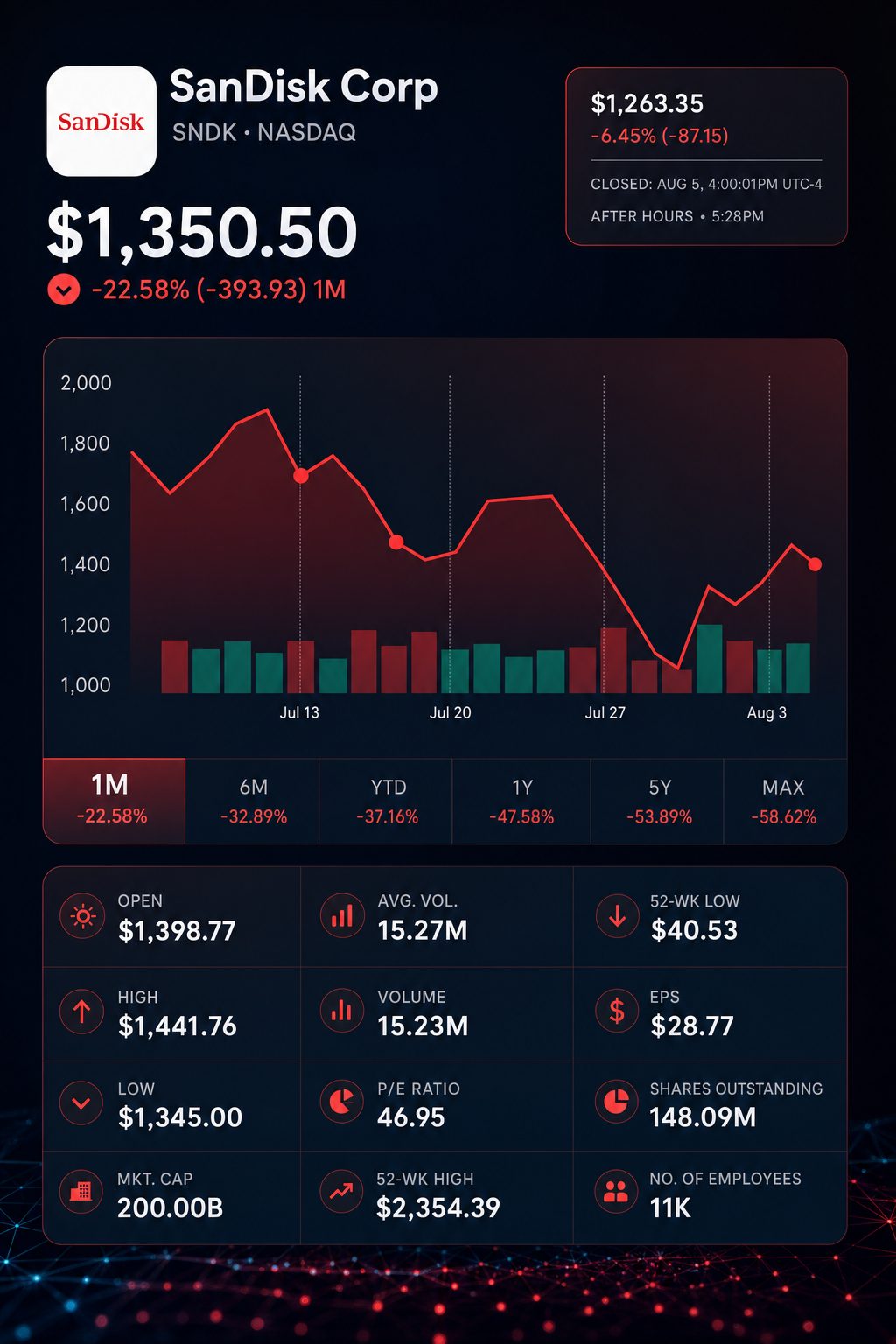
- Sandisk ended regular trading at $1,350.50, a decline of 5.4%, and slipped another 4.2% in after-hours trading.
- Q4 preliminary revenues topped consensus by 5.7%, with adjusted EPS surpassing estimates by 12.3%.
- Company data shows that approximately $2.01 billion in sequential growth was attributed to pricing.
Sandisk NASDAQ:SNDK slipped further after posting a 51% increase in revenue compared to the previous quarter and an 84.6% gross margin. After-hours trading saw shares at $1,293.84, adding to Wednesday’s losses during the regular session.
Revenue for the quarter came in at $8.97 billion, with adjusted earnings at $39.25 per share, surpassing analyst forecasts. However, the midpoint of forward sales guidance fell short of Wall Street expectations.
The first-quarter revenue midpoint of $10.55 billion was 2.5% under consensus estimates, yet indicates a 17.7% rise from the previous quarter. The adjusted EPS midpoint, at $45, exceeded forecasts by 0.6%.
The revenue bridge provided greater insights. Sandisk reported a sequential gain of $3.015 billion. According to company disclosures, approximately $2.01 billion was attributed to pricing, while volume added around $1.005 billion.
The scorecard reflects a clear backward-looking beat, while the outlook is mixed. Consensus numbers come from the Wall Street Journal; guidance estimates are based on the midpoint of each range.
| Metric | Preliminary result or guide | Comparison | Variance |
|---|---|---|---|
| Q4 revenue | $8.965bn | $8.48bn consensus | +5.7% |
| Q4 adjusted EPS | $39.25 | $34.96 consensus | +12.3% |
| Q1 revenue | $10.55bn midpoint | $10.82bn consensus | -2.5% |
| Q1 adjusted EPS | $45.00 midpoint | $44.72 consensus | +0.6% |
| Q1 non-GAAP gross margin | 84.0% midpoint | Q4 actual: 84.6% | -0.6 ppt |
Before results, strength was assessed through volume, datacenter expansion, contracts and margins. Sandisk delivered stronger outcomes in the latter three areas. Volume was again outweighed by pricing.
Datacenter revenue reached $2.98 billion, marking a twofold increase. The segment’s portion of quarterly sales climbed to 33.2%, up from 24.7%. Sandisk started shipping its Stargate QLC platform for revenue as well.
| End market | Q3 FY2026 | Q4 FY2026 | Q/Q change | Q4 sales share |
|---|---|---|---|---|
| Datacenter | $1.467bn | $2.977bn | +103% | 33.2% |
| Edge | $3.663bn | $5.432bn | +48% | 60.6% |
| Consumer | $820mn | $556mn | -32% | 6.2% |
| Total | $5.950bn | $8.965bn | +51% | 100% |
The most effective protection against downturns comes from new business model agreements. Eight clients have entered into contracts guaranteeing a minimum revenue of $93.9 billion at floor pricing. The contracts have a weighted average term of more than four years.
The floor value amounts to 4.6 times projected sales for fiscal 2026. This does not represent revenue recognized in the near term. The broader contract base and capital buffer remain significant.
| Cushion | Reported amount | Investor scale |
|---|---|---|
| Lowest NBM revenue at baseline prices | $93.9bn | 4.6 times FY2026 sales |
| RPO, factoring in post-quarter deals | $91.1bn | 4.5 times FY2026 sales |
| Guaranteed funds | $16.5bn | 17.6% of base NBM |
| NBM-committed FY2027 bits | 50% | Half the intended bits |
| NBM-committed FY2028 bits | About 67% | Close to two-thirds |
| Outstanding share repurchase authorization | $15.5bn | 7.8% of regular-close market cap |
The buyback creates another layer of support. Sandisk spent $4.5 billion on share repurchases in Q4, representing roughly 89% of its adjusted free cash flow. The adjusted cash flow figure does not include $1.94 billion in NBM deposits.
Dave Mazza, CEO of Roundhill Financial, established a high bar before the results, stating that “Nothing short of a big beat with a bigger guide” would be sufficient. Sandisk achieved the earnings beat, but its sales midpoint fell short. The Edge Malaysia
Investor sentiment on Wall Street was positive ahead of the report. Bloomberg recorded 25 buy recommendations and five holds, with no sell ratings. The most recent four actions on Google Finance were evenly divided between buys and holds. All target prices listed below were issued prior to the results.
| Analyst | Firm | Recommendation | Price target | Date |
|---|---|---|---|---|
| Mehdi Hosseini | Susquehanna | Buy, reiterated | $3,050 | July 22 |
| Aaron Rakers | Wells Fargo | Hold, reaffirmed | $1,620 | July 21 |
| Mark Newman | Bernstein | Buy, reaffirmed | $3,000 | July 20 |
| Jim Kelleher | Argus Research | Hold, new coverage | — | July 14 |
Western Digital NASDAQ:WDC echoed the same sentiment. The company’s adjusted EPS and revenue surpassed forecasts, but its shares dropped 10% in after-hours trading. The market response indicates storage sector investors now seek results that significantly exceed consensus expectations.
July closed with heavy losses. Sandisk dropped 47% throughout the month, even after a 23% gain on July 30. The upcoming Investor Day on August 13 will put focus on fiscal 2027 supply, contract conversion, and price floors.
Chief Executive David Goeckeler stated that Sandisk is set up to “generate growing and durable free cash flow.” Investors, however, require proof that pricing strength will be sustained. Sandisk Corporation
Risks: NAND pricing is subject to rapid shifts. Delays in customer rollouts, reduced AI investment, issues in executing contracts, and Kioxia-related supply disruptions may pressure margins. Sandisk’s disclosed results are provisional as the Form 10-K has yet to be finalized.
At present, the results indicate robust demand and significant contractual safeguards. They further reflect a surge largely driven by pricing.
Related articles: NASDAQ:SNDK





![Asia Stock Market Today 26/08/2026 [UPDATE: 07:03 SGT] [Korea Opens Block Trading After Asia’s Broad Rebound]](https://ts2.tech/wp-content/uploads/2026/08/Asia-market-dashboard-2026-08-26-0703-480x384.jpg "Asia Stock Market Today 26/08/2026 [UPDATE: 07:03 SGT] [Korea Opens Block Trading After Asia’s Broad Rebound]")