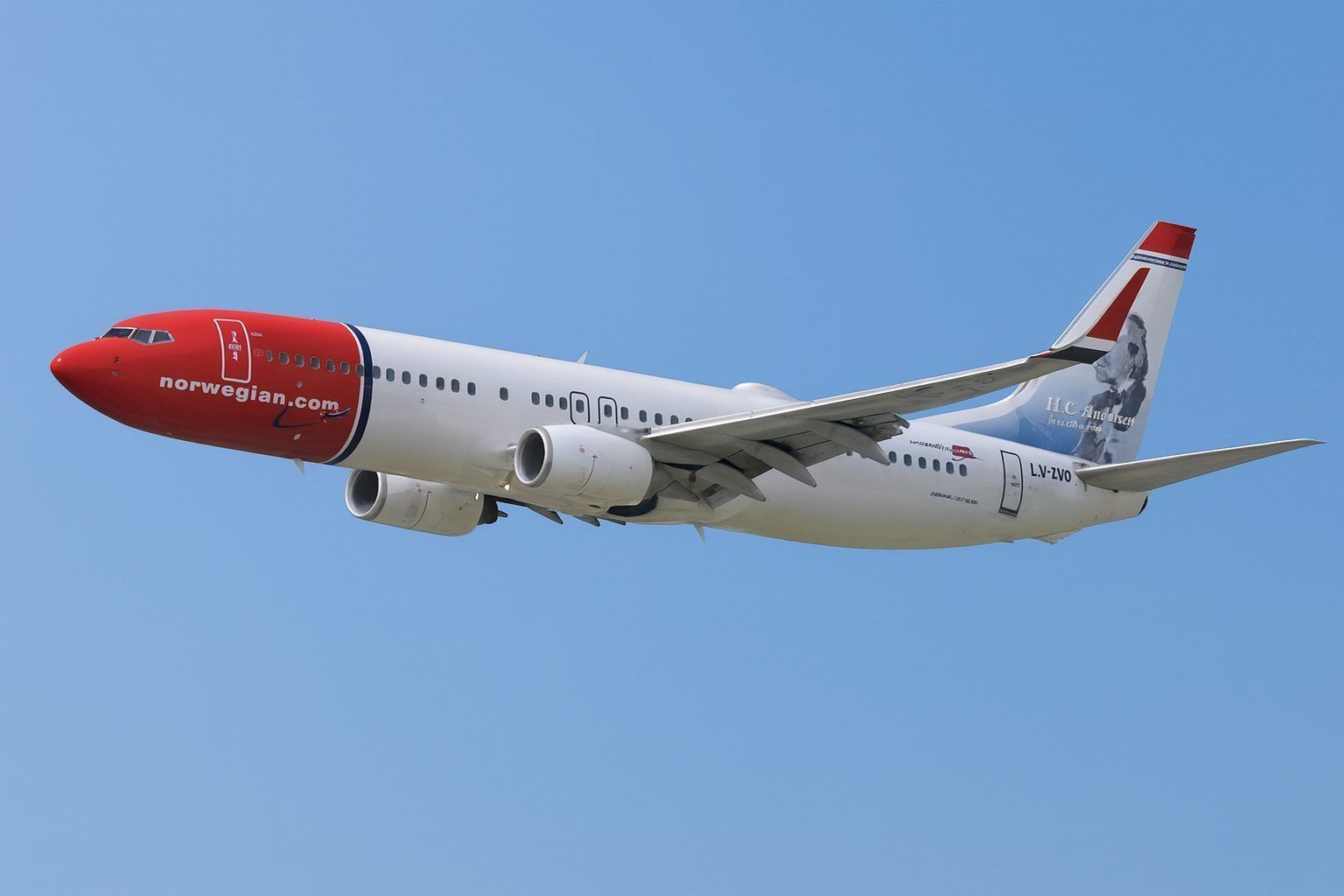
Norwegian Group is closing out 2025 on a strong note. The company, which includes low-cost carrier Norwegian Air Shuttle and regional airline Widerøe, carried 1.84 million passengers in November 2025 and set a new record load factor for the month, while rolling out an expanded route network for summer 2026. Mynewsdesk+1
At the same time, Norwegian is signalling confidence in future demand with 30 new routes across Europe and fresh links from Oslo, Bergen and Stavanger to popular leisure destinations such as Las Palmas, Zurich and Tbilisi. Mynewsdesk+1
Record November for Load Factor as Group Carries 1.84 Million Passengers
According to traffic figures released on 4 December 2025, Norwegian had 1.5 million passengers in November, while Widerøe carried 324,000 travellers. Together, that brings the Norwegian Group total to 1.84 million passengers for the month. Mynewsdesk+1
What stands out, however, is not the marginal year‑on‑year change in passenger numbers, but how full the aircraft were:
- Norwegian’s load factor reached 85.5%, the highest the airline has ever recorded for November.
- Group capacity was intentionally trimmed, with Norwegian’s available seat kilometres (ASK) down 6% compared with November 2024, while revenue passenger kilometres (RPK) fell only 2%. mnd-assets.mynewsdesk.com+1
This gap between reduced capacity and smaller drops in traffic indicates that Norwegian was able to remove less profitable capacity while filling a higher share of remaining seats – a key lever for profitability in a seasonally weaker month.
On a rolling 12‑month basis, Norwegian has now carried just over 23.1 million passengers, up around 3% versus the previous year, with ASK and RPK both growing around 5% and a stable load factor of 85.7%. mnd-assets.mynewsdesk.com+1
Norwegian vs Widerøe: How Each Airline Performed in November 2025
The November numbers underline how the two carriers play different but complementary roles inside the Norwegian Group.
Norwegian Air Shuttle: Optimised Capacity, Stronger Yields
The traffic report for November 2025 shows the following for Norwegian: mnd-assets.mynewsdesk.com+1
- Passengers: 1,515,923 (‑1% year‑on‑year)
- Capacity (ASK): 2,404 million seat kilometres (‑6%)
- Traffic (RPK): 2,055 million seat kilometres (‑2%)
- Load factor: 85.5% (+3 percentage points)
- Average aircraft in operation: 75
- Yield: up 4% vs November 2024
- Unit revenue: up 8% vs November 2024
In a statement, CEO Geir Karlsen noted that the high load factor confirms that the network and capacity adjustments for the winter season are having a “positive impact” and that unit revenue improved in November, while operational performance remained solid. Mynewsdesk+1
In plain terms: Norwegian flew slightly fewer people on fewer seats, but filled those seats better and earned more per kilometre flown – exactly what investors want to see in a shoulder month.
Widerøe: Weather Headwinds but Long-Term Growth
Widerøe, the regional carrier acquired by Norwegian in 2024, had a more challenging November, mainly due to winter weather affecting rural and short‑runway airports: mnd-assets.mynewsdesk.com+1
- Passengers: 323,734 (‑1% year‑on‑year)
- Capacity (ASK): 161 million (‑2%)
- Traffic (RPK): 113 million (‑4%)
- Load factor: 70.3% (‑1.4 percentage points)
Despite that, Widerøe’s 12‑month rolling passengers rose to about 4.1 million, a gain of 9% versus the previous year, with higher ASK and RPK and an improved 12‑month load factor of 73.6%. mnd-assets.mynewsdesk.com+1
This suggests that while bad weather dented November’s figures, the broader trajectory for Norway’s largest regional carrier remains firmly upward as it feeds passengers into Norwegian’s broader European network.
Punctuality, Regularity and CO₂: Operational Metrics Stay Strong
One reason Norwegian continues to rank well with travellers and corporate buyers is its operational reliability.
For November 2025: Mynewsdesk+1
- Punctuality (departures within 15 minutes):
- Norwegian: 82.3%
- Widerøe: 79.8%
- Regularity (share of scheduled flights actually operated):
- Norwegian: 99.7%
- Widerøe: 94.0%
These numbers are notably solid for early winter, when snow, ice and high winds start to disrupt Nordic operations.
From an environmental perspective, Norwegian reported CO₂ emissions per RPK of 69.9 grams in November, around 5% lower than a year earlier. Widerøe reported 31 kg of CO₂ per seat, a reduction of just over 2%. mnd-assets.mynewsdesk.com+1
These incremental improvements support the Group’s wider sustainability strategy, which includes investments in sustainable aviation fuel (SAF) and a modernised Boeing 737 MAX fleet. Mynewsdesk+1
Holiday Travel: Seats Filling Fast for Christmas and New Year
The November release doubles as a winter travel update. Norwegian says flights for the Christmas period are filling up quickly, with strong demand across domestic routes, European city breaks and classic beach destinations. Mynewsdesk+1
Karlsen highlighted that:
- The most popular travel dates around Christmas and New Year are already close to full.
- Booking momentum into early 2026 is stronger than at the same point last year. Mynewsdesk+1
Travel trade coverage echoes this view. Industry outlet Travel And Tour World notes that the Group’s 1.8 million November passengers and record load factor are tightly linked to winter‑focused capacity planning and robust holiday demand, especially in Norway’s domestic market and on sun‑seeking routes. Travel And Tour World+1
For travellers, the message is simple: prices and availability will be least forgiving on peak days. Flexible flyers who can travel mid‑week or outside the absolute peak holiday window are more likely to find lower fares and better seat choice.
New 2026 Routes: Las Palmas, Zurich, Tbilisi and More
November was not just about traffic statistics. Norwegian also used the month to unveil a significant batch of routes for its summer 2026 programme, which now includes more than 300 routes to over 120 destinations across Europe. Mynewsdesk+1
Among the 30 new routes launched for 2026 are several that stand out for both leisure and connecting traffic: Mynewsdesk+1
- Bergen & Stavanger – Las Palmas (Gran Canaria): Strengthening Norway’s links to one of Europe’s most popular year‑round sun destinations, and building on Norwegian’s existing base in the Canary Islands.
- Oslo – Lamezia (Italy): A new route into southern Italy’s Calabria region, becoming Norwegian’s 16th route between Norway and Italy and tapping into a growing interest in less‑crowded Mediterranean destinations.
- Oslo – Zurich (Switzerland): Connecting Norway’s capital with a major European financial and tourism hub, attractive for both business travellers and alpine holiday‑makers.
- Copenhagen – Tbilisi (Georgia): An eye‑catching addition that links Scandinavia with the rapidly rising tourism market in the Caucasus, known for its wine regions, mountain landscapes and cultural heritage.
- Helsinki – Tirana (Albania): A vote of confidence in Albania’s emergence as an affordable Adriatic beach alternative.
- Stockholm – Montpellier (France): Opening up southern France’s Occitanie coastline and nearby Provence‑style experiences to Nordic travellers.
These routes dovetail with Norwegian’s broader strategy: focus on high‑demand leisure and “visiting friends and relatives” (VFR) markets within single‑aisle range of its Boeing 737 fleet, while using Widerøe to feed Nordic regions into larger hubs.
Strategic Backdrop: A Record 2025 and a Bigger Boeing Order
The strong November figures are not a one‑off. Throughout 2025, Norwegian Group has been reporting record or near‑record numbers: Mynewsdesk
- October 2025: 2.64 million group passengers, up 3% year‑on‑year, and delivery of the first of 80 Boeing 737 MAX 8 aircraft on order.
- Summer 2025 (June–August): Multiple post‑pandemic passenger records, with July and August both close to or above 2.8–2.9 million group passengers.
- Q3 2025: The strongest quarterly results in the Group’s history, with profit before tax of NOK 2,891 million and the company’s first‑ever dividend payment of NOK 0.90 per share.
In September, Norwegian also exercised purchase options for 30 additional Boeing 737 MAX 8s, bringing its total firm order to 80 aircraft, with deliveries stretching to 2031. Mynewsdesk
Against that backdrop, November’s record load factor and solid yields look less like a surprise and more like a continuation of a carefully managed growth and renewal phase.
Investor and Industry View: Capacity Discipline Pays Off
Financial and aviation outlets that follow Norwegian closely have framed the November data as a sign of disciplined capacity management rather than pure volume growth.
- Investing.com notes that Norwegian’s November ASK fell 6% year‑on‑year while RPK slipped only 2%, with a load factor of 85.5% and yield at 0.84. Investing.com+1
- Aviation24.be highlights the 1.84 million group passengers and describes November as a “solid month despite the start of the winter season,” emphasising the record load factor and higher unit revenues. Aviation24.be+1
For airlines, this combination – fewer seats, but fuller planes and stronger unit revenue – typically translates into improved margins, particularly when supported by good punctuality and a modern, fuel‑efficient fleet.
What It Means for Travellers and the Nordic Aviation Market
For passengers in Norway and across the Nordics, the latest figures and route announcements suggest several practical takeaways:
- More direct leisure options from regional cities: New routes from Bergen and Stavanger to Las Palmas, and from other Nordic capitals to southern and eastern Europe, reduce the need for hub connections. Travel And Tour World+1
- Tighter capacity in winter: With capacity reduced compared to last year but load factors higher, winter flights – especially around holidays – are likely to be busier and potentially pricier at the last minute. mnd-assets.mynewsdesk.com+1
- Improving reliability: High levels of regularity and solid punctuality in early winter are reassuring for travellers in a region where weather can quickly disrupt travel plans. Mynewsdesk+1
For the wider industry, Norwegian Group’s performance underscores a broader European trend: leisure‑driven, short‑haul carriers that right‑size capacity and invest in newer aircraft are emerging from the post‑pandemic era in a strong competitive position.
Outlook: Norwegian Group Heads Into 2026 with Momentum
As of 7 December 2025, the picture is clear:
- Traffic is robust, even in shoulder months.
- Profitability indicators – load factor, yield and unit revenue – are moving in the right direction.
- The route map is expanding, with a strong focus on sun destinations, emerging markets like Georgia and Albania, and tighter integration of Nordic regional traffic via Widerøe. Mynewsdesk+2Mynewsdesk+2