
NEW YORK, May 3, 2026, 18:01 EDT
NuScale Power Corp. starts the week with its Q1 report on deck for May 7, and eyes on whether the small modular reactor firm can show progress. Shares last closed at $12.14, off 2.57% Friday. Since NuScale hasn’t shipped a commercial reactor module yet, investors are watching less for profit and more for any signs of orders, funding, or concrete steps forward.
This week is a big one for NuScale. The company is looking to leverage the current momentum in nuclear power—spurred by data-center growth, push for industrial electrification, and U.S. policy tailwinds—into signed deals for its small modular reactor, or SMR, technology. Unlike traditional reactors, SMRs are compact units intended for scalable, repeatable deployment, not custom-built mega facilities.
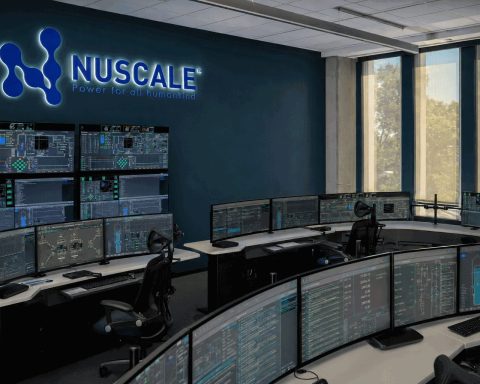
NuScale last week launched an operations center in Houston, bringing teams closer to energy and industrial clients across petrochemicals, data centers, and grid power. CEO John Hopkins described the expansion as a way to strengthen NuScale’s footprint in “a key market for partners, prospective customers, and stakeholders” during its push for near-term deployment. NuScale Power
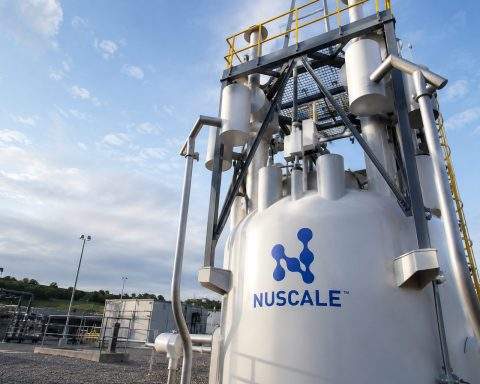
NuScale stands out for its regulatory progress. In May 2025, the U.S. Nuclear Regulatory Commission wrapped up its review of the company’s US460 design, which features six modules—each generating 77 megawatts of electricity. With this approval, U.S. clients can now cite the design in their licensing applications. But, to be clear, the green light doesn’t mean plants will be built or funded automatically.
NuScale’s finances paint a mixed picture. The company wrapped up 2025 holding $1.3 billion in cash, cash equivalents and investments, after it raised $750 million selling 39.3 million shares via its at-the-market program. Revenue slipped to $31.5 million in 2025—down from $37.0 million the previous year. Looking ahead, management is zeroing in on preparing to build its first module in 2026.
Markets are shifting rapidly. Back in April, Reuters flagged that Meta, Amazon, and Google threw their support behind nuclear ventures linked to TerraPower, Oklo, X-energy, and Kairos Power, all as the AI data center boom puts a strain on the grid. Shioly Dong, a senior analyst with BMI, pointed out that large tech firms provide the “revenue certainty” banks look for before signing off on construction loans. Reuters
X-energy, with Amazon in its corner, is now a clearer peer benchmark. The reactor firm aimed for as much as a $7.51 billion valuation in its U.S. IPO. Amazon, meanwhile, is working alongside X-energy to deploy over 5 gigawatts of small modular reactors across the U.S. by 2039.
NuScale’s toughest hurdles remain ahead. According to its annual filing, the company hasn’t secured any binding customer contracts for its NuScale Power Modules, nor has it delivered any modules. There aren’t any showcase plants with permits or shovels in the ground. The company also flagged a possible need for additional funding and noted that suppliers might be reluctant to commit before NuScale has signed on actual customers.
The sector’s supply chain headaches are intensifying. Advanced nuclear startups now scramble to lock down forgings, reactor vessels, steam generators—and the necessary talent—well in advance, as competitors line up at the same suppliers. “Weak supply capacity and limited skilled labor could slow reactor rollouts,” BWXT’s John MacQuarrie told Reuters Events. Reuters
NuScale’s earnings call looks set to hinge on some straightforward issues: Is the Houston expansion actually delivering customer discussions that might lead to real contracts? Are expenses staying in check? And can management offer specifics about how the jump from reactor approval to a revenue-generating project will play out? For now, the shares are still a bet on whether the team can deliver—not your standard earnings play.
Related articles: NYSE:SMR