
Santa Clara, California — April 1, 2026, 04:08 PDT
Nvidia on Tuesday disclosed a $2 billion investment in Marvell Technology, expanding a partnership that will integrate Marvell’s custom AI chips and networking hardware even more closely with Nvidia’s own systems. Marvell’s stock jumped roughly 7% during the session, and Nvidia added 2.7%.
Nvidia’s latest play underlines its determination to sit at the heart of AI data-center budgets, even as some buyers bypass standard GPUs, shopping for semi-custom chips instead. When it can’t move every chip in the rack, Nvidia aims to supply the interconnects, CPUs, and the surrounding software stack.
Timing comes into play here. This year, heavyweights like Alphabet, Microsoft, Amazon, and Meta plan to pour at least $630 billion into AI infrastructure. Back in March, Broadcom projected AI-chip revenue topping $100 billion in 2027, driven by the surge in custom silicon demand.
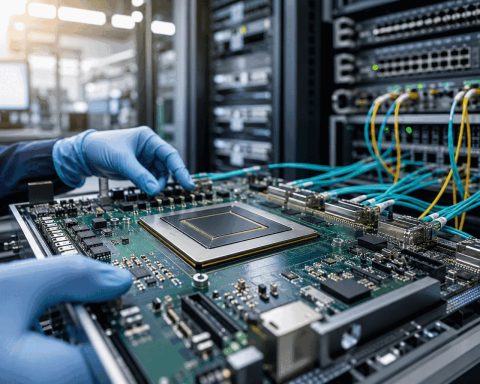
Marvell is set to supply custom XPUs—processors designed for targeted workloads—plus networking gear compatible with Nvidia’s NVLink Fusion platform, according to the terms of the agreement. The two firms also plan to collaborate on silicon photonics, a technology that moves data between chips using light, aiming to boost speeds and cut power use.
“The inference inflection has arrived. Token generation demand is surging, and the world is racing to build AI factories,” Chief Executive Jensen Huang said. He added that the companies will help customers “build specialized AI compute.” NVIDIA Newsroom
Marvell CEO Matt Murphy described the expanded partnership as an answer to the growing demand for “high-speed connectivity, optical interconnect and accelerated infrastructure” needed to ramp up AI. According to Murphy, connecting Marvell’s custom silicon and photonics with Nvidia’s ecosystem should make it easier for customers to build systems that scale and run more efficiently. NVIDIA Newsroom
Jacob Bourne, analyst at eMarketer, pointed out that the deal hands Nvidia access to Marvell’s semi-custom silicon and advanced optical interconnects — both crucial, as rising bandwidth demands and power efficiency issues keep tripping up big AI systems. He also noted investors will probably view the partnership as easing some of the roadblocks, since it allows non-Nvidia AI chips to run inside data centers where Nvidia hardware usually dominates.
This partnership lines up with the push Nvidia CEO Jensen Huang made at last month’s GTC, where he leaned further into inference—the point where an AI answers a user’s query—an area where custom processors and CPUs are now going head-to-head with Nvidia’s graphics chips. Notably, Meta also revealed a slate of new homegrown AI chips around then, signaling that heavyweight clients are keen to rein in costs and energy demands.
Still, risks loom. IDC numbers seen by Reuters put Chinese suppliers at about 41% of China’s AI accelerator server market for 2025, with Huawei setting the pace. Nvidia’s share, meanwhile, dropped to 55%—a slide fueled by U.S. export restrictions nudging customers to local alternatives. Nvidia and Marvell have both flagged shifting supply and demand, legal or regulatory moves, and the broader market or political backdrop as potential threats to what their partnership delivers.
Nvidia is sticking to a straightforward bet: even if the AI chip landscape splits up, customers are expected to stick with its platform. By bringing Marvell into the fold, Nvidia tacks on semi-custom chips and optical connectivity—an expansion that joins its existing focus on GPUs, CPUs, networking gear, and software.
Related articles: NASDAQ:MRVL