
Beijing, May 14, 2026, 16:08 (China Standard Time)
Nvidia’s push to resume H200 AI chip sales in China got the green light from Washington, but so far, not a single unit has reached Chinese buyers. The revenue opportunity sits in limbo, snagged between a U.S. license and Beijing’s hesitancy.
Notably, Nvidia CEO Jensen Huang is in Beijing alongside U.S. President Donald Trump’s delegation, just as Trump sits down with Chinese President Xi Jinping. That visit comes with Nvidia only six days out from its quarterly earnings report.
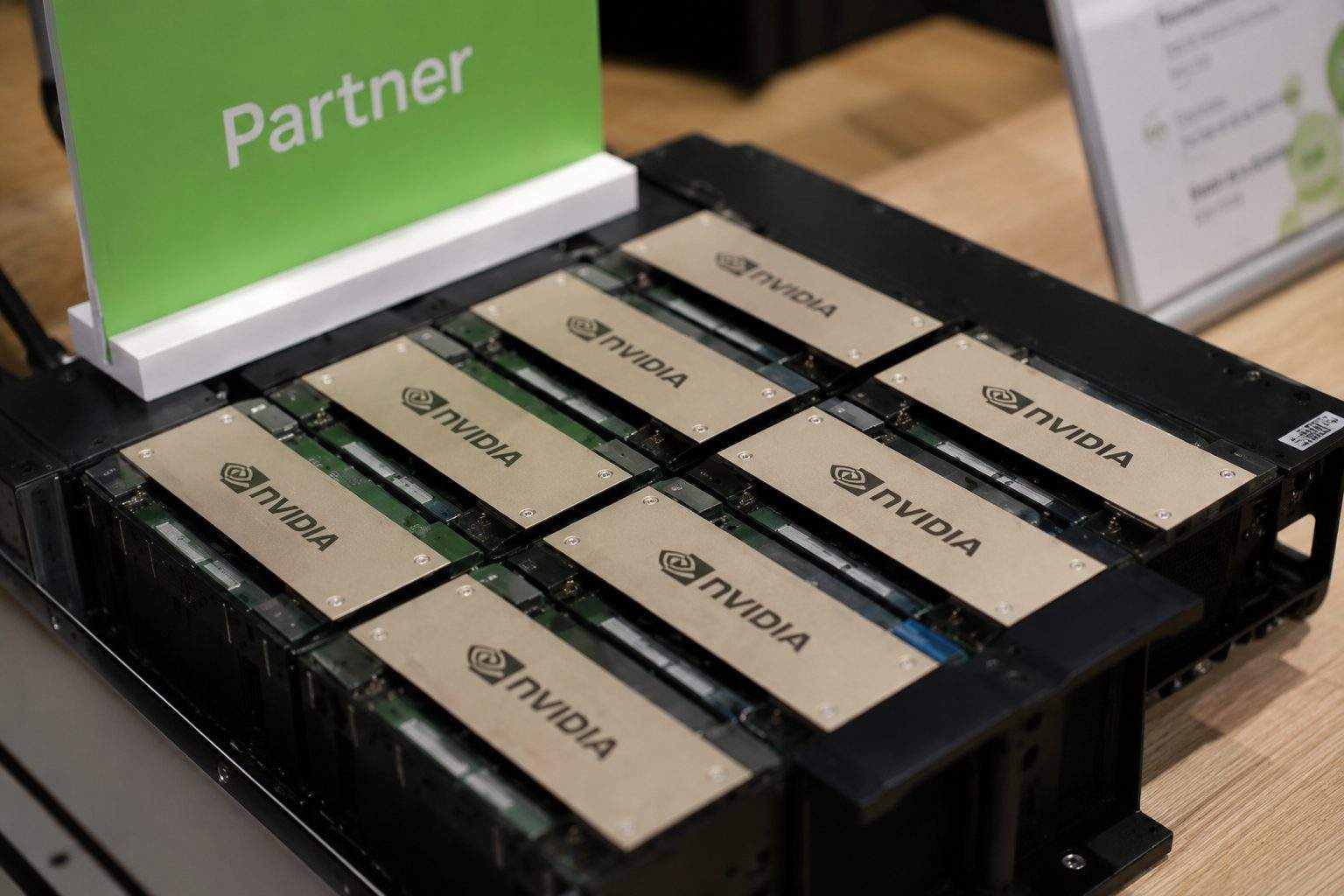
The U.S. Commerce Department has given the green light to roughly 10 Chinese firms—including Alibaba, Tencent, ByteDance, and JD.com—to purchase Nvidia’s H200 chips, according to Reuters, which cited three sources familiar with the situation. The H200, used to train and deploy AI models, is Nvidia’s high-end AI accelerator. Lenovo and Foxconn also made the list as approved distributors; Lenovo confirmed to Reuters its clearance to sell the H200 inside China.
Each approved buyer can get as many as 75,000 chips under the U.S. license terms, Reuters said. Even so, the deal hasn’t resulted in any sales. According to a source cited by Reuters, Chinese customers stepped back following Beijing’s advice. U.S. regulations, meanwhile, mandate security guarantees and that the chips won’t be used for military purposes.
Speaking to Chinese state broadcaster CCTV on Thursday, Huang said he hoped Trump and Xi could “build on their good relationship” and strengthen U.S.-China ties. Right now, according to Reuters, Nvidia isn’t able to supply H200 chips to Chinese customers who want the hardware for AI projects. Reuters
China used to be a big moneymaker for Nvidia, dominating around 95% of the country’s advanced chip space before Washington tightened export rules. The region made up 13% of Nvidia’s revenue, and CEO Jensen Huang once pegged China’s AI opportunity at $50 billion for this year, according to Reuters.
Nvidia shares hit a high of $227.84 Wednesday and settled at $225.83, bumping the chipmaker’s market cap past $5.5 trillion, according to Business Insider. Bank of America now sees the stock reaching $320, up from its prior $300 target. Wells Fargo, for its part, boosted its call to $315 from $265 ahead of the May 20 earnings.
Bank of America analysts pointed to several “upcoming catalysts”—earnings, the Computex tradeshow, Vera Rubin’s launch, and a second-half return of cash—according to Business Insider. Vera Rubin is Nvidia’s next-gen AI chip architecture, seen by investors as fueling another round of products after Blackwell. Business Insider
Prediction markets tilted bullish in the near term. On Polymarket’s May 14 daily event for Nvidia, traders were pricing in an 85% implied probability that shares would close higher during that session, but the bet focuses strictly on short-term price action, not fundamentals.
The earnings hurdle hasn’t moved. Nvidia’s fiscal first-quarter report is set for May 20, after the bell. Chief Financial Officer Colette Kress will follow up with remarks in writing soon after.
Morningstar senior equity analyst Brian Colello said Thursday that investors want to see a “beat-and-raise quarter” and will be watching Nvidia and its supply-chain partners to see if they’re delivering. He pointed to ongoing bottlenecks in AI infrastructure and highlighted the risk that major customers could ramp up use of their own in-house chips. Morningstar
The China route isn’t just an easy win. Beijing has been working to cut its reliance on outside tech, and local players like DeepSeek have promoted homegrown chips—Huawei’s among them, Reuters noted. On the global front, Morningstar highlighted Google’s TPUs and AMD’s widening GPU portfolio as alternatives for big cloud buyers.
Division in Washington runs deep. “Any deal that allows Nvidia to sell more chips to China means fewer Nvidia chips for U.S. firms, and a smaller U.S. lead in AI over China,” said Chris McGuire, senior fellow for China and emerging technologies at the Council on Foreign Relations, speaking to Reuters. Reuters
Nvidia holds the U.S. license, but that alone doesn’t equal sales. The real challenge now: can Huang’s Beijing trip actually convert those permitted orders into physical chip shipments before the company’s next investor update?
Related articles: NASDAQ:NVDA

![Australia Stock Market Today 28/08/2026 [UPDATE: 11:35 AEST] [Xero Surges 8% as PEXA Crashes on FY27 Outlook]](https://ts2.tech/wp-content/uploads/2026/08/AU-market-dashboard-2026-08-28-1133-480x384.jpg "Australia Stock Market Today 28/08/2026 [UPDATE: 11:35 AEST] [Xero Surges 8% as PEXA Crashes on FY27 Outlook]")