
Oracle Corporation NYSE:ORCL is back in the market spotlight on December 11, 2025, for all the wrong reasons. The software and cloud giant’s fiscal Q2 2026 earnings have triggered an 11%+ share price slide, reignited fears of an AI bubble, and knocked tens of billions off its market value in a single session.
At the heart of the sell-off: a blend of revenue and guidance misses, a massive jump in AI-related capital expenditure to $50 billion, and growing concern over whether Oracle’s aggressive AI build-out can translate into profits fast enough.
Below is a detailed breakdown of what happened, how Wall Street is reacting, and what the latest forecasts say about Oracle stock.
Oracle Stock Today: Sharp Drop After Earnings
On Wednesday, December 10, Oracle shares closed around $223 per share, giving the company a market capitalization of roughly $635–636 billion, making it one of the world’s most valuable tech companies.
After the earnings release and guidance update, the stock fell more than 10–11% in after-hours and premarket trading, with prices quoted around $197–$198 early Thursday morning.
UK outlet The Guardian estimates that the slump has wiped out around $70 billion in market value, as investors react to weaker-than-hoped growth and a dramatically more expensive AI expansion plan.
Oracle’s disappointment hasn’t stayed local:
- Reuters reports that the 11%+ drop in Oracle shares has weighed on European stocks and global sentiment, with investors reassessing stretched AI valuations.
- Futures on major U.S. indices, including the Nasdaq 100, turned lower as traders digested Oracle’s results just a day after a Fed rate cut had lifted risk appetite.
In short: Oracle has become today’s macro story as much as a single-stock story.
Inside Oracle’s Q2 FY 2026 Results
Oracle’s fiscal Q2 2026 (quarter ended November 30, 2025) numbers look strong at first glance, but the devil is in the expectations.
Headline figures
According to Oracle’s official release: Oracle Investor Relations+1
- Total revenue:
- $16.1 billion, up 14% year over year (13% in constant currency).
- Cloud revenue (IaaS + SaaS):
- $8.0 billion, up 34% in USD.
- Cloud Infrastructure (IaaS):
- $4.1 billion, up 68%.
- Cloud Applications (SaaS):
- $3.9 billion, up 11%.
- GAAP EPS: $2.10, up 91% year over year.
- Non‑GAAP EPS: $2.26, up 54%, boosted in part by a $2.7 billion pre‑tax gain from selling Oracle’s stake in chip designer Ampere.
- Remaining Performance Obligations (RPO):
- $523 billion, up 438% year over year, with $68 billion added in the quarter, driven by major commitments from Meta, Nvidia and others.
These are very big numbers. Oracle is clearly not stagnating.
But relative to Wall Street expectations…
Several problems emerge once you benchmark these results against forecasts:
- Revenue came in slightly below consensus. Multiple outlets note that the $16.1 billion headline figure, while strong, missed Wall Street estimates, and so did cloud and infrastructure revenue.
- RPO of $523 billion, while extraordinary in absolute terms, did not clearly beat expectations — Reuters cites estimates around $526 billion, while other sources reference consensus near $519 billion.
- Profit was inflated by the one‑time Ampere gain, so the underlying earnings trajectory is less dramatic than the headline EPS jump suggests.
The net effect: investors saw a company spending like an AI hyperscaler, but not yet delivering the revenue beat and growth surprise they were hoping for from that spending.
Guidance Shock: $50 Billion in Capex and Slower‑Than‑Hoped Growth
The real bombshell is forward guidance, not just what Oracle delivered last quarter.
Revenue and EPS guidance
Oracle’s forecast for the current fiscal Q3 left Wall Street cold. The company guided to: Reuters
- Revenue growth: 16%–18% year over year
- Versus analyst expectations of around 19.4%.
- Adjusted EPS: $1.64–$1.68
- Versus consensus around $1.72.
For a stock priced as a high‑growth AI and cloud winner, “good but a bit slower than expected” is not what growth‑hungry investors want to see.
The $50 billion AI data center splurge
Layered on top of that, Oracle has drastically revised its capital spending plan:
- Previous FY 2026 capex forecast: ~$35 billion
- New FY 2026 capex forecast:$50 billion
- Increase: +$15 billion, or more than 40%.
Tokenist notes that Q2 capex alone hit roughly $12 billion, well above analyst expectations of around $8.25 billion.
The spending is aimed at:
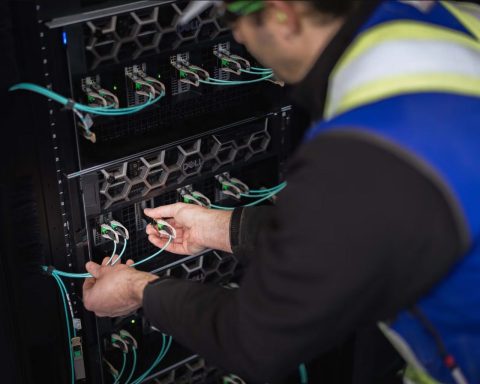
- Building and leasing AI‑optimized data centres
- Supporting mega‑contracts with AI players such as OpenAI (widely reported to have booked hundreds of billions in compute over several years)
- Expanding Oracle Cloud Infrastructure (OCI) capacity for GPU‑heavy workloads.
However, this comes with side effects:
- The Financial Times and others highlight that Oracle’s debt load has surged, with long‑term debt around $100 billion and total debt above that, up roughly 25% year on year.
- The Register notes that restructuring costs tied to Oracle’s ongoing fiscal 2026 restructuring plan (including layoffs) also climbed sharply to over $400 million in the quarter.
Management has tried to reassure investors, emphasising “chip‑neutral” strategies and flexible financing models:
- Customers can “bring their own chips” to Oracle data centres, reducing upfront capex for some deployments. Oracle Investor Relations+2Investing.com+2
- GPU vendors may lease hardware rather than sell it outright to Oracle, helping align cash outflows with incoming revenue.
Still, the message that landed with the market is simple:
Spending is exploding now, while the payoff looks more “later.”
Oracle’s AI and Cloud Story: Big Vision, Slower Conversion
To understand today’s reaction, it’s worth zooming out on Oracle’s AI narrative.
From AI World to AI hangover
In October 2025, at Oracle AI World in Las Vegas, the company unveiled several major AI offerings:
- Oracle AI Data Platform – a unified platform to connect enterprise data with generative AI models and orchestrate “agentic” AI workflows across OCI, Autonomous AI Database and OCI Generative AI services. Oracle
- Oracle AI Database 26ai – a major release of Oracle’s flagship database that embeds AI directly into the core, including vector search, AI‑assisted database management and AI‑native analytics, with support for open table formats like Apache Iceberg and multicloud environments.
In its Q1 FY 2026 update in September, Oracle told investors it expected OCI revenue to grow 77% this fiscal year to $18 billion, and then rise to $32 billion, $73 billion, $114 billion and $144 billion in the following four fiscal years — a staggeringly ambitious ramp.
This, combined with multi‑cloud deals with Amazon, Google and Microsoft, and large AI contracts with partners like OpenAI, generated a huge wave of enthusiasm and propelled Oracle’s share price to all‑time highs in early September.
But since then, the mood has shifted:
- Barron’s and others have noted that Oracle has given up a large chunk of those gains, with shares down around 37–40% from peak, even before today’s slide, as investors question the sustainability of the AI boom and Oracle’s reliance on a small number of mega‑customers.
- TipRanks describes the latest quarter as an “AI speed bump”, with strong backlog but slower‑than‑hoped revenue conversion and rising costs. TipRanks
In other words, the AI narrative is intact on paper — but the timing and profitability of that story now face much closer scrutiny.
What Wall Street Is Saying: Oracle Stock Forecasts and Price Targets
Despite the sell‑off, the consensus view on Oracle remains broadly positive, though price targets are sliding lower.
Consensus ratings and 12‑month price targets
Different data providers show slightly different aggregates, but they all tell a similar story:
- StockAnalysis:
- 32 covering analysts
- Consensus rating: “Buy”
- Average 12‑month price target:$333.13
- Target range: $175 (low) to $400 (high)
- Implied upside: ~49% from a $223 share price.
- MarketBeat (43 analysts):
- Consensus rating: “Moderate Buy” (30 Buys, 11 Holds, 2 Sells)
- Average price target:$320.84
- Target range: $130 to $400
- Implied upside: ~44% from recent levels.
- GuruFocus aggregate (36 analysts):
- Average target: about $325
- High: $400
- Low: about $175
- Implied upside: ~46% from ~$223 per share.
TipRanks, summarising Wall Street views, similarly shows a “Moderate Buy” consensus with an average price target around $346, implying more than 50% upside, though it warns these estimates are likely to be revised after this quarter. TipRanks+1
Key analyst moves on December 11, 2025
Today’s news has prompted a wave of target cuts rather than wholesale downgrades:
- Piper Sandler:
- Maintained “Overweight”
- Cut price target from $380 to $290.
- Barclays:
- Kept a Buy rating
- Reduced target from $400 to $330 (Dec 9).
- Citigroup:
- Strong Buy
- Trimmed target from $415 to $375 (Dec 4).
- RBC, Stifel, Evercore ISI:
- According to MarketScreener and other reports, all lowered targets into roughly the $250–$275 range, while mostly retaining neutral to positive stances.
- Bank of America:
- Maintained “Buy”, but cut its target from $368 to $300, citing a timing mismatch between AI capex and revenue realisation. Investing.com
- Citizens / Citizens JMP:
- Reiterated “Market Outperform” with a $342 target, highlighting Oracle’s chip‑neutral strategy and backlog‑driven growth potential. Investing.com
- Jefferies:
- Earlier in the quarter maintained a $400 bull‑case target on AI‑driven growth, though that looks increasingly optimistic relative to the latest cuts.
Across these updates, a clear pattern emerges:
Analysts still like Oracle long term, but they are pulling expectations back to earth.
Valuation Check: Is Oracle Still Priced Like an AI High‑Flyer?
Reuters notes that Oracle now trades at a forward P/E of around 29.5, slightly above mega‑cap peers like Microsoft and Amazon on similar metrics.
Given:
- Slower‑than‑expected revenue growth
- A guidance miss on EPS
- A $50 billion capex plan funded in part by rising debt
…investors are questioning whether Oracle deserves to sit at a valuation premium to other AI and cloud leaders with more mature hyperscale businesses.
On the other hand, Oracle’s EPS growth and cloud backlog are undeniably strong, and consensus forecasts still call for robust growth in revenue and earnings over the next two years. StockAnalysis estimates: StockAnalysis
- Revenue this year: ~$68.4 billion (up ~19% from last year)
- Revenue next year: ~$85 billion (another ~24% increase)
- EPS this year: ~6.95 (up ~60%)
- EPS next year: ~8.16 (up ~17%)
If those forecasts play out, today’s valuation may look more reasonable in hindsight. The question is how much execution risk investors are willing to accept along the way.
The Bull Case for Oracle Stock
Supporters of Oracle’s long‑term story point to several positives:
- Explosive growth in AI‑ready cloud infrastructure
- IaaS revenue grew 68%, and cloud revenue overall increased 34% in Q2.
- Oracle is positioning itself as a key infrastructure provider for GPU‑heavy AI workloads, including large language models from OpenAI and others.
- Massive and growing backlog
- RPO of $523 billion gives multi‑year visibility and a strong claim that the demand really is there.
- Differentiated technology stack
- AI Database 26ai, AI Data Platform, multicloud database services, and Autonomous Database give Oracle a vertically integrated AI story that spans:
- core databases
- AI‑native data platforms
- cloud infrastructure
- enterprise applications (Fusion, NetSuite) Oracle+2Oracle+2
- AI Database 26ai, AI Data Platform, multicloud database services, and Autonomous Database give Oracle a vertically integrated AI story that spans:
- Multi‑cloud partnerships and chip‑neutral strategy
- Oracle can host its databases and AI services across Amazon, Google and Microsoft environments and support multiple GPU providers, making it less tied to any single ecosystem.
- Analysts still see substantial upside
- Despite cuts, the average 12‑month price target still implies 40–50% upside from current levels.
For long‑term investors who believe that AI infrastructure is a decade‑long secular trend, Oracle’s aggressive spending could be seen as a rational attempt to secure a durable position.
The Bear Case: AI Bubble Risk and Balance Sheet Strain
Sceptics are not short on arguments either:
- AI capex outrunning revenue
- Oracle is committing $50 billion of capex in a single fiscal year, a huge number even by hyperscaler standards.
- Cloud and infrastructure revenue, while strong, are only slightly beating or even missing expectations, suggesting monetisation may be slower than hoped.
- Rising debt and restructuring costs
- Long‑term debt has climbed roughly 25% to just under $100 billion, and total debt is higher still.
- Restructuring charges linked to layoffs and a fiscal 2026 restructuring plan are adding extra cost and signalling that Oracle is reshaping itself under pressure.
- Customer concentration and AI bubble concerns
- Contracts with OpenAI, Meta and other mega‑clients are impressive but raise concentration risk — particularly if AI economics or regulation shift.
- Analysts and commentators increasingly warn that AI infrastructure spending may be forming a circular ecosystem of high‑valuation companies buying services from one another without clear end‑customer profitability.
- Valuation still rich versus uncertainty
- A forward P/E near 30 and a mega‑cap valuation leave limited room for execution missteps, particularly when guidance is already disappointing the Street.
- Market psychology has turned cautious
- Oracle’s results have become a barometer for the AI trade: when Oracle stumbles, tech indices wobble. That makes ORCL more vulnerable to sentiment swings than a typical enterprise software stock.
What Today’s News Means for ORCL Investors
For investors and traders following Oracle stock on December 11, 2025, the picture is nuanced:
- Fundamentals are not collapsing. Revenue is growing double‑digits; cloud is growing faster; EPS is up sharply (helped by one‑offs); and backlog is enormous.
- Expectations are being reset. The combination of a revenue miss, softer guidance, and a much more expensive AI build‑out means the path to monetising Oracle’s AI story looks bumpier than bulls hoped.
- Wall Street still broadly likes the stock, but the tone has shifted from “AI rocket ship” to “long‑term execution story with meaningful risk.” MarketBeat+2GuruFocus+2
For anyone following Oracle, the next few quarters will likely hinge on a few key metrics:
- Cloud and IaaS revenue growth – does it stay at or above current levels, or decelerate?
- Capex intensity – does spending stabilise or continue rising beyond FY 2026?
- Debt trajectory and financing costs – can Oracle maintain its investment‑grade rating while spending aggressively? Reuters+3The Register+3Investing.com+3
- Backlog conversion – do RPO and AI commitments turn into realised, high‑margin cloud revenue at scale? Oracle Investor Relations+2The Register+2
Related articles: NYSE:ORCL