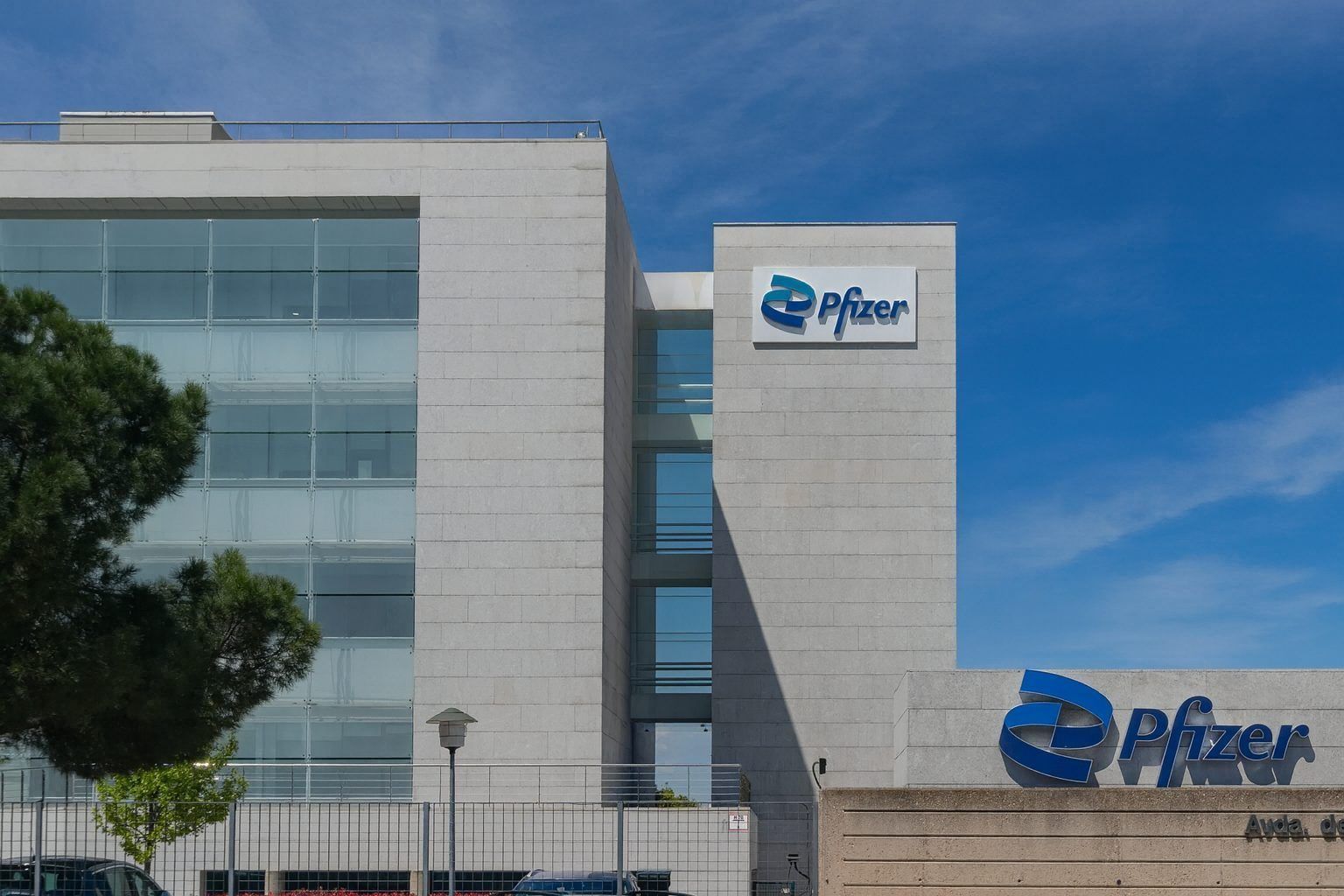
Pfizer Inc. (NYSE: PFE) remains one of the most closely watched healthcare stocks as of December 3, 2025. The share price is still stuck near post‑COVID lows, but a new $10 billion obesity‑drug acquisition, expanding RSV vaccine markets and a hefty dividend yield around 6.5–7% are reshaping the narrative around the stock. Pfizer+2Pfizer+2
Below is a deep dive into where Pfizer stock stands today, which headlines are moving it, and how Wall Street currently values PFE for 2026 and beyond.
1. Pfizer stock today: price, trading range and valuation
As of late trading on December 3, 2025, Pfizer shares are changing hands at about $25.6. That puts the stock: MarketBeat+1
- Near the middle of its 52‑week range of roughly $20.92 to $27.7
- Well below its late‑2021 peak above $50, when COVID vaccine and antiviral sales were at their highs TS2 Tech
Recent data from MarketBeat, Business Insider and other trackers show: MarketBeat+2markets.businessinsider.com+2
- Market capitalization: about $144–144+ billion
- Trailing P/E ratio: roughly 14–19x, depending on whether GAAP or adjusted earnings are used
- Price‑to‑sales (TTM): ~2.3x vs ~3.7x for the broader pharma sector
- Dividend: about $1.69–$1.72 per share annually, implying a yield around 6.5–7% at current prices
A Trefis fundamental review on December 3 highlights that Pfizer’s last‑twelve‑months free cash‑flow margin is about 16.5% and operating margin about 24.6%, with a P/E multiple near 14.7, well below the S&P 500 median multiple of ~23.5. Trefis
Based on Pfizer’s updated 2025 adjusted EPS guidance of $3.00–$3.15 per share, the stock trades at roughly 8–9x forward earnings, underscoring why many investors view it as a value play within big pharma. Q4 Capital+1
2. Fresh technical outlook for December 3, 2025
Several short‑term technical services have published new views today or in the last 24 hours:
Economies.com: leaning on moving‑average support
A December 3 technical note from Economies.com says Pfizer recently pulled back, with negative RSI signals, but is now leaning on support at its 50‑day simple moving average within a broader short‑term uptrend. The service: Economies.com+1
- Identifies support around $24.95
- Sees initial resistance near $26.10
- Labels today’s short‑term forecast as “Bullish”, as long as the stock holds above that support level
StockInvest.us: gentle uptrend, low volatility
On December 2, StockInvest.us described PFE as a “buy candidate” in a weak rising trend, noting: StockInvest
- The stock fell from $25.27 to $25.15 on December 2, with about 1.1% intraday volatility
- Short‑term moving averages show mixed signals, but the long‑term trend remains positive
- Their model expects the stock to rise about 2–3% over the next three months, with a 90% probability of finishing that period in a band roughly $25.25–$28.58
Taken together, near‑term technicals suggest support just below $25 and a resistance zone in the mid‑$26s, with a modestly bullish tilt if those supports hold.
3. Q3 2025 earnings: post‑COVID reset, higher guidance
Pfizer’s Q3 2025 earnings release (for the quarter ended September 28, 2025) is still anchoring fundamental sentiment. The company reported: Q4 Capital+1
- Revenue:$16.7 billion, down about 6% year‑over‑year (7% lower on an operational basis)
- Adjusted diluted EPS:$0.87, ahead of analysts’ expectations
- A sharp decline in COVID‑19 product revenue, particularly Paxlovid (down ~55% operationally) and Comirnaty (down ~20% operationally)
- Higher revenues from Eliquis, the Vyndaqel family and migraine drug Nurtec/Vydura, each showing solid demand and, in some cases, double‑digit operational growth
Crucially, management raised and narrowed 2025 guidance: Q4 Capital
- Full‑year revenue: now $61–64 billion
- Adjusted diluted EPS:$3.00–$3.15, up from a prior range of $2.90–$3.10
- Guidance reflects cost‑cutting, a better tax rate and pipeline investments
The quarter also included a one‑time $1.35 billion acquired in‑process R&D (IPR&D) charge linked to a licensing deal with 3SBio, which depressed reported earnings but is treated as a non‑recurring item in adjusted figures. Q4 Capital
Pfizer emphasized that COVID‑related sales are now a much smaller part of the business, with growth increasingly driven by cardiometabolic, oncology, vaccines and neuroscience portfolios.
4. Obesity pivot: the $10 billion Metsera deal
The biggest strategic move this quarter is Pfizer’s full‑scale push back into obesity and cardiometabolic diseases via its acquisition of Metsera.
Deal terms and strategic rationale
On November 13, 2025, Pfizer announced the completion of its acquisition of Metsera, a clinical‑stage biotech focused on obesity and cardiometabolic disorders. The deal is worth up to $10 billion, after a bidding war with Novo Nordisk. Pfizer+2Reuters+2
Key points:
- Metsera brings a portfolio of differentiated oral and injectable incretin and non‑incretin obesity candidates, including MET‑097i, a once‑monthly GLP‑1 injection.
- Mid‑stage data show up to ~14% weight loss in trials, with late‑stage development expected to begin soon. Reuters
- Pfizer expects potential launches between 2028 and 2029, positioning it to compete with Novo Nordisk and Eli Lilly in one of the fastest‑growing drug markets globally. Reuters+1
Pfizer had previously shelved its in‑house GLP‑1 candidates due to safety concerns, so Metsera is effectively a reset button for the company’s obesity franchise. The trade‑off: near‑term earnings dilution and higher R&D risk in exchange for what could be a multi‑billion‑dollar opportunity later in the decade.
5. RSV vaccine Abrysvo: expanding market tailwinds
Beyond obesity, Pfizer is leaning heavily on its RSV vaccine franchise as a key growth driver.
EU and US expansions in 2025
In April 2025, the European Commission broadened the label for Abrysvo, Pfizer’s bivalent RSV vaccine, to include adults aged 18–59 at risk of RSV lower respiratory tract disease. This makes Abrysvo the first RSV vaccine in the EU approved for non‑pregnant adults as young as 18. Pfizer
Separately, the CDC’s Advisory Committee on Immunization Practices (ACIP) voted in 2025 to expand U.S. recommendations for Abrysvo to high‑risk adults aged 50–59, on top of existing recommendations for older age groups. Pfizer+1
Medical sources such as Yale Medicine emphasize the significant RSV burden, with tens of thousands of hospitalizations annually among older adults and infants; Abrysvo is one of three adult RSV vaccines now recommended in the U.S., alongside GSK’s Arexvy and Moderna’s mResvia. Yale Medicine
For investors, Abrysvo represents:
- A new multi‑year revenue stream as RSV vaccination becomes part of routine adult immunization
- A platform where Pfizer can leverage its vaccine manufacturing and commercial infrastructure developed during COVID
6. Portfolio reshaping: BioNTech stake sale and Seagen legal setback
Strategic exit from most of the BioNTech stake
On November 13–14, 2025, Pfizer disclosed that it had slashed its equity stake in BioNTech by more than half, now holding about 1.66 million ADSs worth roughly $160 million as of the end of September. Reuters+2Yahoo Finance+2
- The sale marks a financial exit from most of its COVID‑vaccine partner’s equity, even as both companies stress that their collaboration on mRNA vaccines remains intact.
- The move fits CEO Albert Bourla’s strategy of recycling COVID windfall cash into acquisitions (Seagen, Metsera and others) aimed at generating $20+ billion in new revenue by 2030. Reuters
Seagen: appeals court overturns $42 million verdict
On December 2, 2025, a U.S. appeals court overturned a $42 million jury verdict that had previously been awarded to Seagen, Pfizer’s oncology unit, in a patent dispute with Daiichi Sankyo over the cancer drug Enhertu. The court found Seagen’s patent invalid due to inadequate description. Reuters
While the ruling does not threaten Pfizer’s ownership of Seagen, it underscores:
- The legal and patent risks embedded in oncology portfolios
- The importance of robust IP to support long‑term pricing power
7. Regulatory overhang: tougher vaccine scrutiny
Another theme weighing on vaccine makers this week is a series of reports that the U.S. FDA is considering stricter vaccine approval standards under its new head of vaccine oversight.
Coverage from Barron’s and Investopedia indicates that: Barron’s+1
- An internal FDA memo has recommended tougher review processes and cited safety signals in COVID‑19 vaccine data.
- The news triggered declines in several vaccine stocks, with Pfizer down around 2% on the initial headlines, alongside steeper losses for Moderna and BioNTech.
For Pfizer, which is less reliant on COVID vaccines than in 2021–2022, the long‑term impact may be more about pipeline timelines and regulatory complexity than near‑term revenue. Still, heightened scrutiny could slow or complicate approvals in vaccines more broadly.
8. Wall Street forecasts and price targets as of early December 2025
Analyst sentiment on Pfizer is cautiously constructive but far from euphoric. Across multiple data providers, PFE is generally rated a “Hold” with upside”:
Consensus ratings and targets
- MarketBeat:
- Consensus rating: Hold (1 Sell, 12 Hold, 6 Buy across 19 analysts)
- Average 12‑month price target:$28.39 (high $35, low $23), implying about 11% upside from recent prices. MarketBeat
- StockAnalysis.com:
- Consensus rating: Hold from 10 analysts
- Average price target:$28.30 (low $24, high $35), forecasting roughly 10–11% upside. StockAnalysis+1
- Nasdaq/Fintel (Citigroup note, Dec 2):
- Citigroup reiterated “Neutral” on December 2.
- Fintel data show an average one‑year price target of $29.44, implying ~16% upside from a recent closing price of about $25.27. Nasdaq
- Business Insider (32‑analyst set):
- Lists a median target of $35.66, with a high of $45 and a low of $24.
- At a last price of $25.62, that median implies roughly 40% upside. markets.businessinsider.com
- Valuation models:
- A recent Yahoo Finance valuation piece pegs a widely followed “fair value” around $29.08, again above the current price and suggesting undervaluation. Yahoo Finance
- Trefis’ internal model suggests fair value near $32.23, about 28% above the market price highlighted in their December 3 note. Trefis+1
In other words, most mainstream models cluster in the high‑$20s, but some more bullish frameworks put fair value in the low‑$30s or mid‑$30s.
Latest single‑stock calls
StockAnalysis’ rating history shows that in late 2025: StockAnalysis
- Citigroup initiated/maintained Hold with a $26 price target on December 2.
- Guggenheim remains Strong Buy, recently lifting its target from $33 to $35.
- Morgan Stanley and Bank of America have Hold ratings with targets around $30–$32.
This mix of neutral majors and a few vocal bulls helps explain why the aggregate consensus lands at “Hold.”
9. Dividend and capital returns: $68 billion back to shareholders
For income‑oriented investors, Pfizer’s capital‑return profile is one of the main attractions.
A December 3 Trefis analysis estimates that over the last 10 years, Pfizer has returned about: Trefis+1
- $35 billion in dividends
- $33 billion in share repurchases
- $68 billion in total capital returned to shareholders
That total is roughly 48% of Pfizer’s current market capitalization, versus an S&P 500 median of about 26%, highlighting how shareholder‑friendly the payout policy has been.
In the first nine months of 2025 alone, Pfizer paid around $7.3 billion in dividends and did not execute share repurchases, signaling a preference for cash dividends while it prioritizes debt reduction and strategic deals like Metsera. Q4 Capital
At today’s price near $25.6, the annual dividend of around $1.70 per share equates to a yield comfortably above 6%, one of the highest among large‑cap pharma peers. markets.businessinsider.com+1
10. Key risks to the PFE story
Despite the attractive valuation and dividend, several risks remain front‑of‑mind:
- Execution risk on Metsera and other pipeline assets
- Obesity is highly competitive and currently dominated by Novo Nordisk and Eli Lilly.
- Metsera’s once‑monthly GLP‑1 must deliver not only strong efficacy and safety in Phase 3, but also clear differentiation on dosing convenience and side‑effect profile. Reuters+1
- Regulatory headwinds for vaccines
- The FDA’s potential tightening of vaccine approval standards could extend development timelines or increase trial costs in key areas like COVID and RSV. Barron’s+1
- Patent cliffs and price pressure
- Like most big pharma names, Pfizer faces loss of exclusivity on several blockbuster drugs over the coming years, which can pressure revenue unless new products ramp quickly.
- Legal and IP risks
- The overturned Seagen verdict illustrates how quickly expected legal wins can disappear, affecting both revenue expectations and negotiating leverage in future disputes. Reuters
- Macro and interest‑rate risk
- High dividend payers can be sensitive to interest‑rate moves, since income‑seeking investors compare yields against bonds and cash alternatives.
11. Is Pfizer stock a buy, hold or sell right now?
As of December 3, 2025, the overall market view on Pfizer is “value‑with‑baggage”:
- The stock trades at a steep discount to the broader market and even to many pharma peers on price‑to‑earnings and price‑to‑sales metrics. TS2 Tech+1
- Its dividend yield near 6.5–7% is well above average and supported by robust free cash flow and a long history of shareholder payouts. markets.businessinsider.com+1
- Wall Street’s 12‑month targets generally point to 10–30% upside, depending on the model, with outliers in the mid‑$30s. Trefis+4MarketBeat+4StockAnalysis+4
On the other hand:
- Earnings are still digesting the post‑COVID comedown, with total revenue down year‑over‑year and COVID products shrinking sharply. Q4 Capital+1
- The Metsera obesity bet, while potentially transformative, adds late‑decade execution and clinical risk. Pfizer+2Reuters+2
- Regulatory and legal uncertainties (vaccine oversight, Seagen appeals) inject an extra layer of headline risk. Reuters+1
For income‑focused investors who are comfortable with healthcare and regulatory risk, Pfizer currently looks like a high‑yield, reasonably valued blue chip with significant optionality in obesity, oncology and vaccines. For more growth‑oriented investors, the story may hinge on confidence in Metsera and the broader late‑stage pipeline actually delivering the multi‑billion‑dollar opportunities implied in management’s 2030 targets.
As always, this overview is informational only, not investment advice. Anyone considering PFE should weigh these factors against their own risk tolerance, time horizon and portfolio mix, and, if needed, consult a qualified financial adviser.