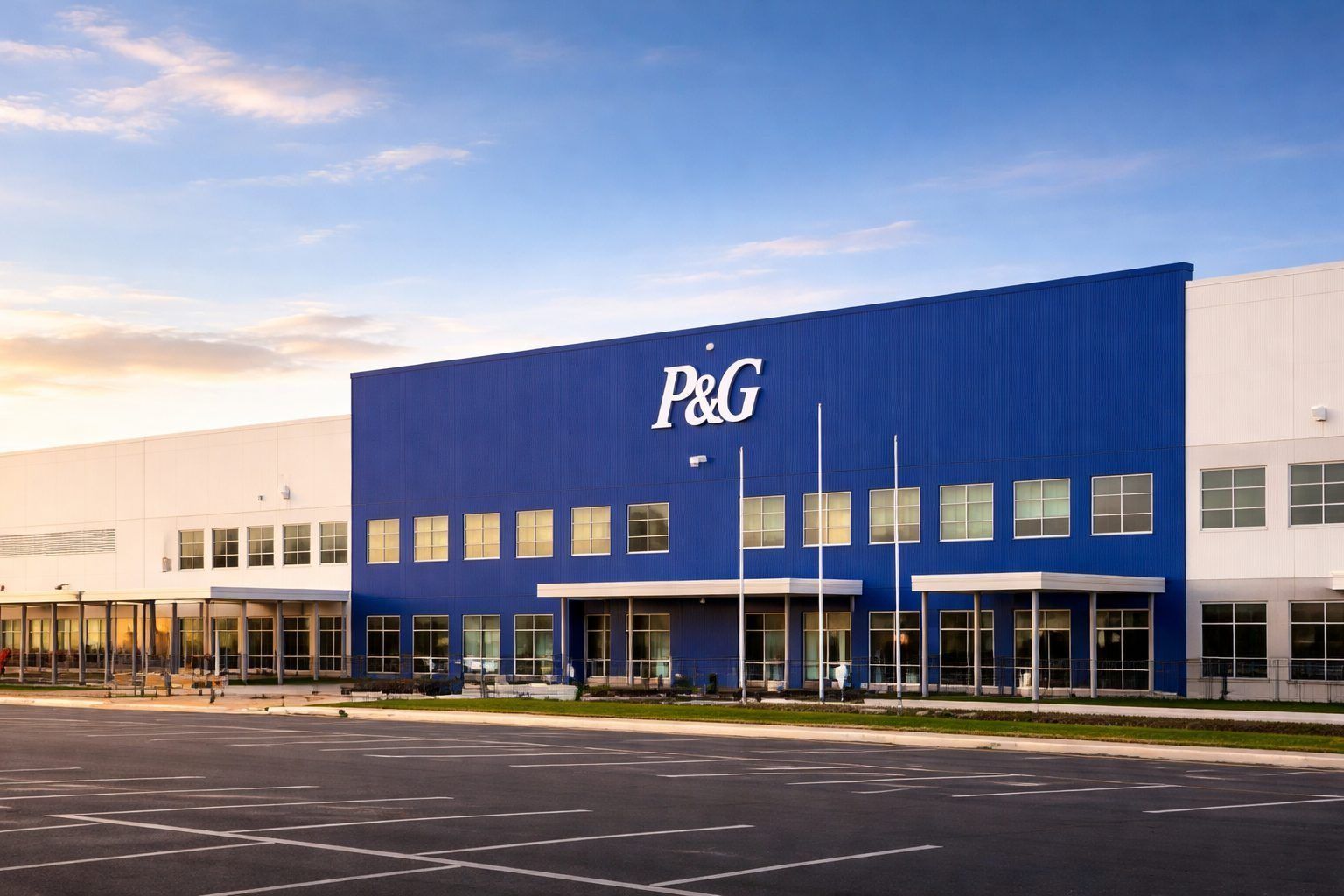

Procter & Gamble Company (The) (NYSE: PG) is ending 2025 with a familiar investor debate—is this consumer-staples bellwether a defensive bargain after a weak year, or a “steady but capped” stock until growth re-accelerates? As of the latest available quote from late December trading, PG is around $144.46.
Below is a roundup of the latest coverage and analysis dated from December 20, 2025 onward, plus the most relevant near-term forecasts, Street targets, and the key catalysts that could drive the next move.
What’s new since December 20, 2025: the “reassess PG” moment
A prominent theme in fresh analysis on December 20, 2025 is a reassessment of valuation after a notable drawdown. Simply Wall St’s latest piece frames PG as down roughly ~13% year to date, arguing that the market may be underappreciating the combination of brand resilience, pricing power, and an efficiency push that includes more aggressive use of AI.
That “AI + efficiency” angle is increasingly common in commentary around PG and other mega-cap staples: the thesis is that even modest top-line growth can translate into improved earnings quality if the cost base keeps tightening.
At the same time, the tape has been choppy: PG recently snapped a winning streak and has been trading well below its 2025 highs, highlighting how even defensive names can de-rate when investors demand clearer growth or worry about the consumer.
Analyst actions and price targets: Jefferies turns bullish, Barclays stays cautious
Jefferies upgrade: a meaningful sentiment shift
One of the most-circulated catalysts behind the renewed attention is Jefferies moving to “Buy” and raising its target to $179 from $156 earlier in the same week—an action that’s still rippling through Saturday’s write-ups and market recaps. Investing.com+2Investing.com+2
Why this matters for PG investors:
- PG is a crowded “core holding”—upgrades can matter less for discovery and more for re-rating.
- The size of the target lift (from $156 to $179) signals Jefferies believes the market can look past near-term demand noise if execution holds.
Barclays trims its target
On the more cautious end, MarketBeat’s Dec. 20 reporting highlights Barclays lowering its price target to $151 and maintaining an “Equal Weight” stance, reflecting skepticism that upside is imminent without clearer acceleration. MarketBeat+1
Where consensus sits
Across the Street, multiple tracking services cluster around a mid-to-high $160s / low $170s consensus target area:
- MarketBeat shows an average target around $171 (with a low end near $151 and high near $209, depending on the analyst set).
- Investing.com’s consensus summary similarly indicates a Buy-leaning consensus with targets spanning roughly the high-$140s to mid-$180s.
- MarketWatch’s analyst estimates page lists an average target near $170.
Put simply: the Street largely sees double-digit upside potential from current levels—but with meaningful dispersion that reflects uncertainty about volume growth, consumer health, and mix.
The core bull case for Procter & Gamble stock in 2026
1) Pricing power remains the engine—until volumes re-accelerate
P&G has leaned heavily on pricing to protect margins and revenue, and many forecasts still assume low-single-digit growth driven by a mix of price, product innovation, and incremental volume recovery.
One industry-facing outlook (S&P Global Market Intelligence) expects P&G to return to growth with net sales rising around 3% (to about $87B) in 2026, anchored partly by continued price/mix actions.
2) Management guidance still points to steady growth
In P&G’s fiscal 2026 first-quarter materials, the company maintained guidance for all-in sales growth of 1%–5% and organic sales growth from flat to +4% (with FX and M&A expected to be a tailwind).
That’s not “hypergrowth,” but it’s exactly the profile many investors buy PG for: durable brands + predictable cash flows.
3) Dividend durability is a feature, not a footnote
P&G emphasizes that it has paid dividends for well over a century and has raised its dividend for decades—often cited as a key reason long-term holders stay through cycles.
For income-focused investors, the point isn’t just the current yield—it’s confidence that dividends are supported by scale, cash flow, and a long record of shareholder returns.
The bear case: consumer volatility and the “volume problem”
The biggest risk isn’t whether Tide or Pampers remain essential. It’s whether consumers keep trading down and whether unit volumes stay soft enough to cap growth even if pricing holds.
A widely read early-December report highlighted CFO Andre Schulten warning about unusual volatility and noting sales were down “significantly” in both volume and value in parts of the U.S. period data, with multiple one-off factors cited (including tough comparisons and macro disruption). Investopedia
That matters because:
- P&G is often treated as a consumer health proxy.
- If the market believes the consumer is weakening, investors tend to demand a lower multiple for “defensive growth” names.
Forecasts and what the market is pricing in now
The “Wall Street base case”: modest upside, not a moonshot
Most credible forecasts for PG look like:
- Low-single-digit sales growth
- Margin management doing heavy lifting
- Steady EPS expansion
- Dividend + buybacks supporting total return
That view is consistent with mainstream analyst target ranges centered near ~$170 (give or take).
Short-term quant/technical forecasts (useful, but lower-confidence)
Some algorithmic and technical-leaning forecasters project only small moves over the next few weeks, often reflecting current downtrend/mean-reversion signals rather than fundamentals. Treat these as sentiment indicators, not thesis anchors.
What to watch next: January earnings and the company webcast
The next major scheduled catalyst is P&G’s earnings event in January 2026. Multiple market calendars point to a late-January earnings date, and P&G’s investor relations site highlights a webcast discussion of results around that period.
Into that event, PG investors will likely focus on:
- Organic sales split: how much is price vs. volume?
- U.S. consumption trends: is volatility easing or worsening?
- Gross margin trajectory: are productivity gains offsetting input and promotional pressures?
- Guidance tone: any tightening/loosening of the FY2026 outlook?
Bottom line: where PG stock stands heading into 2026
As of Dec. 20 trading, Procter & Gamble stock is near the mid-$140s, and the “PG story” is unusually polarized for a staples giant: some see a quality compounder on sale, while others see a fully understood franchise that won’t re-rate without clearer volume recovery. Simply Wall St
The latest wave of coverage since December 20, 2025 leans into the idea that the market may be ready to revisit PG’s valuation—especially after Jefferies’ bullish turn—yet the near-term direction likely hinges on one thing: whether P&G can stabilize demand while keeping its pricing/mix playbook intact.