

San Diego, April 25, 2026, 11:04 PDT
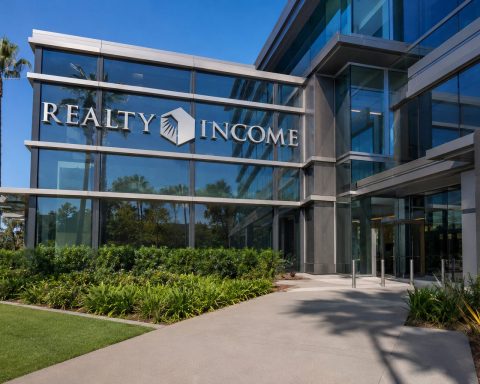
Realty Income Corp. dropped 1.17% to finish Friday at $63.33, trailing both the broader U.S. market and much of its real estate sector rivals as investors looked ahead to the company’s first-quarter numbers due next month. Kimco Realty, Regency Centers, and Federal Realty posted smaller declines. Realty Income now trades 6.78% under its 52-week high from Feb. 27, according to market data.
This gets attention now because Realty Income ranks among the most closely tracked U.S. income names, with its next earnings due as investors continue to gauge dividend payouts versus rising borrowing costs. The San Diego real estate investment trust said it’ll report first-quarter 2026 numbers after the New York Stock Exchange wraps up trading on May 6. An investor call follows at 2 p.m. PDT.
Another date looms for the dividend crowd. Realty Income on April 14 announced it’s declaring its 670th straight monthly dividend on common stock, pricing it at $0.2705 per share, or $3.246 annualized. Shareholders of record by April 30 will get paid on May 15.
Realty Income, structured as a REIT, owns properties that generate rental income and pays out a large share of its taxable earnings to shareholders. By the close of 2025, the company counted more than 15,500 properties—spanning every U.S. state, the U.K., plus eight other countries in Europe—most tied up in long-term net leases. Those deals typically have tenants picking up expenses like taxes, insurance and maintenance.
May’s report puts the spotlight on whether cash flow can keep up with both the dividend and Realty Income’s growth targets. For the fourth quarter, net income available to common shareholders landed at $296.1 million, translating to 32 cents per share. Adjusted funds from operations, or AFFO—a key cash-flow metric for REITs—came in at $1.08 per share. The 2025 AFFO figure was $4.28 a share. CEO Sumit Roy described “palpable” business momentum at the time and projected 2026 AFFO between $4.38 and $4.42 a share. Realty Income
Management’s pitch now leans on capital access. Back in March, Realty Income and Apollo announced Apollo-managed funds and affiliates would put in $1.0 billion for a 49% stake in a joint venture set to hold around 500 single-tenant retail properties. Roy described it as a model for a “multi-billion-dollar, programmatic co-investing relationship.” Apollo Partner Jamshid Ehsani went further, calling the deal a “landmark” for public REITs. Realty Income
Debt load is still front and center. In late March, Realty Income lined up an $800 million sale of 4.750% senior unsecured notes maturing 2033, landing a 5.047% effective yield to maturity. The company also put together a $500 million U.S. dollar-to-euro cross-currency swap, reporting that the move brought its effective blended yield to maturity down to roughly 4.44%.
Not every analyst is betting on a breakout here. Barclays’ Richard Hightower bumped his price target on Realty Income up to $68 from $65 as of April 21, sticking with an Equal Weight rating, per a summary of his note. He called the net-lease REIT environment “Goldilocks,” but the rating stops short of a broad buy recommendation. @IntellectiaAI
Analysts aren’t rushing in. According to MarketBeat, 16 tracked experts keep Realty Income at Hold on average—six say buy, but nine are stuck at hold and one is outright negative. The group’s 12-month price target works out to $66.61.
The risks aren’t hard to spot. In its annual filing, Realty Income cautioned that inflation, high rates and tariffs all threaten tenants, noting a 1% move in variable-rate debt would swing interest expenses by $20.2 million. Foreign-exchange exposures are also on the radar, with the company growing its footprint beyond the U.S.
Realty Income shareholders aren’t just watching for the May dividend. The bigger question: can the company keep picking up new properties, secure low-cost financing, and drive cash flow growth—all without weighing down a stock that’s already drifted below its February peak?
Related articles: NYSE:O





![US Stock Market Today 08/28/2026 [UPDATE: 02:04 EDT] [Marvell Stalls Near Overnight Low as Price Discovery Fades]](https://ts2.tech/wp-content/uploads/2026/08/US-market-dashboard-2026-08-28-0159-480x384.jpg "US Stock Market Today 08/28/2026 [UPDATE: 02:04 EDT] [Marvell Stalls Near Overnight Low as Price Discovery Fades]")