
NEW YORK, May 21, 2026, 08:36 EDT
- Redwire finished Wednesday up 6.2%. The stock slipped in premarket trading ahead of Thursday’s session.
- The company said it landed two drone contracts in 48 hours, picking up work from the U.S. Army and a NATO customer.
- AE Industrial Partners lowered its reported stake to under 5% after converting and selling a big preferred-stock block, according to a filing.
Redwire Corporation shares slipped in premarket trading Thursday after jumping in the previous session. Investors took in news of two fresh unmanned-aircraft orders while also reacting to a sponsor sell-down flagged in securities filings.
The stock ended Wednesday up 6.18% at $14.77, but traded at $14.36 before the bell. Market cap was about $2.94 billion. U.S. stock markets open as usual Thursday before closing Monday, May 25 for Memorial Day.
Redwire’s trying to build steadier revenue, leaning on fresh demand for space and defense products after its stock rallied. The latest deals bring it further into drones, a market investors tie to increased military spending in the US and Europe.
Redwire on Wednesday said it landed a $15 million follow-on deal from the 1st Aviation Brigade, U.S. Army Aviation Center of Excellence, for its Stalker uncrewed aerial systems. This is the third order in eight months from the same customer, raising recent orders to $24.8 million. “Stalker was purpose built to meet multiple mission needs,” said Steve Adlich, president of Redwire Defense Tech. Redwire Corporation
Redwire said a day ago that it secured a multi-year contract worth “high eight-figures” from an unnamed NATO country for its Penguin Mk3 tactical UAS. Adlich called the deal an example of Redwire’s “forward-looking approach” to tactical UAS modernization among NATO allies. Redwire Corporation
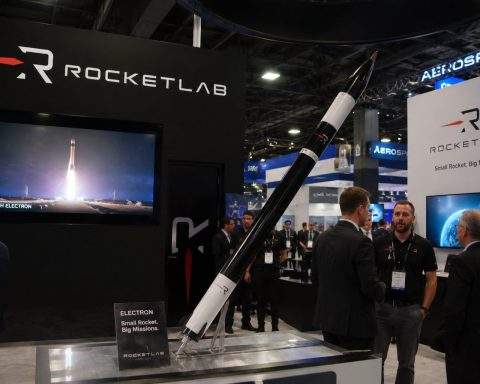
The new orders bring Redwire deeper into the defense-drone business, up against players like AeroVironment, which offers the Puma, JUMP, and Switchblade lines, and in the sights of space investors who stack Redwire against public outfits like Rocket Lab, a self-described end-to-end space company. But the matchups aren’t one to one: Redwire focuses on space hardware and defense tech. Rivals split their business among launch, spacecraft, drones, and weapons.
Ownership shifted, too. In a May 20 filing, Redwire said AE Industrial Partners converted its last 46,505.13 Series A convertible preferred shares into 15,247,586 common shares. Convertible preferred stock lets holders swap for common shares, changing who votes and how many common shares are out.
AE Red Holdings and related insiders sold 5.66 million shares at a $14.50 average, then another 9.59 million shares at $13.30, according to a Form 4. The May 18 trades cut their stake to 1.1%. The group filed a Schedule 13D amendment calling it an exit filing.
Redwire posted first-quarter revenue of $97.0 million, up 57.9% from a year ago, with backlog at a record $498.1 million. Backlog is contracted work not yet turned into revenue. CEO Peter Cannito said demand stayed “very strong.” CFO Chris Edmunds flagged better gross margins and said Redwire is sticking with its 2026 revenue target of $450 million to $500 million. Redwire Corporation
Redwire’s quarter had plenty of noise. The company posted a net loss of $76.5 million, with more than $44 million of that due to non-recurring items mostly from equity-based pay related to the Edge Autonomy acquisition. Adjusted EBITDA came in at minus $9.2 million. Adjusted EBITDA excludes interest, taxes, depreciation, and amortization, and also includes Redwire’s own adjustments. It’s not a GAAP metric.
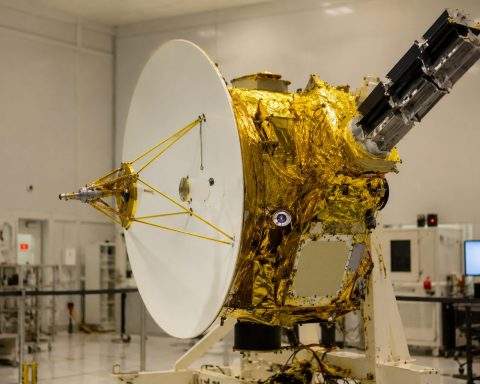
Voyager Technologies said it picked up a subcontract from Redwire, which is the main contractor for DARPA’s Otter program. Voyager will provide a measurement system for a spacecraft operating in very-low-Earth orbit. Delta-V in the program refers to a spacecraft’s ability to shift velocity for maneuvers. Voyager is still doing work in the space-defense field.
One problem is that orders and backlog might not turn into profit as fast as bulls hope. The company has already warned projections may miss and mentioned risks like tariffs, heavy customer exposure, ongoing Edge Autonomy integration, reliance on launch vehicles, and trouble turning backlog into revenue. After a sharp move in the stock, there’s less room for execution hiccups, lower margins, or more selling from investors.
Related articles: NYSE:RDW