
IRVINE, California, May 15, 2026, 08:05 PDT
Industrial robotics player Mind Robotics, originally spun out of Rivian Automotive Inc., has secured $400 million in fresh funding, lifting its valuation to $3.4 billion. That fresh figure reflects technology birthed at the EV maker before the spinoff. Kleiner Perkins led the latest round, which brings Mind’s total raised to more than $1 billion within less than a year, Reuters reports, citing a source close to the deal.
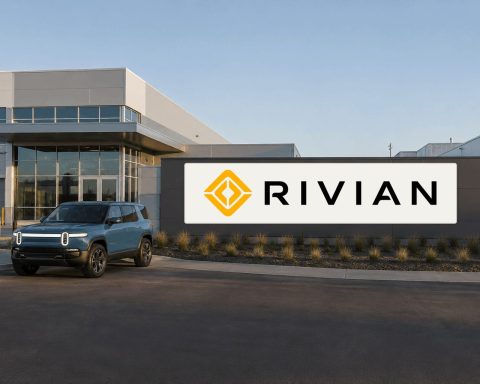
Timing matters for Rivian. The company is moving past its high-end R1 trucks and SUVs, shifting focus to the mass-market R2 as production scales. On April 30, Rivian said it started building saleable R2s at its Normal, Illinois facility, handed over the first units to employees, and maintained its 2026 goal: 62,000 to 67,000 vehicles delivered.
Mind is shifting gears, touting its Rivian partnership as the source of “production-scale data.” These are actual figures coming straight from active manufacturing lines—not just simulations, the company emphasizes. With this data, Mind claims its industrial robots are learning to tackle unpredictable, real-world factory work that traditional automation just can’t cover. Mind Robotics
Meritech Capital, Redpoint Ventures, SV Angel, Incharge Capital, A-Star Capital and Garuda Ventures all came in as fresh investors for Mind’s latest round, alongside return backers Accel, Andreessen Horowitz and Greenoaks. RJ Scaringe, who’s at the helm of both Rivian and Mind, put it simply: they want “scaled deployments.” Kleiner Perkins’ Ilya Fushman calls robotics “the ultimate frontier.” Business Wire
Rivian shares stuck in negative territory late morning, changing hands at $13.96, down 56.5 cents from their prior close. The move left the company with a market cap near $17.4 billion.
The R2 is next up. Rivian sees this cheaper SUV as its shot at the Tesla Model Y crowd, aiming for broader reach and putting the vehicle at the core of its 2026 growth plan. Scaringe says the company expects to deliver more than 22,000 R2s this year.
Rivian might be planning more than just one R2. “There are other variants of R2, which we haven’t shown,” CEO RJ Scaringe told Reuters last week. He stopped short of clarifying whether that includes a pickup or another body style. Here’s what’s on the table: the initial R2 will launch at $58,000, with cheaper trim levels coming, and a $45,000 version expected to arrive by late 2027. Reuters
Rivian is steering straight into the robotics fray—a space that burns through cash. Tesla’s deep in it already, and Figure AI, with Nvidia’s muscle behind it, is pushing hard on humanoid bots. Mind? The company isn’t spreading itself thin; it’s drilling down on factory use, skipping splashy demos. That approach turns Rivian’s own production lines into more than window dressing—they’re a live lab for testing robots in the wild.
Rivian isn’t limiting its tech push to robotics. CEO Scaringe told Reuters the automaker is considering building proprietary lidar sensors, possibly leaning on Chinese technology or striking partnerships. Rivian, he said, is pushing ahead on self-driving systems developed in-house.
R2’s prospects aren’t getting any lift from credit costs. Kalshi’s live rate monitor is showing a 97% chance, Polymarket puts it at 98%, that the Fed holds rates unchanged at the June meeting. Polymarket’s 2026 rate-cut market? Odds for no cuts this year stand at 67%. Borrowing remains expensive—monthly payments matter just as much as the headline price for car buyers.
Rivian is in a tight spot. First-quarter free cash flow came in at negative $1.08 billion, and the company isn’t budging from its projection for a 2026 adjusted EBITDA loss somewhere between $1.8 billion and $2.1 billion. Adjusted EBITDA, as Rivian spells out, drops out interest, taxes, depreciation, amortization—and adds the company’s own adjustments on top. Any hiccup in R2 production, or if Mind—the robotics initiative—fails to deliver meaningful factory savings, leaves Rivian with little cushion. A richer valuation doesn’t do much to ease that cash pinch.
The core issue for investors is tougher than what the headline figure suggests: can Rivian truly leverage its software, robotics, and massive trove of factory data to drive down per-vehicle costs—and keep those R2s moving through production? Forget the splashy milestones. The real measure is vehicles actually leaving Normal, robots handling the work, and results showing up on the floor.
Related articles: NASDAQ:RIVN