
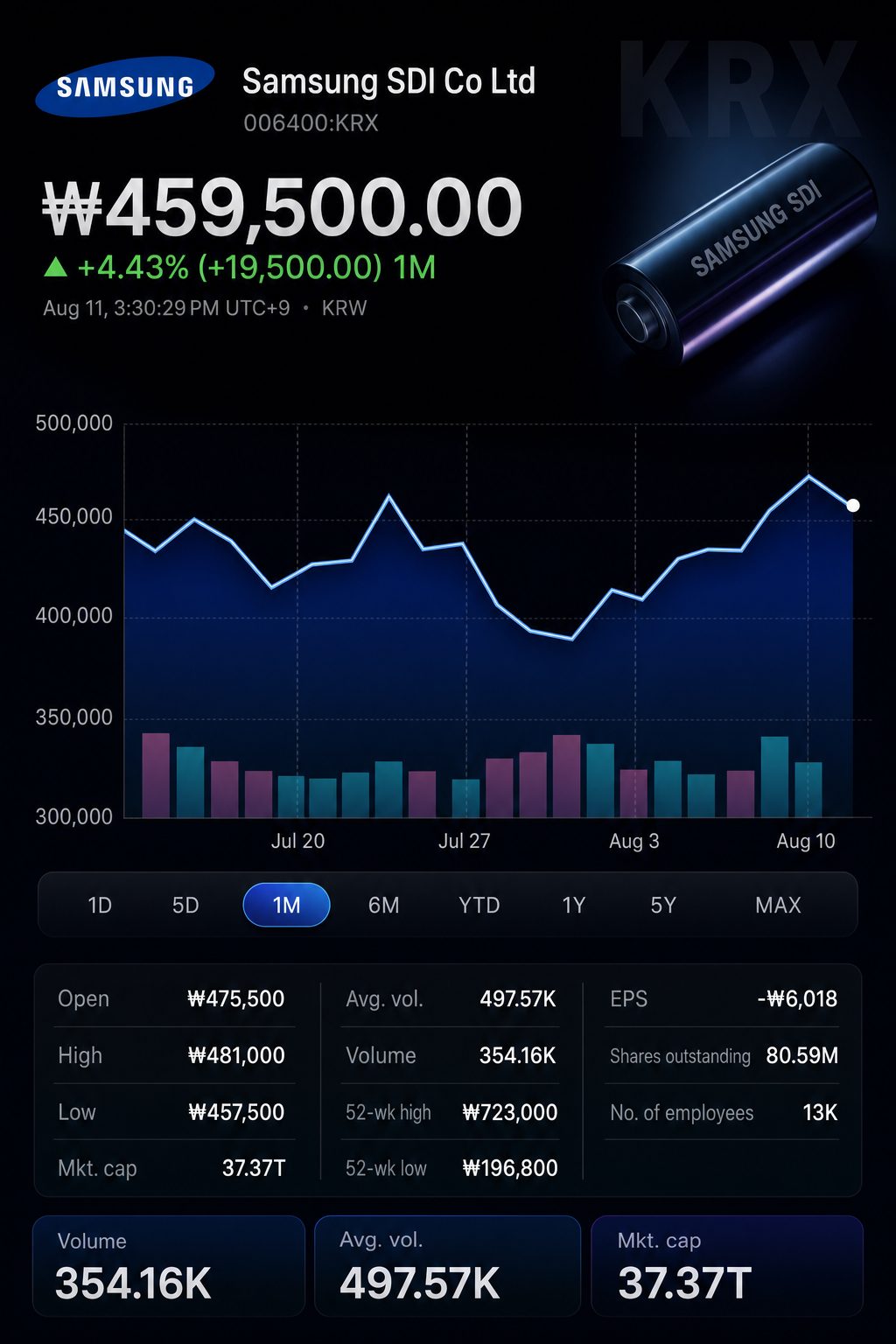
SEOUL, August 11, 2026, 16:14 KST – Shares in Samsung SDI (006400.KS) slid 4.5% after General Motors’ (GM.N) decision to pull out of a battery project increased concerns over risk for the company’s Indiana battery operations.
- Samsung SDI KRX:006400 dropped 4.47% following its agreement to purchase General Motors’ 49.99% stake in their joint venture.
- The Indiana facility had an initial annual capacity target of 27 GWh, with a budget set at $3.5 billion.
- The purchase amount and the updated investment strategy from Samsung SDI have not been made public.
- While energy storage can hedge against demand, full ownership centralises both capital exposure and utilisation risk.
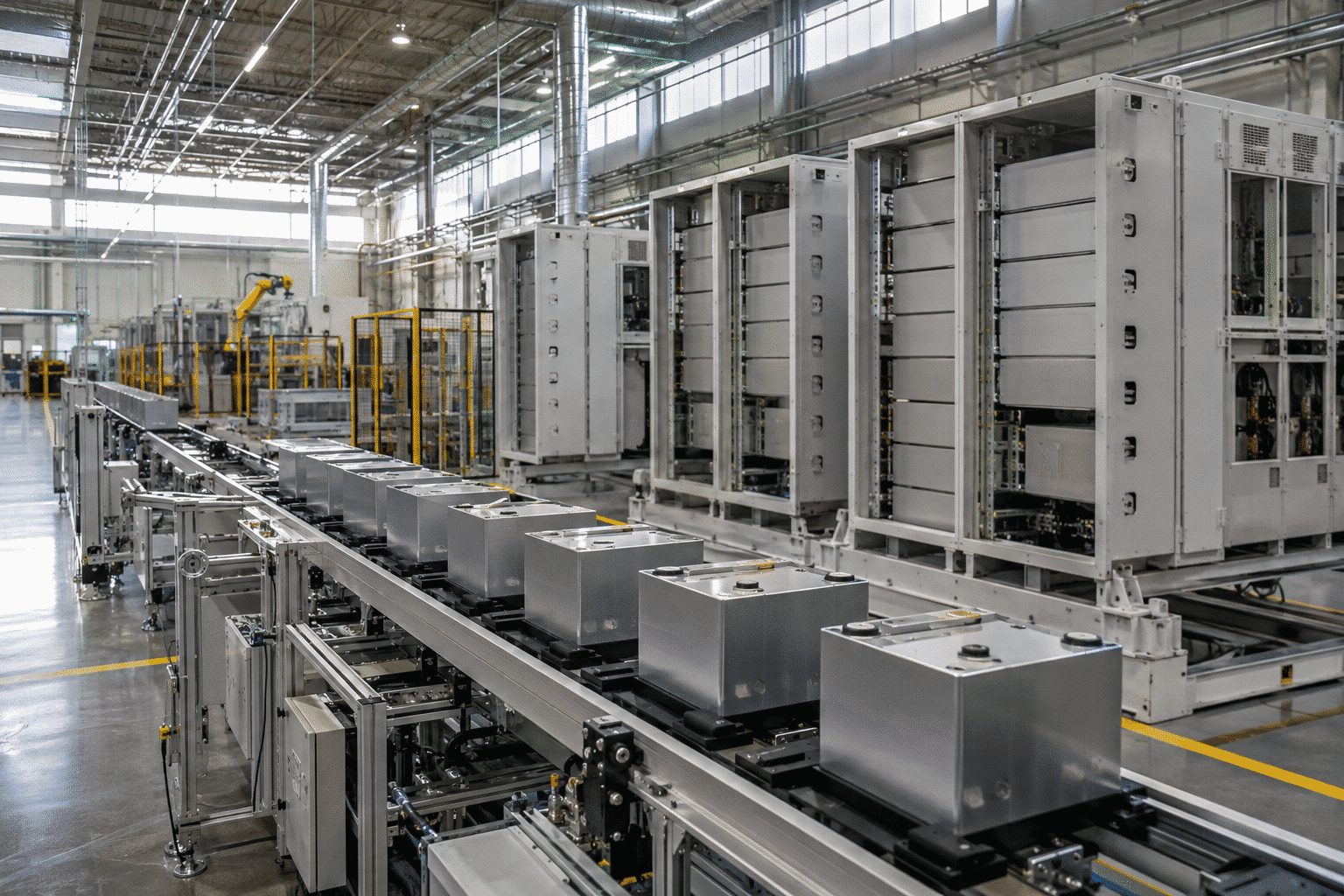
Shares in Samsung SDI dropped 4.47% on Tuesday after the battery manufacturer agreed to acquire full ownership of its Indiana joint venture with General Motors NYSE:GM. GM is divesting its 49.99% interest in SDI-GM Synergy Cells Holdings as weakening electric-vehicle demand leads to changes in the project.
The market reaction highlights a clear worry. Samsung SDI will take over the factory, but will now solely bear the funding and utilisation risks that were previously shared with GM.
GM did not reveal the price of its stake. Samsung SDI stated its current investment plan would be modified, but did not specify a new budget. Additional regulatory disclosures are expected once the plan is completed.
| Ownership | Before transaction | After transaction |
|---|---|---|
| Samsung SDI | 50.01% | 100% |
| General Motors | 49.99% | 0% |
| Operating entity | Joint venture | Wholly owned Samsung SDI subsidiary |
The change in ownership is more significant than the reported stake implies. Samsung SDI is able to reallocate output without needing partner approval, but any additional investment now appears on its balance sheet alone. Both the latest filing and third-party coverage verify the 49.99% stake transfer.
| Project metric | Original 2024 plan | Position on August 11, 2026 |
|---|---|---|
| Investment | Roughly $3.5 billion | Awaiting update |
| Initial annual capacity | 27 GWh | Still 27 GWh planned; portfolio under assessment |
| Expansion case | As much as 36 GWh | No confirmation given |
| Production target | 2027 | No revised timeline provided |
| Product focus | EV prismatic cells | Batteries for EV and energy storage |
The initial proposal included around $3.5 billion in funding and an expected yearly production of 27 GWh. There was potential to increase output to 36 GWh. The New Carlisle location, covering 680 acres, was projected to generate over 1,600 jobs and launch large-scale manufacturing in 2027.
Those expectations have shifted rapidly. In 2024, GM Chair and CEO Mary Barra stated, “The EV market and GM sales will continue to grow.” The companies are now pointing to softer-than-forecast EV demand in their decision to terminate the partnership. Samsung SDI’s original joint-venture release
GM and several other carmakers cut back on EV output when the $7,500 U.S. consumer tax incentive expired last September. Work on the Indiana site had been decelerating even before. The issue does not stem from plant technology, but rather from slower anticipated demand for its batteries.
Samsung SDI is turning to energy storage as its suggested fallback. The firm aims for its fully owned division to handle both storage and EV uses. This reflects an industry trend: In March, GM and LG Energy Solution KRX:373220 reached a deal to retool an EV battery facility in Tennessee for storage cell production.
| Samsung SDI positioning | Latest disclosed figure or forecast |
|---|---|
| US ESS order coverage | Significant capacity is covered until 2029 |
| Potential capacity crossover | Demand could outpace capacity from 2028 onward |
| US LFP cell production | Set to start in October 2026 |
| UPS and BBU battery sales | Projected to climb over 70% in 2026 |
Recent projections from management also back this scenario. Yong-hee Cho, executive vice president overseeing the ESS business, stated that secured orders “cover a substantial portion of our capacity through 2029.” The company anticipates demand might surpass available capacity from 2028 and is scheduled to launch US LFP cell production in October. Samsung SDI Q2 call transcript
Shifting to storage brings additional costs. Adapting an EV production line to supply grid or data-centre buyers at scale may require investing in new equipment, product qualification and updating the supply chain.
| Market signal | Share move | Context |
|---|---|---|
| Samsung SDI, August 11, 2026 | -4.47% | Announcement of full acquisition |
| General Motors, latest US indication | +0.43% | Disclosure of stake divestment |
| Samsung SDI, August 28, 2024 | Up as much as 3.2% | Finalisation of original venture conditions |
The difference is pronounced. Samsung SDI shares climbed after the joint venture terms were settled in 2024, but slipped 4.47% on Tuesday after news of the full takeover. GM’s latest US move left its shares up 0.43%.
The firms will continue to work on next-generation prismatic batteries jointly. This keeps open a pathway to future GM projects, while not requiring the carmaker to share ownership of the current plant.
Samsung SDI posted a profit in the second quarter, ending a run of seven straight quarterly losses. Revenue stood at 3.8 trillion won, with operating income at 204 billion won. Capital expenditures totaled 503 billion won. The Indiana decision comes at a time when the company’s earnings have turned positive, but cash requirements continue to be significant.
Risks: Storage needs could occupy the facility more quickly than demand for EVs. The opposite scenario is also a concern. Costs for conversion, postponed qualification, or softer orders may result in Samsung SDI left with an underutilised asset.
The updated investment plan is the next crucial disclosure. Investors require details on the stake price, outstanding capital commitment, and production schedule in order to assess if control justifies the associated risk transfer.
Related articles: NYSE:GM